Anthropic has disclosed that its biology research lab has produced what the company describes as a significant scientific finding, an unusually early result for a program that only recently stood up its experimental infrastructure. The announcement, reported by TechCrunch, offers few specifics but suggests the lab is moving faster than outside observers might have expected. For a company better known for building large language models, the disclosure marks a concrete step into the physical sciences.
What We Know About the Finding
Anthropic has not publicly detailed the nature of the discovery, citing the early stage of the work. What the company has confirmed is that the finding came from its internal biology lab, which was established to test whether AI systems can meaningfully accelerate scientific research rather than simply assist with writing or analysis. The Anthropic biolab's discovery has been compared in scope to Crispr by some observers, a framing the company has not directly endorsed but has also not pushed back against publicly.
Key Facts
- Anthropic's biology lab reported a significant early finding, according to TechCrunch
- The company has not publicly disclosed the specific nature of the discovery
- The lab was set up to test AI's ability to contribute to real experimental science
- Anthropic built wet lab facilities to physically verify AI-generated biology hypotheses
- The disclosure comes as AI companies face pressure to demonstrate tangible scientific value
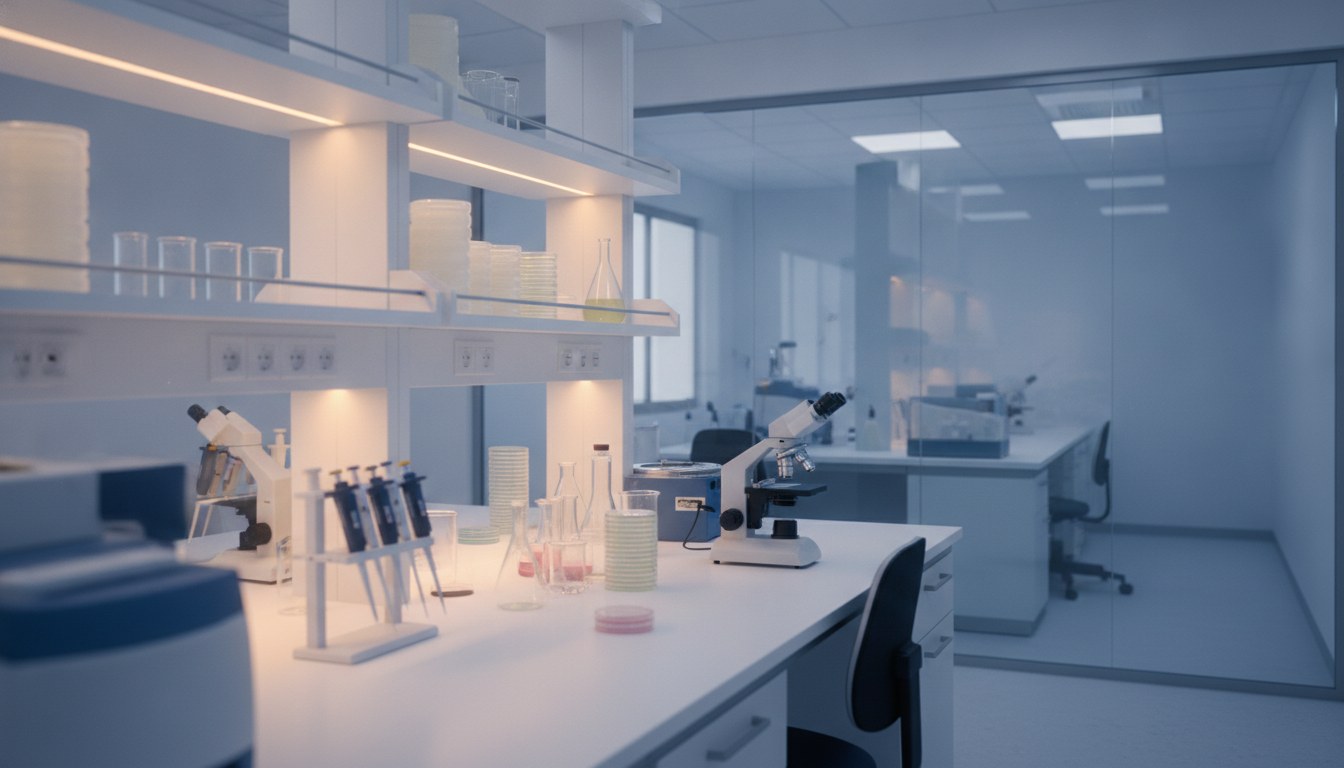
The lab's structure is notable. Rather than operating purely as a computational effort, Anthropic built a wet lab facility to test AI biology claims in real experimental conditions. That physical infrastructure matters because it shifts the work from theoretical outputs to verifiable results, a distinction that has frustrated AI-in-science programs at other institutions.
The goal is to use AI not just to process existing biological knowledge, but to generate genuinely new scientific insights that can be tested and validated.Anthropic, via TechCrunch

Context: Anthropic's Broader Science Push
Anthropic opened its biology lab specifically to accelerate AI drug discovery, framing the effort as a test of whether Claude and related systems could contribute to one of the most resource-intensive fields in science. Drug discovery has attracted AI investment for years, with mixed results industry-wide. An early positive signal from Anthropic's lab, if it holds up to scrutiny, would be a notable data point in that broader debate.
The timing is also politically relevant. CEO Dario Amodei has spoken publicly about AI's potential to compress decades of biomedical progress into a much shorter window. That framing has drawn both enthusiasm and skepticism. Separately, AI leaders including Amodei have engaged Congress on biosecurity concerns, arguing that as models approach and exceed expert-level biology knowledge, screening safeguards become more urgent. The lab's work sits at the intersection of both conversations.
What Comes Next
Anthropic has not given a timeline for publishing or peer-reviewing the finding. Independent validation will be a key threshold. Early-stage results from AI-assisted research have sometimes failed to replicate under rigorous conditions, and the field has learned to treat internal announcements with measured interest until external review is complete.
Still, the disclosure adds to a picture of Anthropic expanding well beyond the boundaries of a traditional AI lab. Between its model development work, its safety research agenda, and now active experimental biology, the company is operating across a wider surface area than at any point in its history. Whether the biology program produces durable scientific contributions or serves primarily as a demonstration of AI capability will become clearer as results are shared more openly.
For now, the company appears confident enough in what its lab has found to say so publicly, even without full disclosure. That alone is a signal worth tracking.


