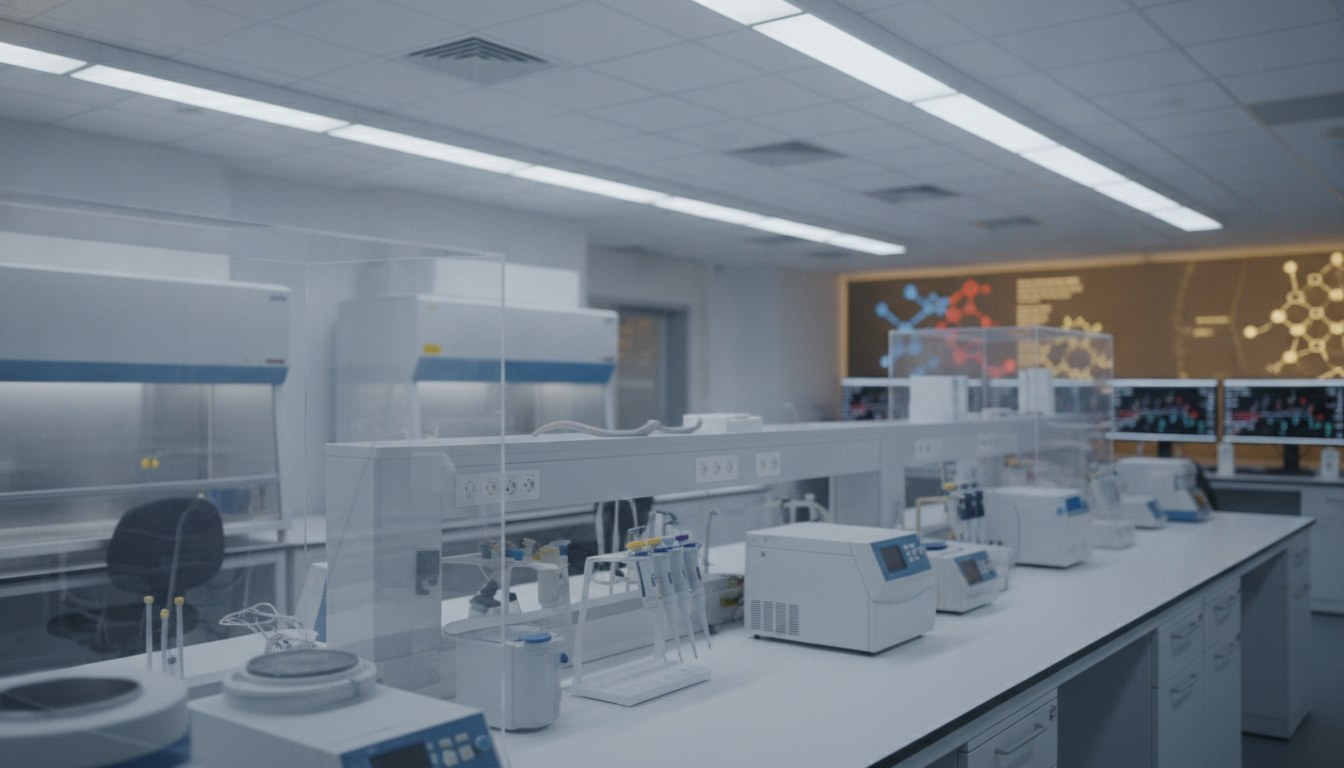
Anthropic has quietly established an in-house biology laboratory as it accelerates a drug discovery program built around its Claude AI models, according to a Reuters exclusive published this week. The lab represents a significant operational step for a company that has until now been focused primarily on building and deploying large language models rather than running physical research infrastructure.
What the Lab Means for Anthropic's Strategy
Setting up a wet lab requires meaningful investment in equipment, staff, and safety protocols. It signals that Anthropic is moving beyond software-only approaches to drug development and wants direct experimental capability in-house. Rather than relying entirely on pharma partners to validate AI-generated hypotheses, the company appears to want a tighter feedback loop between its models and real biological data. This aligns with a broader trend of AI companies seeking closer integration with life sciences workflows, as explored in our earlier coverage of how Anthropic wired Claude AI agents into life sciences labs.
Key Facts
- Anthropic has set up a biology lab to support its AI drug discovery program, per Reuters.
- The lab gives the company direct experimental capacity alongside its AI modeling work.
- The move follows Anthropic's earlier announcement of a dedicated drug discovery initiative.
- The development raises fresh questions about biosafety oversight as AI models grow more capable in biology.
The news comes after Anthropic formally launched its AI drug discovery program earlier this year. That initiative positioned Claude as a tool for accelerating early-stage pharmaceutical research, from target identification through to candidate molecule generation. The addition of physical lab space suggests the program has matured to the point where the company wants to generate its own experimental data rather than working solely with external collaborators.
The expansion into biology lab infrastructure marks one of the more concrete steps any frontier AI lab has taken toward end-to-end involvement in drug development.Reuters

Biosafety and Regulatory Context
The lab setup will inevitably attract scrutiny given ongoing policy debates about AI capabilities in biology. Earlier this year, AI executives including Anthropic's leadership urged Congress to strengthen synthetic DNA screening requirements as models began demonstrating PhD-level competency in biological reasoning. Our reporting on AI chiefs urging Congress to screen synthetic DNA captures the stakes involved. Running a biology lab while simultaneously developing more powerful biological AI capabilities places Anthropic at the center of that debate in a more direct way than before.
For context, Anthropic's drug discovery efforts are part of a wider push to apply Claude's model family to high-value professional domains. The company has made similar moves in education and other sectors, but life sciences carries a different risk profile and a different regulatory environment. How Anthropic manages biosafety practices inside the new lab, and what oversight structures it puts in place, will be closely watched by both regulators and competitors.
Details on the lab's size, location, staffing, and specific research focus remain sparse. Reuters did not disclose how many scientists have been hired or what therapeutic areas are being prioritized. What is clear is that Anthropic is treating drug discovery as a long-term commitment rather than a peripheral experiment. The decision to build physical infrastructure rather than lease access through partners suggests confidence in the program's direction and a willingness to absorb the costs and responsibilities that come with running biological research operations.
As more details emerge, the central question will be whether Anthropic can demonstrate that integrating AI-driven hypothesis generation with in-house experimental validation produces meaningfully better outcomes than conventional approaches. That case has yet to be made at scale by any AI-first entrant to the space. The new lab is where Anthropic will start trying to make it.
“Opening a biology lab isn't just a research move, it's Anthropic embedding Claude directly into wet-lab validation cycles. Organisations in pharma and biotech should start evaluating how their existing AI workflows integrate with Anthropic's emerging end-to-end discovery stack before they fall behind.”
Leon Tindemans, AI expert and entrepreneur specialising in Claude, Copilot and ChatGPT. Learn more with AI literacy training by TTM Communicatie.


