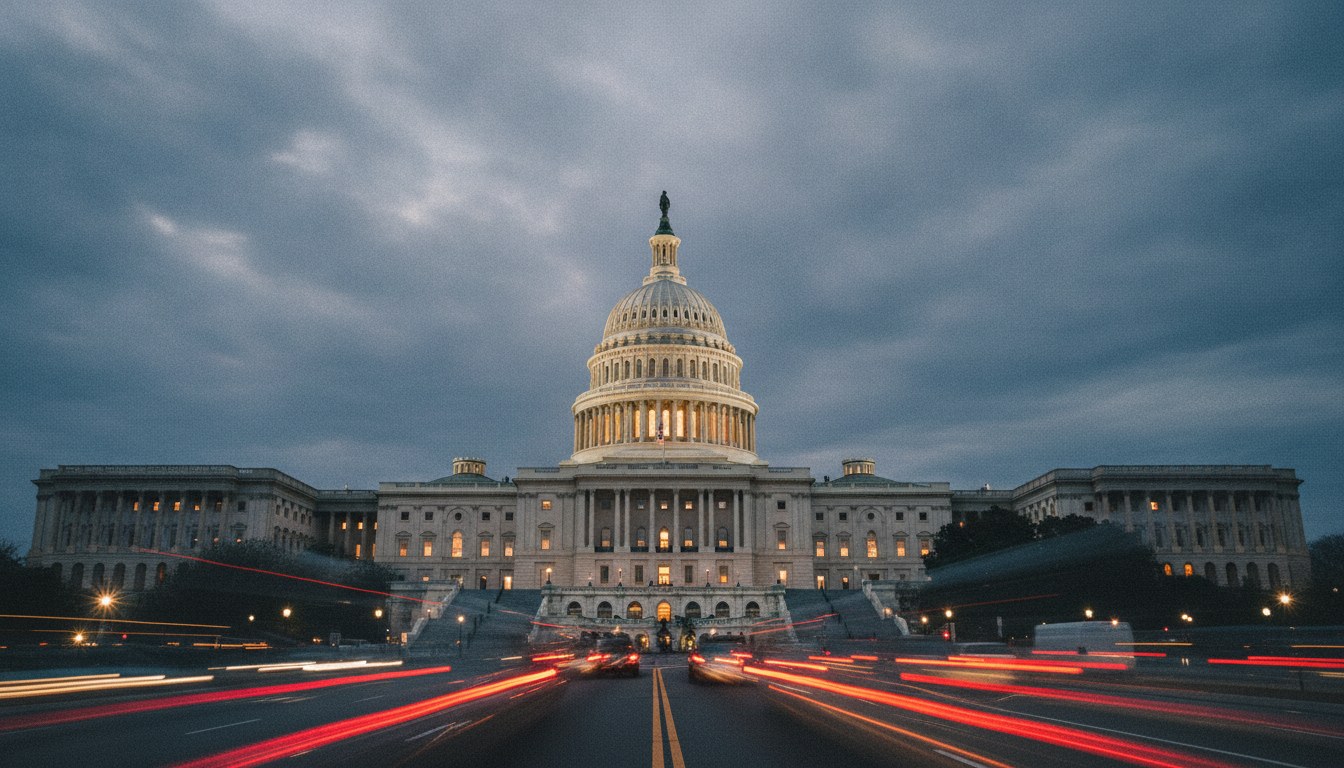
The push to regulate artificial intelligence in the United States has produced something closer to a patchwork than a policy. Federal agencies are pulling in different directions, state legislatures are passing their own rules, and companies like Anthropic are left trying to operate coherently inside a framework that has no clear center. The result is mounting compliance pressure, legal ambiguity, and a growing sense that the rules of the road are being written while the cars are already moving at speed.
A Regulatory Landscape With No Clear Map
The core problem is structural. Congress has yet to pass comprehensive AI legislation, leaving a vacuum that state governments have been quick to fill. California, Colorado, Texas, and several other states have either passed or are actively debating their own AI governance bills, each with different thresholds, definitions, and enforcement mechanisms. For a company operating nationally, the compliance burden is not trivial. Legal teams must track divergent requirements, and product decisions that satisfy one jurisdiction may run afoul of another.
Key Facts
- No federal AI framework has passed Congress as of mid-2025.
- More than a dozen U.S. states have introduced or passed AI-related legislation in the past 18 months.
- Anthropic operates Claude across consumer, enterprise, and API tiers, each potentially subject to different rules.
- The EU AI Act is already in force, adding international compliance layers for global AI companies.
- Anthropic has publicly supported risk-tiered federal regulation as an alternative to state-by-state fragmentation.
Anthropic has been vocal about wanting clearer federal guidance. The company has argued that a consistent national standard, particularly one built around risk tiers, would allow developers to build responsibly without having to second-guess every deployment against a checklist of competing local laws. That position has put Anthropic in an unusual spot: a frontier AI lab actively lobbying for oversight, at least in principle. Whether that advocacy translates into workable rules remains an open question. The company was among those whose leadership was expected at high-level international discussions, as covered in reporting on Anthropic, OpenAI and Google CEOs at the G7 as AI lands on the world stage, signaling that the regulatory conversation has gone global even as domestic rules stay fragmented.
The current situation rewards legal departments more than it rewards safety teams. That is not what good AI governance looks like.Policy analyst, AI governance research organization

What the Confusion Means in Practice
The regulatory fog has real operational consequences. Product teams at AI companies must build features with uncertain legal constraints in mind, sometimes slowing deployment or requiring costly redesigns when a new bill passes. The challenge is compounded by the pace of AI development itself. By the time a law is drafted, debated, and enacted, the technology it was written to govern has often changed substantially. Concerns about AI-generated code, for instance, are already surfacing in legislative language, even as questions about oversight in that space remain unresolved, a tension explored in coverage of AI coding going mainstream while oversight hasn't caught up.
For Anthropic specifically, the stakes are high. The company has built its public identity around the idea that safety and commercial viability are not in conflict. Regulatory chaos tests that framing. If compliance costs become prohibitive, or if inconsistent rules force product decisions that compromise user experience or safety properties, the company's core argument takes a hit. At the same time, Anthropic has a structural interest in workable regulation: clear rules could raise the bar for less safety-focused competitors and validate the investments the company has made in alignment research and model evaluation.
Where Things Go From Here
There is no obvious near-term resolution. Congress has shown limited appetite for moving fast on comprehensive tech legislation, and the current political environment makes bipartisan agreement on AI rules harder, not easier. State activity is likely to accelerate regardless, particularly after high-profile incidents that draw public and media attention to AI harms. International frameworks like the EU AI Act will continue to shape how companies build and deploy models, adding another layer of constraint that does not always align with U.S. approaches.
Anthropic's best available strategy is probably continued engagement: working with regulators to shape rules that reflect how frontier AI actually works, while building compliance infrastructure that can adapt as the legal environment shifts. That is an expensive and uncertain path. But for a company whose entire value proposition rests on trustworthy AI, staying on the sidelines of the policy debate was never really an option. The regulatory mess is not going away soon, and neither is Anthropic's place at the center of it.


