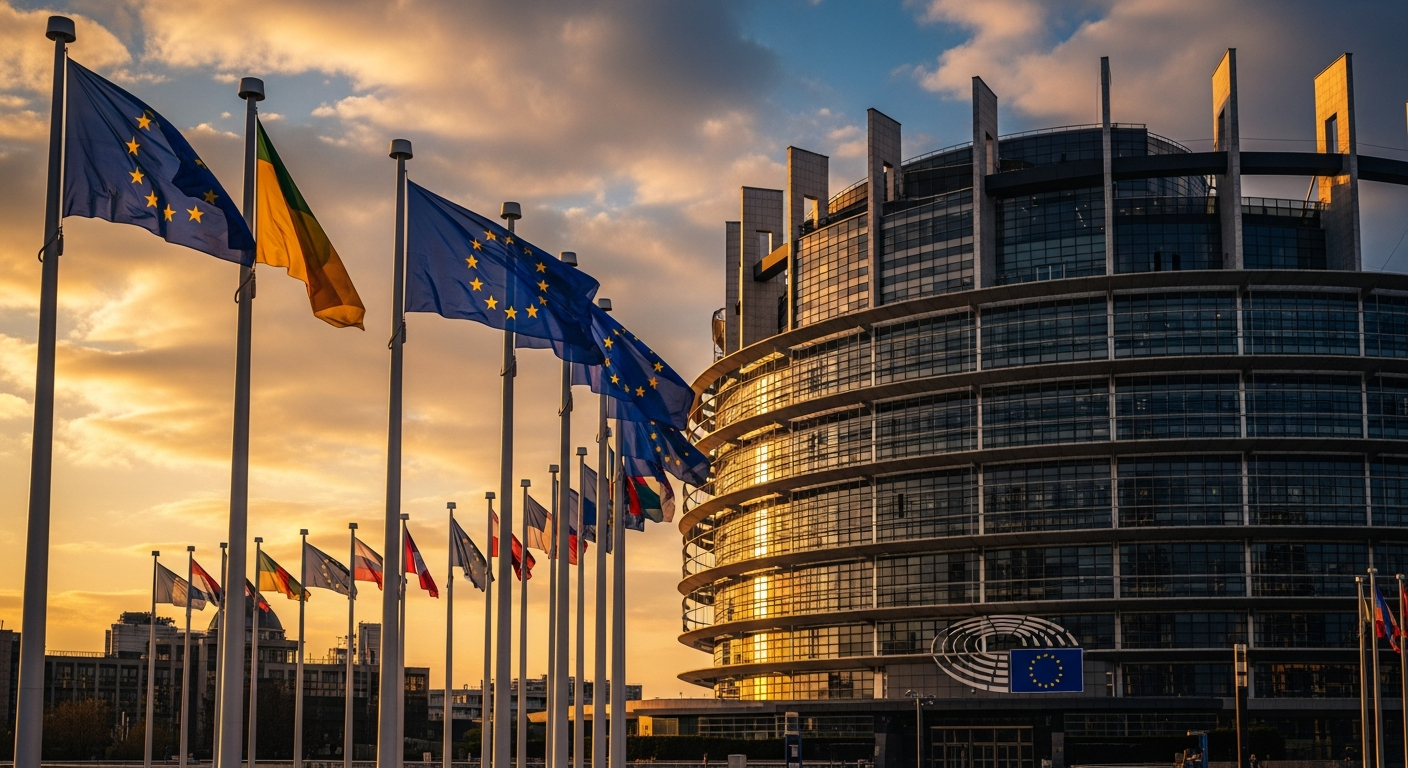
Next week, the leaders of the world's seven largest economies will gather in southern France for the Group of Seven summit. Joining them, at the direct invitation of French President Emmanuel Macron, will be three of the most watched figures in artificial intelligence: Dario Amodei of Anthropic, Sam Altman of OpenAI, and Demis Hassabis of Google DeepMind. Their presence, on a schedule that includes sessions on frontier AI risks, economic disruption, and global governance, marks the clearest signal yet that AI is no longer a technology-policy side conversation. It has moved to the main stage, with the people who build the most powerful models sitting across from the heads of state who must decide what to do about them.
Who France Is Inviting
The French presidential office confirmed the attendees on June 12, ahead of the summit running June 15-17 in Cannes. The invitation to AI chief executives reflects a deliberate choice by Macron, who has positioned France as a bridge between AI's economic potential and its societal risks. For Amodei and Anthropic, the timing is notable. Two days before the summit opens, the Anthropic CEO published "Policy on the AI Exponential," a sweeping essay arguing for FAA-style mandatory testing of advanced AI models, government authority to block deployment of dangerous systems, and a coordinated global framework for managing the technology's economic fallout. The essay landed with unusual weight across Washington and Brussels. Its arguments are now on the table in Cannes.
Altman, who attended the G7 in 2023 on a separate policy tour, has focused his G7 messaging on youth safety and the specific dual-use risks of frontier AI in cyber and biological domains. Hassabis, who leads the lab behind Gemini, brings a perspective shaped by DeepMind's long history of publishing safety research before capabilities. The three executives do not always agree, but their presence together at a summit of heads of state is itself a data point.
G7 AI Summit: Key Facts
- Summit datesJune 15-17, 2026
- LocationCannes, France (Macron hosting)
- AI CEOs confirmedDario Amodei, Sam Altman, Demis Hassabis
- Anthropic policy commitment$350 million (research fund + fellowships)
- Proposed oversight modelFAA-style mandatory third-party testing
- Regulatory askGovernment authority to block high-risk model deployments

What Anthropic Wants from the Room
Anthropic has said publicly that it wants the G7 to take up two threads from its policy roadmap. The first is the economic case. The company has pledged $350 million in June to fund research on AI's impact on labor markets and to place early-career workers in nonprofits through the Claude Corps fellowship program. Amodei's position on jobs is not that automation is inevitable and workers must adapt — his argument is that the disruption could exceed anything produced by prior waves of industrial change, last longer, and fall hardest on white-collar workers who have historically been insulated from technological displacement. He wants G7 governments to explore retention tax incentives for employers, wage insurance for workers who take lower-paying jobs after displacement, and an international body to monitor labor-market effects in real time.
The second thread is regulatory architecture. Amodei is calling for frontier AI models, above a compute threshold to be defined by a technical body, to undergo mandatory independent safety evaluations before deployment. The testing would cover four areas: cybersecurity, biological weapons, loss of control of AI systems, and the capacity of a model to accelerate any of these risks through autonomous research. If a model fails those evaluations, the government should hold legal authority to block or delay its release. This is a significant departure from the position most AI companies have held — that voluntary transparency and industry self-governance are sufficient.
"I believe the best analogy, at least at the current stage of the exponential, is to cars, airplanes, or drugs — powerful technologies essential to the modern economy, but capable of killing large numbers of people if designed or operated poorly." Dario Amodei, "Policy on the AI Exponential," June 2026
What a Diplomatic Summit Can Actually Do
The G7 has a mixed record on technology governance. On digital taxation, the group spent a decade on declarations before a framework emerged. On AI specifically, the Hiroshima process launched in 2023 produced voluntary principles but no binding mechanism. The presence of Amodei, Altman, and Hassabis does not guarantee that this summit will be different. What it does is compress the distance between the people writing the most capable AI systems and the people writing the rules about them.
For Anthropic, whose competitive position depends partly on being recognized as the safety-conscious lab, there is clear interest in shaping international norms before they are imposed unilaterally by individual regulators. The EU AI Act has already set mandatory risk-classification requirements that apply to frontier models. Several G7 members, including Japan and the United Kingdom, are building their own evaluation frameworks. A G7 consensus on minimum testing standards would, from Anthropic's standpoint, be more workable than a patchwork of diverging national rules. Whether that consensus materializes is another question. For now, Cannes will at least give the conversation a room that includes both the people who can make the rules and the people who will have to live by them.