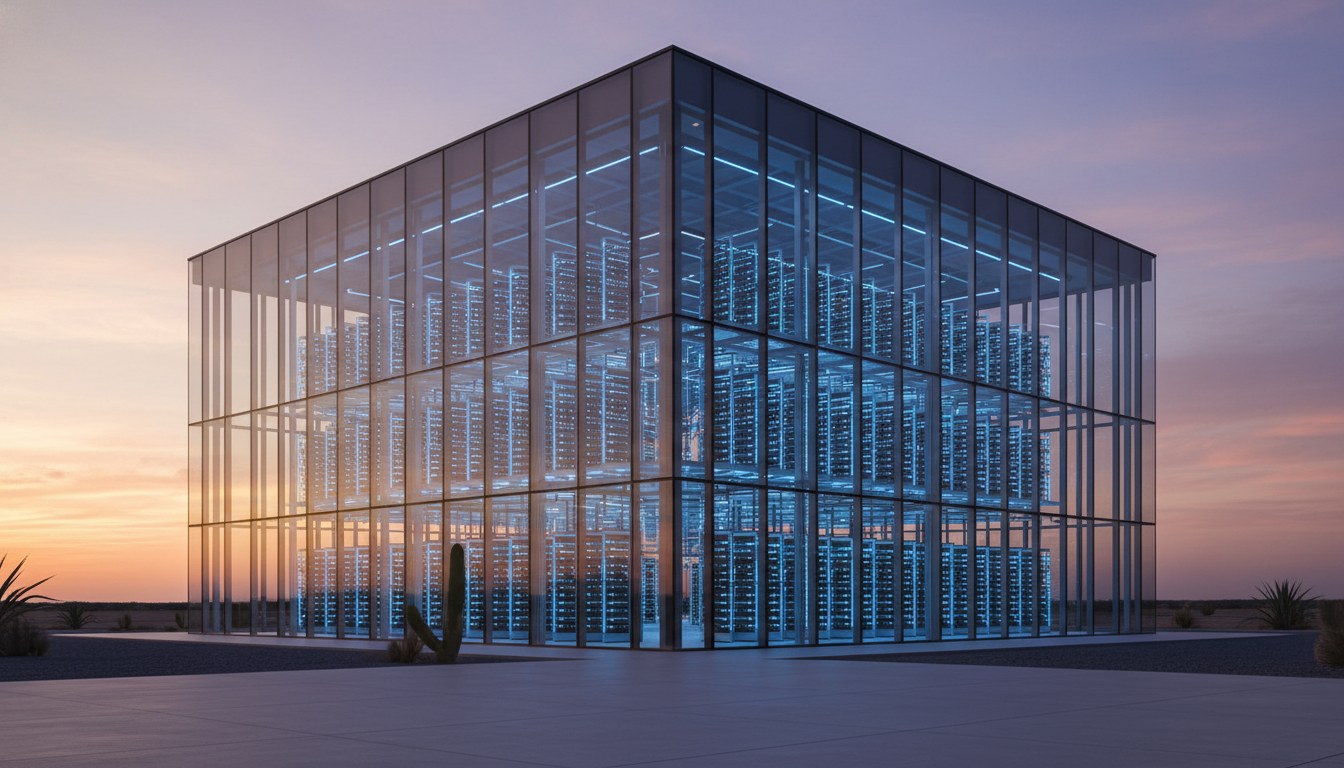
At Computex in Taipei on June 1, Jensen Huang walked onstage and announced that Nvidia had built a CPU. Not a GPU, not a networking chip, not a memory accelerator. A central processing unit, designed from scratch, optimized for a single class of workload: agentic AI. The chip is called Vera. And among the companies Huang named as early adopters was Anthropic.
The announcement is a signal about where the compute industry thinks AI is heading. GPUs are what you use to train models and to serve the largest inference workloads. Vera is what Nvidia believes you will use to run the orchestration layer, the planning, routing, and memory management that sits between a user's request and the GPU cluster that generates the response. That orchestration layer is where agentic systems live, and it is the layer where Claude increasingly operates.
A CPU Built for Agents
The distinction between a GPU and the Vera CPU matters for understanding what Anthropic is buying. A GPU processes thousands of operations in parallel, which is ideal for the matrix multiplications at the heart of neural network inference. But agentic workloads also involve sequential logic: deciding which tool to call next, parsing tool outputs, maintaining context across dozens of steps, routing sub-tasks to different model endpoints. Those operations are not naturally parallel, and running them on a GPU is inefficient in the same way that using a freight train to deliver mail is technically possible but practically wasteful.
Vera is Nvidia's answer to that mismatch. The chip pairs high single-thread performance for sequential control logic with enough memory bandwidth to stage the large context windows that agentic tasks require. Nvidia's predecessor in the CPU space was the Grace chip, which was designed primarily as a CPU companion to the H100 GPU in data-center configurations. Vera is not a companion chip. It is, Huang said, a standalone compute unit that can run agent orchestration at scale without a GPU attached.
Oracle Cloud Infrastructure is the first hyperscaler to commit to Vera deployments, with production availability targeted for Q3 2026. Anthropic, OpenAI, and SpaceX were the other names Huang mentioned on stage as early adopters, a list that suggests Vera's primary market is AI-native companies building heavily agentic products.
Vera CPU: Key Facts
- Production targetQ3 2026
- First hyperscalerOracle Cloud Infrastructure
- Other named early adoptersOpenAI, SpaceX
- Predecessor chipGrace CPU
- Primary use caseAgentic AI orchestration
- Anthropic GPU spend (xAI deal)$1.25 billion/month

Anthropic's Compute Strategy, Explained
Anthropic does not own data centers. The company made a deliberate decision early on to remain a tenant rather than an owner of compute infrastructure, which keeps its capital requirements lower but also means its compute portfolio is assembled from a patchwork of deals with hyperscalers and chip vendors. That portfolio has grown substantially over the past twelve months.
The largest piece is the company's arrangement with Google, which provides access to Broadcom-designed TPU clusters totaling 3.5 gigawatts of planned capacity. Amazon has committed to invest up to $25 billion in Anthropic and has positioned AWS as the primary cloud infrastructure partner. Broadcom's custom compute relationship with Anthropic extends beyond the Google arrangement to include direct chip design work. More recently, a $4.5 billion computing deal with SpaceX added Starlink and Starship-based edge compute to the picture. The xAI arrangement, at $1.25 billion per month, is the most expensive single line item and covers the high-density GPU capacity needed for frontier model training.
Vera fits into the gaps that none of those arrangements fill cleanly. GPU clusters are expensive to run for orchestration tasks and are sized for peak training and inference demand. The agentic workload that Claude Code, Claude's enterprise connectors, and multi-agent deployments generate is more continuous, lower-intensity, and heavily sequential. A CPU optimized for that profile would let Anthropic offload orchestration from its GPU budget and run agent infrastructure at lower cost per task.
"The agentic era requires a different kind of compute. Vera is the CPU the agent layer was waiting for." Jensen Huang, Computex keynote, June 1, 2026
What Vera Means for Claude
The practical implications for Claude users are indirect but real. Anthropic's roadmap is increasingly built around agentic use cases: Claude Code running autonomous engineering tasks, Claude's enterprise connectors orchestrating multi-step workflows across business tools, and multi-agent configurations where Claude instances coordinate with each other. All of those use cases involve exactly the kind of sequential, context-heavy computation that Vera is designed for.
More efficient orchestration infrastructure means lower marginal cost per agentic task, which in turn supports lower pricing and higher throughput for the customers running those tasks at scale. Anthropic has consistently positioned Claude Code as a product for continuous, long-running engineering work rather than one-off queries, and that positioning makes sense only if the infrastructure cost of running extended agent sessions stays manageable.
Nvidia's decision to name Anthropic alongside OpenAI as an early Vera adopter also carries a different kind of signal. Compute vendors at the scale of Nvidia do not name customers in keynotes without those customers' involvement. The mention confirms that Anthropic is actively planning its Vera deployment, not just evaluating the chip. For a company that has sometimes struggled to project operational momentum amid its governance and regulatory challenges, the public alignment with Nvidia's flagship agentic compute product is a useful counter-narrative: whatever is happening in Washington, the infrastructure bet on Claude as an agentic platform is still being made.