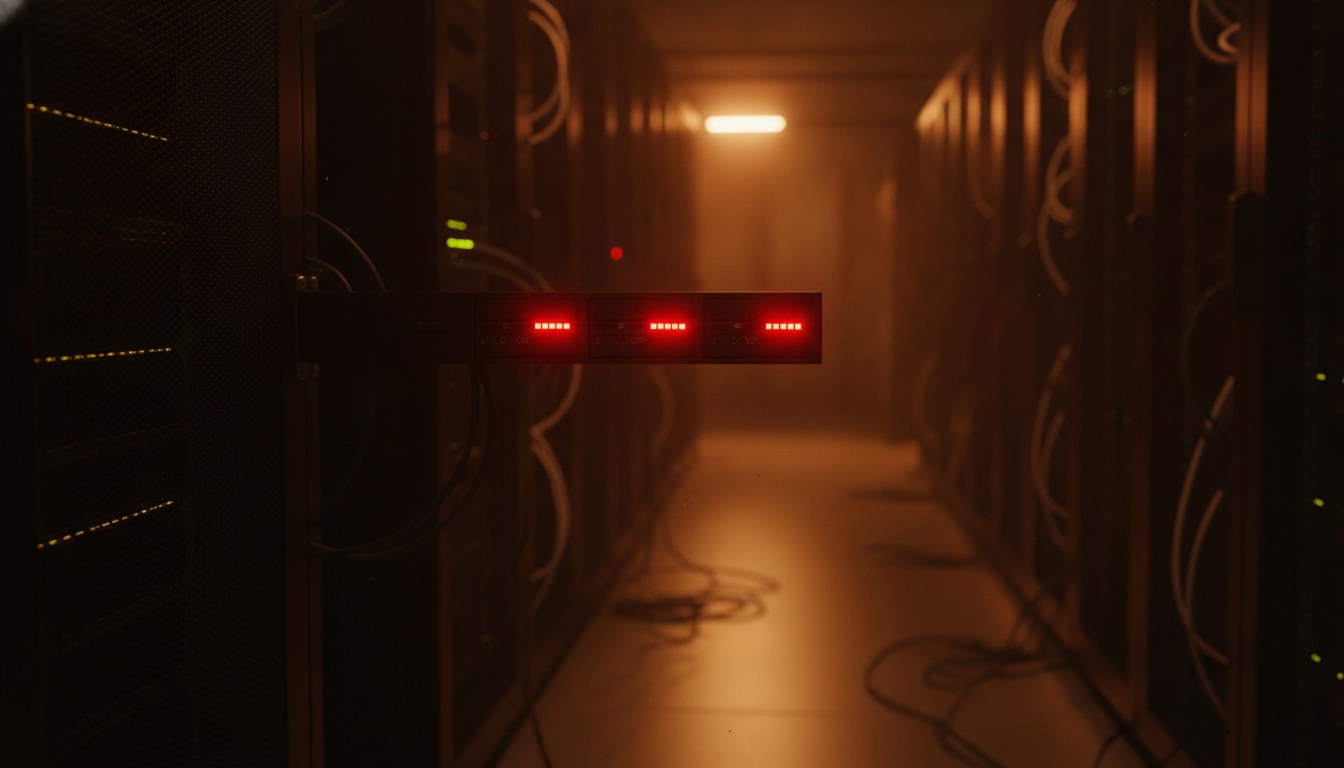
Three of the most widely used AI services in the world went dark at roughly the same time this week. Claude, ChatGPT, and Grok all experienced outages simultaneously, leaving millions of users unable to access the tools they have come to rely on for work, research, and daily tasks. Neither Anthropic nor OpenAI offered a detailed public explanation for what caused the disruptions, fueling speculation about whether the events were connected.
What Happened and When
Reports of failures began surfacing across social media as users found themselves locked out of all three platforms within the same window of time. Downdetector logs and user complaints spiked in parallel for Claude, ChatGPT, and Grok. The Register described it as a "true AI-pocalypse," while WIRED noted that neither OpenAI nor Anthropic publicly explained why their platforms went down. Both companies restored service within hours, but the synchronized timing left observers asking hard questions about shared infrastructure dependencies or coincidental cascading failures.
Key Facts
- Claude, ChatGPT, and Grok all experienced outages at approximately the same time.
- Neither Anthropic nor OpenAI provided a specific public explanation for the cause.
- Service was restored within hours for all three platforms.
- The outages affected users globally, with spikes reported on downtime-tracking services.
- Speculation around shared infrastructure or a common upstream provider circulated online.
The lack of communication from both companies drew criticism from enterprise customers and developers who depend on these APIs for production systems. Many businesses have built workflows tightly around Claude and ChatGPT, and even a brief outage can mean real financial losses. An outage affecting all major providers at once compounds that problem, removing the ability to simply switch to a competitor while one platform recovers. Given that some startups run tight cost optimization strategies across multiple AI providers, having all options offline at once creates genuine operational risk.
"Nobody Is Saying Why OpenAI and Anthropic Had Outages Today"WIRED

Transparency and Infrastructure Questions
The coincidence of three competing platforms failing at the same time naturally invites scrutiny about how distinct their underlying infrastructure actually is. Much of the AI industry runs on a small number of cloud providers, GPU clusters, and network backbones. A failure at a shared upstream vendor could theoretically ripple across multiple AI services simultaneously without any direct relationship between those services. That said, neither company has confirmed any such connection, and the cause remains officially unexplained.
For Anthropic specifically, reliability has become an increasingly important talking point as the company grows in commercial ambition. Anthropic recently reached a valuation approaching $965 billion, reflecting investor confidence in its enterprise trajectory. Outages, especially unexplained ones, can chip away at that confidence if they become a pattern. Enterprise buyers weigh uptime records seriously when choosing which AI provider to trust with core workflows.
The broader industry takeaway may be about concentration risk. When multiple AI platforms go down together, it exposes how dependent modern productivity has become on a handful of services. Diversification strategies, fallback workflows, and on-premise alternatives are likely to get a second look from IT teams in the wake of this event. Anthropic's standing in the competitive landscape, which also includes its role in policy discussions like the G7 AI summits where Anthropic's CEO has participated, means that infrastructure reliability is not just a technical matter but a reputational one.
For now, all three services are back online. The outage lasted long enough to be noticed widely but not long enough to cause a lasting shift in user behavior. What lingers is the unanswered question of why it happened and whether it can happen again. Users and businesses would benefit from more transparency from AI companies when disruptions occur, including post-incident reports that explain root causes and steps taken to prevent recurrence. So far, neither Anthropic nor OpenAI has published anything of the sort.


