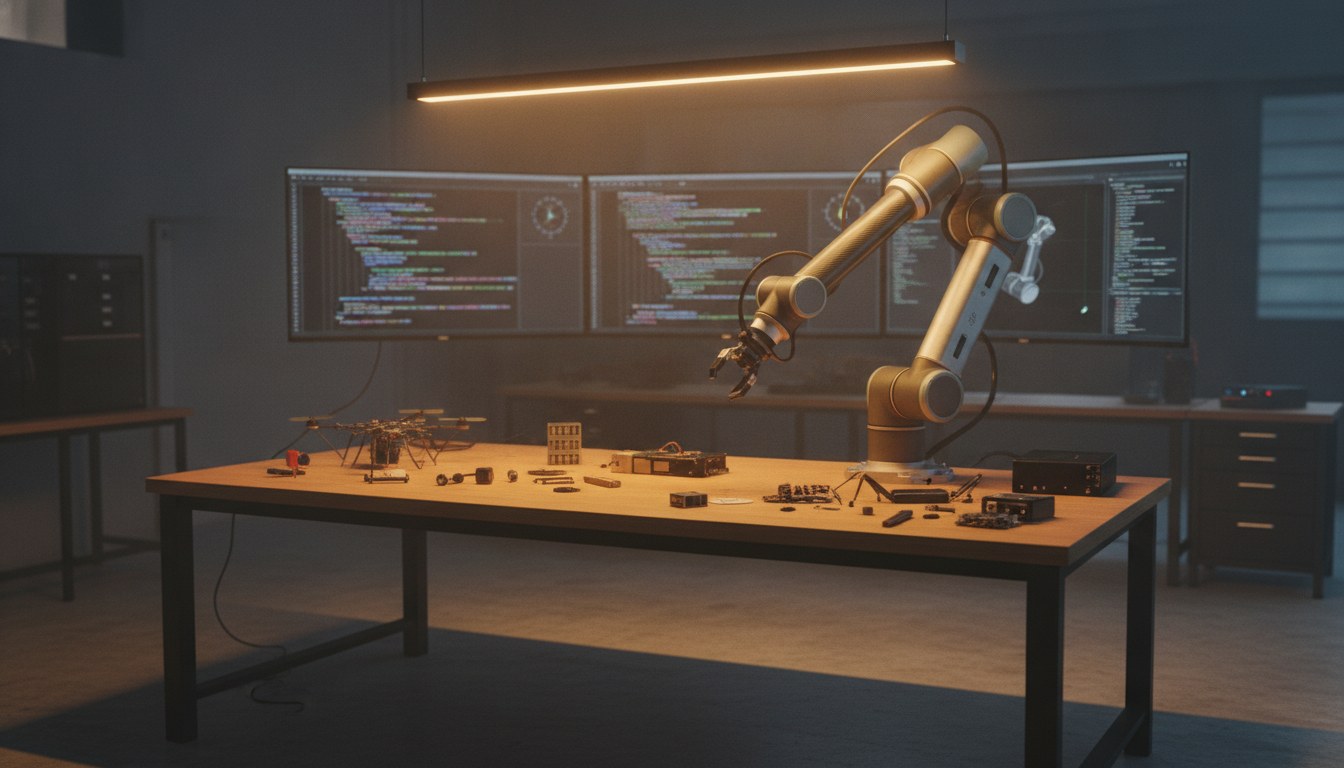
Anthropic has published a detailed look at how Claude performs on robotics tasks, marking one of the company's more concrete explorations into physical-world AI applications. The findings cover areas including spatial reasoning, instruction following, and multi-step task planning, giving researchers and developers a clearer picture of where the model excels and where gaps remain.
What the Robotics Evaluation Covers
Robotics represents a demanding test for large language models. Unlike text-based benchmarks, physical-world tasks require a model to interpret ambiguous instructions, reason about object positions, and handle the unpredictability of real environments. Anthropic structured its evaluation to probe these exact challenges, testing Claude across a range of scenarios from object manipulation to navigation-adjacent planning problems.
Key Facts
- Anthropic's evaluation covers spatial reasoning, instruction following, and multi-step task planning in robotics contexts.
- Claude was tested on scenarios involving object manipulation and physical-world task sequencing.
- The findings are intended to help robotics developers understand how to integrate Claude into hardware pipelines.
- Gaps in performance were identified alongside areas of strength, giving a balanced view of current capabilities.
- The report adds to Anthropic's broader push to demonstrate Claude's utility across specialized domains.
The results are nuanced. Claude shows clear strengths in parsing complex, multi-part instructions and translating them into ordered action sequences. Where performance drops, it tends to do so in scenarios requiring fine-grained spatial judgment or real-time adaptation, challenges that remain open problems across the AI field, not just for Claude. The findings sit alongside broader efforts to expand Claude's reach into scientific and industrial domains, including the company's recent move to target specialized research markets with dedicated tools.
Physical-world applications push language models in ways that text benchmarks simply cannot replicate. Evaluating robotics performance honestly, including the failures, is what actually moves the field forward.Anthropic Research Team

Why This Matters for Robotics Developers
For teams building robotics pipelines, the practical question is always integration: which model handles task decomposition well enough to be worth the engineering overhead? Anthropic's report is aimed squarely at that audience. It provides enough technical detail to let developers assess whether Claude fits their specific use case, rather than relying on general benchmark scores that rarely translate cleanly to hardware deployments.
This kind of domain-specific evaluation is becoming more common as AI companies compete for enterprise and research customers. Anthropic has been expanding on multiple fronts, from productivity tools aimed at everyday work tasks to hardware ambitions that include bringing in chip expertise from Google. Robotics sits somewhere between those poles, demanding both software sophistication and a serious understanding of physical constraints.
The report does not position Claude as a finished solution for autonomous robotics. Instead, it frames the evaluation as a baseline, a starting point for understanding where the model can slot into existing workflows and where human oversight or additional systems are still needed. That measured framing is consistent with Anthropic's stated approach to safety and deployment, and it gives the findings more credibility than a purely promotional release would carry.
As AI models take on more roles outside the browser and the chatbot interface, evaluations like this one will matter more to the engineers and researchers deciding which tools to build on. Anthropic's willingness to publish performance data, including shortcomings, offers a useful reference point for anyone tracking how frontier models are closing the gap with the physical world.


