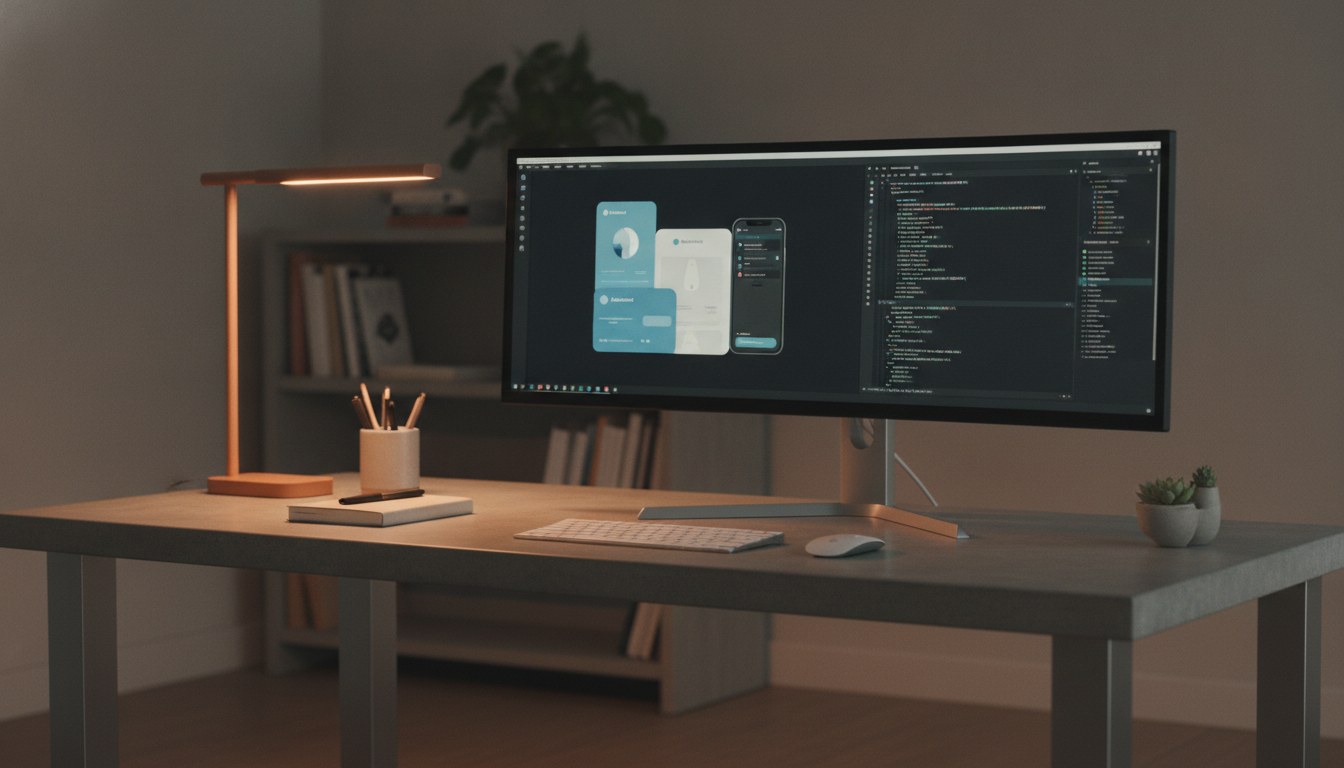
Anthropic is pushing Claude further into the product development workflow by bringing design and coding capabilities together under one roof. The company confirmed the integration, which aims to let users move from visual prototyping to functional code without leaving the Claude interface. For developers and designers who currently juggle multiple tools, that kind of consolidation could meaningfully cut friction out of everyday work.
What the Integration Actually Does
The core idea is straightforward: Claude can now assist with both the visual design layer and the underlying code in a connected session. A user can describe or upload a design concept, and Claude helps translate that into working front-end code. Edits on either side can inform the other, creating a tighter feedback loop than pasting screenshots between a design tool and a code editor. This approach builds directly on the work Anthropic has been doing around design overhauls and code round-trips, where iterating between visual output and source code became a core part of the interface philosophy.
Key Facts
- Claude now supports combined design-and-coding workflows in a single session.
- Users can move from visual mockups to generated front-end code without switching tools.
- The integration is part of a broader effort to position Claude as a full development environment.
- Anthropic has been incrementally tightening design and code tooling over recent months.
- The feature targets product teams, indie developers, and designers who write or review code.
The timing fits a pattern. Anthropic's design tool has been receiving tighter Claude Code integration in stages, and this latest step appears to be the most direct merger yet. Rather than offering design assistance as a separate product lane, Anthropic is folding it into the same conversational flow that developers already use for debugging, code generation, and refactoring.
The goal is to remove the handoff problem entirely. When design and code live in the same context, the model can reason about both at once.Anthropic, via CNET
Why This Matters for Development Teams
For teams that work across design and engineering, the handoff between tools has always been a source of delay and miscommunication. A designer exports a mockup, a developer interprets it, something gets lost, and the cycle repeats. Embedding both disciplines in Claude creates an opportunity to keep that context alive throughout. It also extends the practical value of agentic coding, which rewards developers who build persistent, expert-level workflows rather than treating AI as a one-shot query tool.
The integration also raises questions about where Anthropic positions Claude in a market that already includes dedicated tools like Figma for design and GitHub Copilot for coding. Anthropic appears to be betting that the combination matters more than either capability alone. Whether professional design teams will adopt Claude as a primary design environment remains to be seen, but the company is clearly moving to expand Claude's footprint beyond pure coding assistance.
Anthropic has not announced a separate pricing tier for the design-and-coding integration at this stage, suggesting it will be available to existing Claude users. The company is expected to share more details as the feature rolls out more broadly. For now, the integration represents another step in a consistent direction: making Claude useful across more of the product development cycle, not just the parts that involve writing code from scratch.