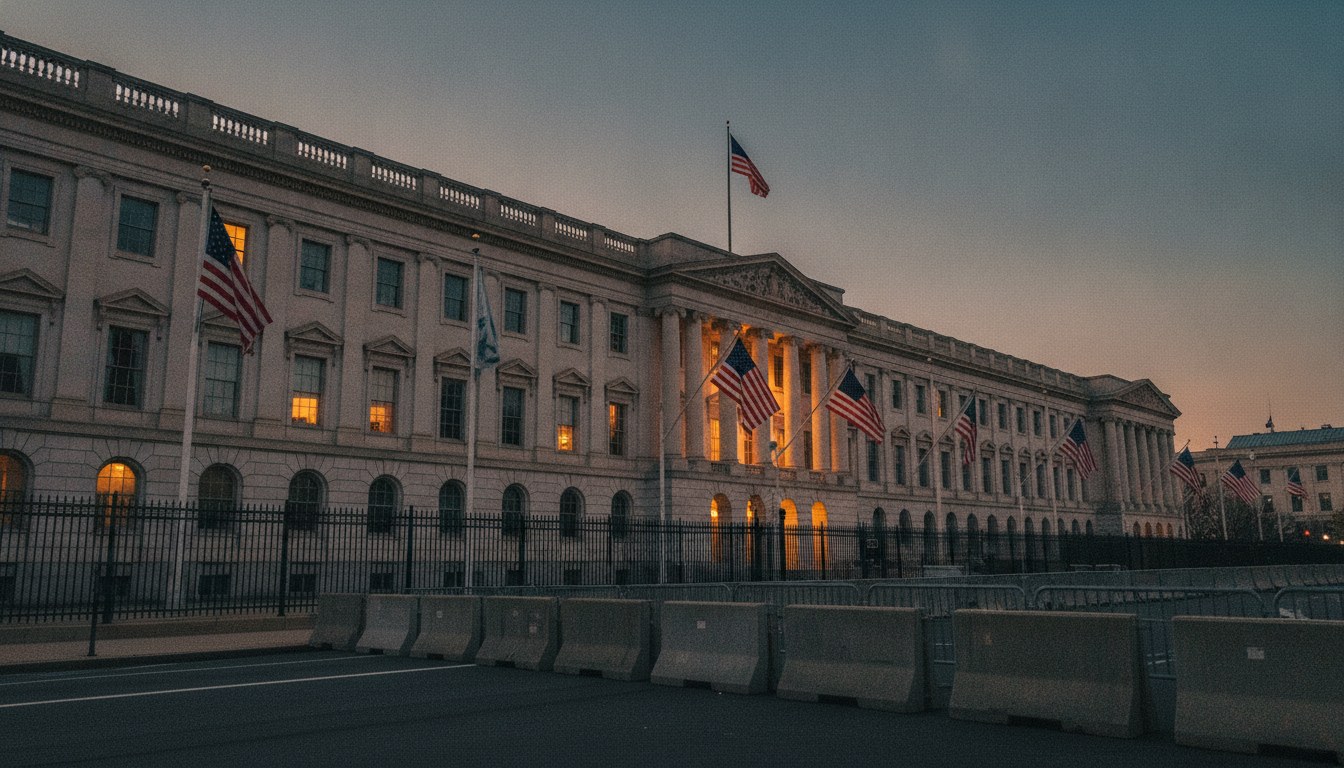
Anthropic is navigating a complicated and uneven landscape of government opinion as its high-profile legal clash with the Department of Defense continues. According to reporting from FedScoop, federal agencies are not speaking with one voice when it comes to the AI safety company's position, with some departments showing openness to Anthropic's arguments while the Pentagon dispute grinds on. The divergence reflects a broader tension inside the federal government over how to handle AI vendors that assert ethical limits on how their technology can be used.
A Battle Over Principles and Procurement
The core of the dispute traces back to Anthropic's insistence on maintaining certain safety conditions in its government contracts, conditions the Defense Department viewed as incompatible with standard supply chain rules. Anthropic's legal fight against Pentagon blacklisting became one of the more visible examples of an AI company drawing a firm line with a major government client, rather than quietly adapting to procurement demands. That posture has drawn admiration in some quarters of Washington and skepticism in others.
Key Facts
- Anthropic is facing varied reactions across different federal agencies, not a unified government stance.
- The Pentagon dispute centers on AI safety supply chain conditions Anthropic embedded in its contracts.
- Some agencies have shown more receptivity to Anthropic's safety-first framework than the Defense Department.
- The legal battle remains unresolved, keeping uncertainty over Anthropic's federal contracting future.
- The situation is being watched closely as a test case for how AI safety companies engage with government clients.
The split government response is partly a product of how decentralized federal AI procurement actually is. Civilian agencies and defense agencies operate under different pressures and risk tolerances. A health or research agency evaluating an AI vendor may weigh safety restrictions very differently than a branch of the military with operational requirements that demand flexibility. The broader regulatory chaos surrounding AI policy has made it harder for any single framework to govern how companies like Anthropic are treated across the executive branch.
Anthropic's founders have been unusually direct about why they were willing to fight rather than fold, arguing that compromising on safety conditions would undermine the entire premise of building AI responsibly.Dario and Daniela Amodei, public statements

What Diverging Reactions Mean for Anthropic's Federal Strategy
For Anthropic, the mixed signals from Washington create both risk and opportunity. On one hand, agencies that are receptive to its safety framework could become meaningful partners and revenue sources even as the Pentagon case plays out. On the other hand, a prolonged legal dispute with one of the largest government buyers in the world sends a signal to other potential clients that contracting with Anthropic comes with a degree of uncertainty. That reputational calculus cuts both ways: it appeals to buyers who prioritize safety and deters those who prioritize operational flexibility above all else.
The company's leadership has been deliberate in how they have framed the Pentagon fight publicly. Rather than portraying it as an adversarial relationship with government generally, they have positioned it as a disagreement over specific conditions, not a rejection of federal work. Dario and Daniela Amodei explained their reasoning publicly, framing the stand as a necessary defense of the principles that justify building powerful AI in the first place. Whether that message lands with federal buyers beyond the Pentagon remains to be seen.
The broader question this situation surfaces is whether the federal government will eventually develop coherent, consistent standards for AI procurement that account for safety conditions vendors may want to impose. Right now, the absence of that consistency means companies like Anthropic are negotiating agency by agency, case by case. That is an expensive and unpredictable way to build a government business, and it may push some AI companies to simply avoid the complexity altogether. For Anthropic, walking away from federal work entirely has never appeared to be the preference, but the path forward requires some resolution of a dispute that has already lasted longer than many expected.
“When AI safety principles collide with procurement bureaucracy, organisations cannot afford to wait for resolution. Map your AI vendor dependencies now, because contracts built around a single federal relationship are strategic liabilities in this climate.”
Leon Tindemans, AI expert and entrepreneur specialising in Claude, Copilot and ChatGPT. Learn more with the AI training programmes by TTM Communicatie.


