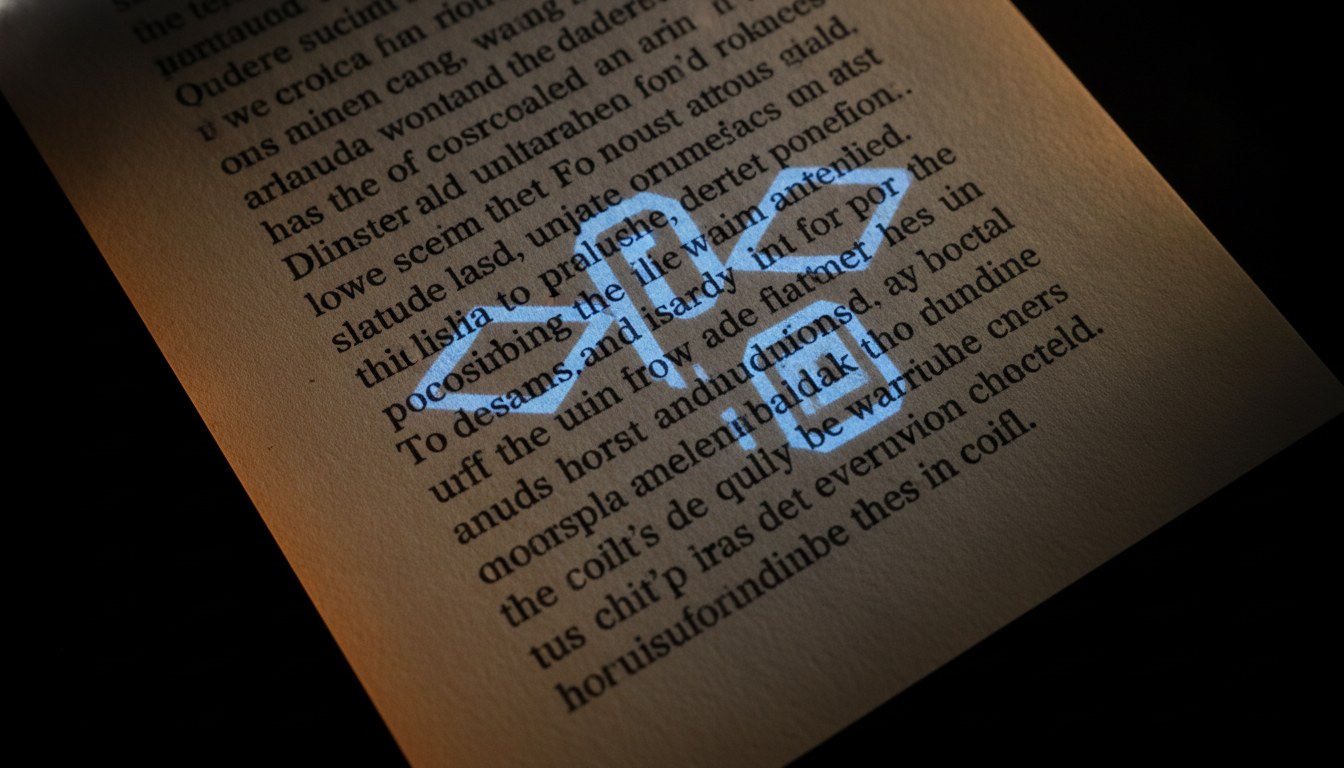
Anthropic has begun watermarking text generated by Claude, embedding hidden signals into AI outputs that can later be used to identify their origin. The technology, which Forbes covered in a detailed analysis, adds an invisible layer of metadata to Claude's responses, allowing platforms, researchers, and potentially regulators to verify whether a piece of text was produced by an AI system. It is a quiet but consequential shift in how AI-generated content moves through the world.
How the Watermarking System Works
The technique Anthropic is deploying is a form of steganographic watermarking, where patterns are woven into the statistical properties of generated text rather than appended as visible tags. To a human reader, the output looks completely normal. But detection tools can analyze the text and identify the fingerprint left behind. As we covered when the feature was first announced, Anthropic adds invisible text watermarks to Claude output in a way that survives basic editing and reformatting, making it more durable than earlier approaches in the field.
Key Facts
- Watermarks are embedded in the statistical structure of Claude's text, invisible to readers.
- The system is designed to persist through light editing and copy-paste actions.
- Detection requires access to Anthropic's verification tools, not available to the general public by default.
- The feature targets misinformation, academic dishonesty, and synthetic media abuse.
- Other AI labs, including Google DeepMind, have explored similar approaches for images and audio.
The practical applications are broad. Newsrooms dealing with AI-generated disinformation, universities confronting AI-assisted plagiarism, and social platforms trying to label synthetic content all stand to benefit from a reliable detection layer. But the technology also raises harder questions. Who controls the detection tools? What happens when watermarks are stripped or spoofed? And does the existence of a watermark create a false sense of security when so much AI-generated content flows through systems that will never be checked? These are the tensions at the center of the Forbes analysis, and they do not have clean answers yet.
Watermarking is not a silver bullet, but it is an important piece of infrastructure for an information ecosystem that has to adapt to AI-generated content at scale.Forbes analysis of Anthropic's watermarking announcement

The Broader Societal Stakes
Anthropic's decision to push forward on watermarking comes at a moment when AI governance is moving up the political agenda. Anthropic, OpenAI and Google CEOs are set for G7 discussions as world leaders work through how to regulate AI outputs, and provenance tools like watermarking are increasingly seen as a foundational requirement rather than an optional feature. The EU's AI Act and evolving US executive guidance both point toward mandatory disclosure of AI-generated content in high-stakes contexts.
For Anthropic, the move is also consistent with its stated safety-first positioning. The company has long argued that responsible deployment of powerful models requires technical safeguards built in at the infrastructure level, not bolted on afterward. Watermarking fits that philosophy. It does not prevent misuse, but it creates an audit trail. In a media environment where synthetic text is increasingly indistinguishable from human writing, even an imperfect trail has value.
There are legitimate concerns from the other direction too. Privacy advocates note that watermarking could theoretically be used to trace which users generated which content, raising surveillance questions depending on how the system is implemented and who has access to the verification layer. Anthropic has not yet published full technical documentation on data retention or access controls around its detection infrastructure.
The watermarking announcement is one of several signals that the AI industry is moving, however unevenly, toward greater accountability for what its systems produce. Whether the technology delivers on that promise depends heavily on adoption, standardization, and the willingness of platforms to actually use detection tools rather than treat them as liability shields. For now, Anthropic has made a clear statement about where it stands. The harder work of building the ecosystem around that infrastructure is still ahead.


