Anthropic's internal biology laboratory has produced its first reported scientific discovery, according to coverage from The Rundown AI. The find represents a tangible early output from a facility the company built specifically to test whether AI systems can accelerate biological research, moving the effort from a stated ambition into something more concrete.
What the Lab Is and Why It Exists
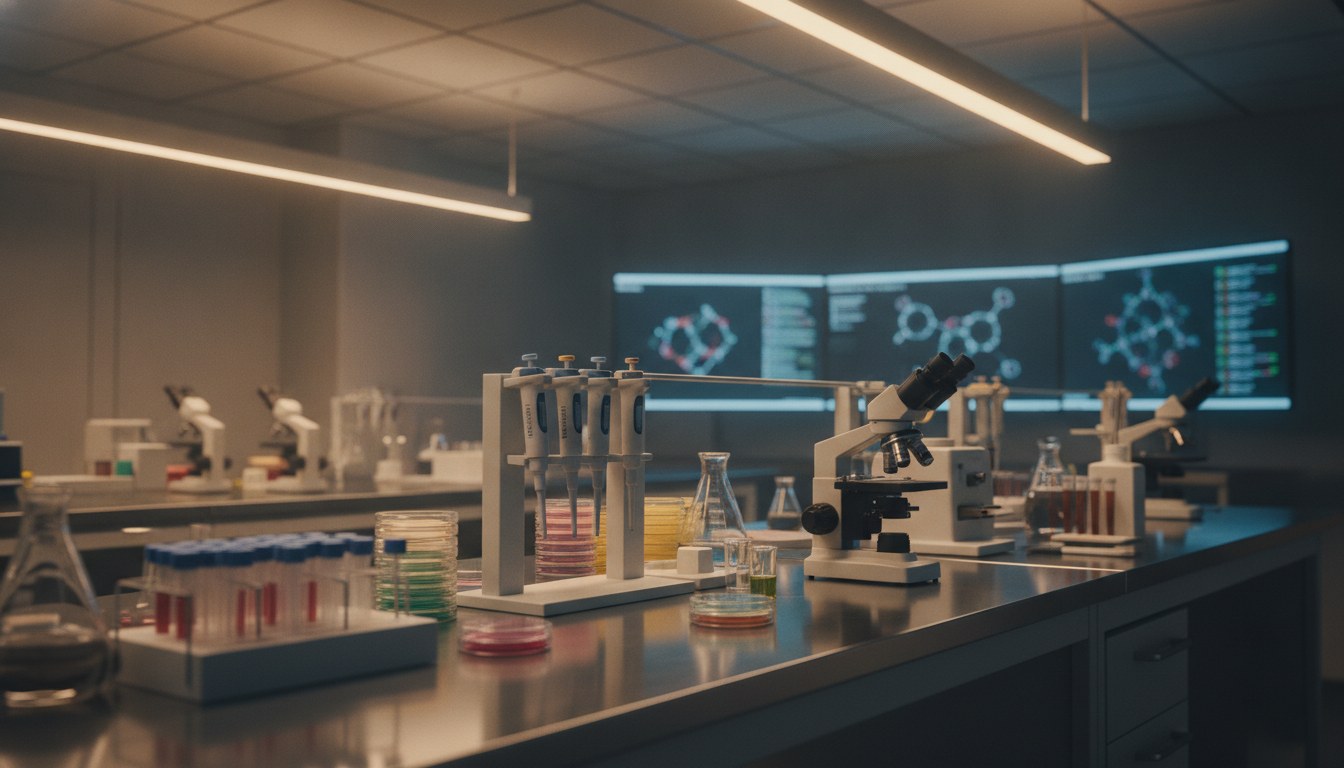
Anthropic opened the biology lab as a dedicated wet lab environment where researchers could put AI-generated hypotheses directly to experimental test. The facility was designed to close the loop between AI reasoning and physical lab work, a gap that has long made it difficult to assess how much AI actually contributes to scientific progress versus simply summarizing existing literature. Coverage of Anthropic's wet lab facility earlier this year detailed the rationale: if an AI system proposes a biological mechanism, scientists on-site can run the experiment and check whether the prediction holds up.
Key Facts
- Anthropic's biology lab has completed its first reported discovery since opening.
- The lab pairs AI reasoning with hands-on wet lab experimentation.
- The find has drawn comparisons in some outlets to the significance of CRISPR-class tools.
- Not all observers agree on the discovery's novelty, with at least one scientific publication offering a more cautious read.
- The result adds pressure on competing AI labs to show similar applied science outputs.
The nature of the discovery has been described in broad terms across several outlets. Some reports framed the find as a potential gene-editing related advance. Comparisons to CRISPR appeared in early coverage, though those characterizations came with caveats from researchers outside the company. The significance of any single lab result depends heavily on reproducibility and independent validation, neither of which has been established publicly yet.
The question was never whether AI could generate interesting biological hypotheses. The question is whether those hypotheses survive contact with actual biology.Independent biology researcher, quoted in coverage of the lab's opening

Skepticism Alongside the Excitement
Not every outlet received the news with enthusiasm. New Scientist's assessment was notably more restrained, with the publication suggesting the discovery may amount to another incremental gene-editing tool rather than a category-defining advance. That kind of pushback is standard in science journalism and doesn't invalidate the result, but it does underscore that the gap between a lab announcement and a peer-reviewed, replicated finding can be wide.
Anthropic has been deliberate about framing the biology program as a long-term investment rather than a quick pivot. The company's core product remains its Claude model family, and the lab work is positioned as an application layer built on top of those AI capabilities rather than a separate business line. Whether the lab produces findings that translate into clinical or commercial value will take years to assess.
For now, the first reported discovery gives the program something it lacked before: a proof of concept. The lab was a bet that combining AI with real experimental infrastructure could compress timelines in biological research. One early find doesn't confirm or deny that bet, but it does mean the project has moved past the stage of pure hypothesis. Researchers and observers watching the space will be waiting to see whether the lab can maintain output, and whether outside scientists can replicate what the team has found.