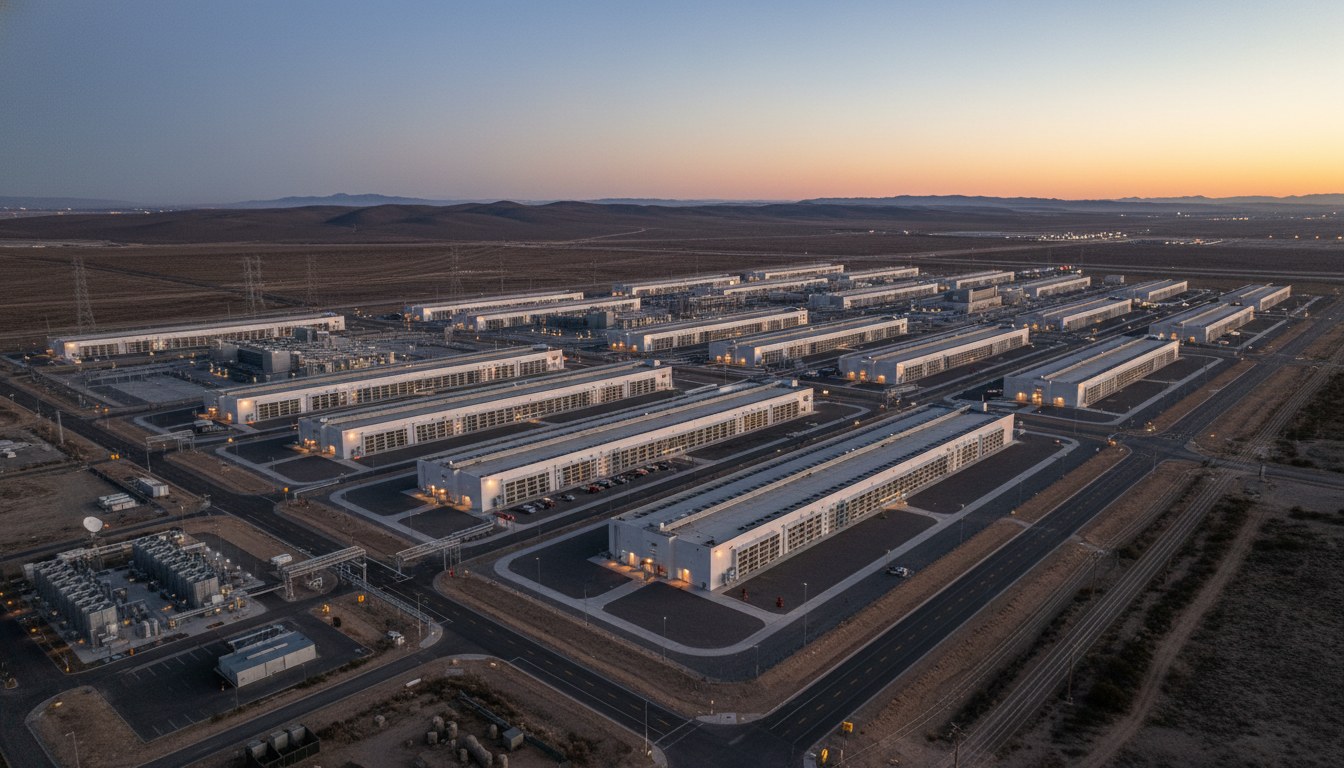
The competitive landscape of frontier AI has always been fluid, but few developments illustrate that fluidity quite like the relationship between xAI and Anthropic. The two companies spent years positioning themselves as rivals in the race to build the most capable AI systems. Today, according to a report from The Information, xAI's Colossus supercluster is effectively powering Anthropic's model training operations, representing a shift that few in the industry anticipated.
From Rivalry to Infrastructure Partner
The story tracks how Elon Musk's xAI built out Colossus, its Memphis-based supercluster, with the original ambition of giving Grok a decisive compute advantage over competitors including Anthropic. That ambition has not disappeared, but the economics of running one of the world's largest GPU clusters created a separate incentive: monetizing spare capacity. Anthropic, facing its own scaling demands, became a significant customer. The arrangement is not a small one. A SpaceX IPO filing revealed that Anthropic pays xAI roughly $1.25 billion a month for access to Colossus compute, a figure that underlines just how capital-intensive frontier AI development has become.
Key Facts
- xAI built Colossus in Memphis with the goal of accelerating Grok's development
- Surplus compute capacity opened a revenue opportunity with rivals including Anthropic
- Anthropic's monthly payments to xAI are reported at approximately $1.25 billion
- The deal highlights the separation between AI model competition and underlying infrastructure markets
- Both companies continue to develop competing frontier models independently
The scale of that financial commitment reflects a broader reality in AI: training costs have grown so large that even well-funded labs cannot afford to build and run all the infrastructure they need on their own. Google's commitment of up to $40 billion to Anthropic was partly designed to ensure the company had access to TPU compute through Google Cloud. The xAI deal suggests Anthropic is pursuing a multi-supplier strategy rather than relying on any single provider, which makes strategic sense given the volatility in GPU availability over the past two years.
The arrangement is striking precisely because xAI was built to beat Anthropic. Instead, it ended up billing them.The Information

What the Deal Means for the Broader AI Race
Analysts tracking the AI infrastructure market will find the dynamic familiar. Compute has become a commodity layer sitting beneath the model competition, and the companies that built the largest clusters early have found themselves with a sellable asset regardless of how their own models perform. xAI's position as a supplier does not reduce the intensity of the model-level rivalry. Grok and Claude's model family continue to compete for enterprise customers, developers, and consumer users. What the arrangement does is add a financial interdependency that neither company has fully advertised.
For Anthropic, the optics are complicated. The company has consistently emphasized its independent, safety-focused mission, and a deep financial relationship with a company led by Elon Musk introduces questions about alignment and leverage that its leadership will need to address. At the same time, the practical need for compute is not optional. Training frontier models at competitive scales requires the kind of hardware that only a handful of clusters in the world can provide. Anthropic's leadership appears to have concluded that the infrastructure is fungible even when the values of the provider are not.
The story of how xAI went from chasing Anthropic to powering it is, in many ways, a story about how AI development actually works in 2025. Model quality, safety research, and product execution still matter enormously. But underneath all of it sits a physical layer of chips, power contracts, and cooling infrastructure, and whoever controls that layer holds a different kind of power entirely. For readers following the latest Claude AI news, this deal is a reminder that the competitive picture extends well beyond benchmark scores and product releases.


