Pope Leo XIV's first encyclical, released on May 25, has opened a visible fault line inside the Trump administration. Two days after the Vatican document landed alongside Anthropic co-founder Christopher Olah, the most prominent members of the administration have offered readings so different they might be describing separate texts.
A Split Inside the Administration
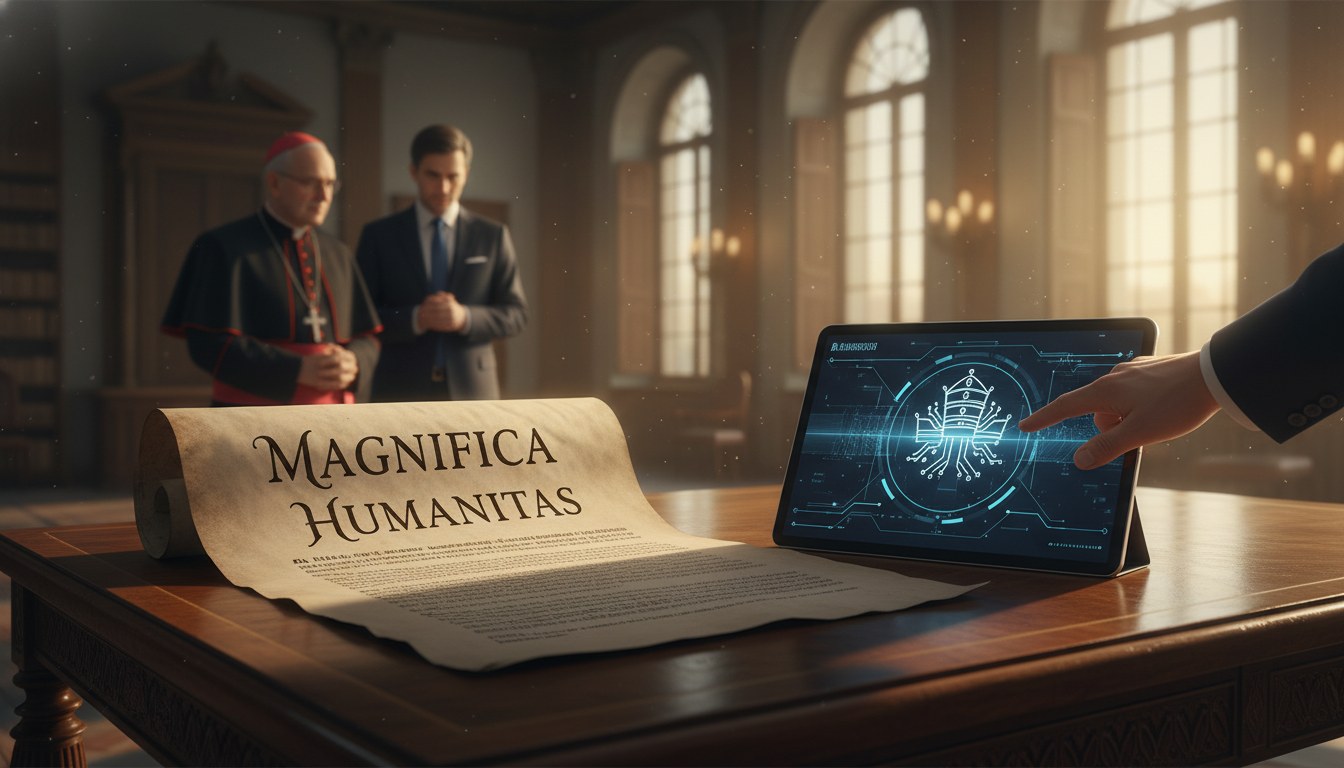
Interior Secretary Doug Burgum went on Fox Business to push back. Describing data centers as "positive for humanity," Burgum questioned whether "tech editorializing" was part of the role of being pope. He was responding to "Magnifica humanitas," a roughly 40,000-word document in which Leo XIV called for AI to be "disarmed," warned of machines spreading misinformation and prioritizing conflict, and urged that AI data ownership not be left solely in private hands. To Burgum, this read as unwelcome interference in a domain where the administration has worked to roll back regulation.
Vice President JD Vance took a different view. Speaking with NBC News, he described the portions of the encyclical he had read as "very profound," noting that the document raised questions about workforce skills and the ethics of autonomous warfare that deserved serious attention. The gap between Burgum's dismissal and Vance's appreciation was not a matter of emphasis. The two men were responding to the same document with opposite signals, and both are senior voices in an administration that has positioned AI deregulation as a priority.
Key Facts
- Encyclical titleMagnifica humanitas: On safeguarding the human person in the time of artificial intelligence
- ReleasedMay 25, 2026
- Anthropic representativeChristopher Olah, co-founder
- Document lengthApproximately 40,000 words
- Burgum's responseData centers are "positive for humanity"; questioned tech editorializing by clergy
- Vance's responseCalled the encyclical "very profound"

Anthropic's Calculated Position
Olah's appearance at the Vatican was not incidental. Seated among a row of cardinals and theologians in a packed Vatican auditorium, Anthropic's co-founder called on religious communities, civil society organizations, scholars, and governments to act as a check on AI development. He argued that AI development is "concentrated in a handful of wealthy nations" and that the church's voice is needed to ensure the gains are "shared globally." The appearance was framed by Anthropic as part of a broader effort to widen the conversation on frontier AI beyond Silicon Valley and Washington.
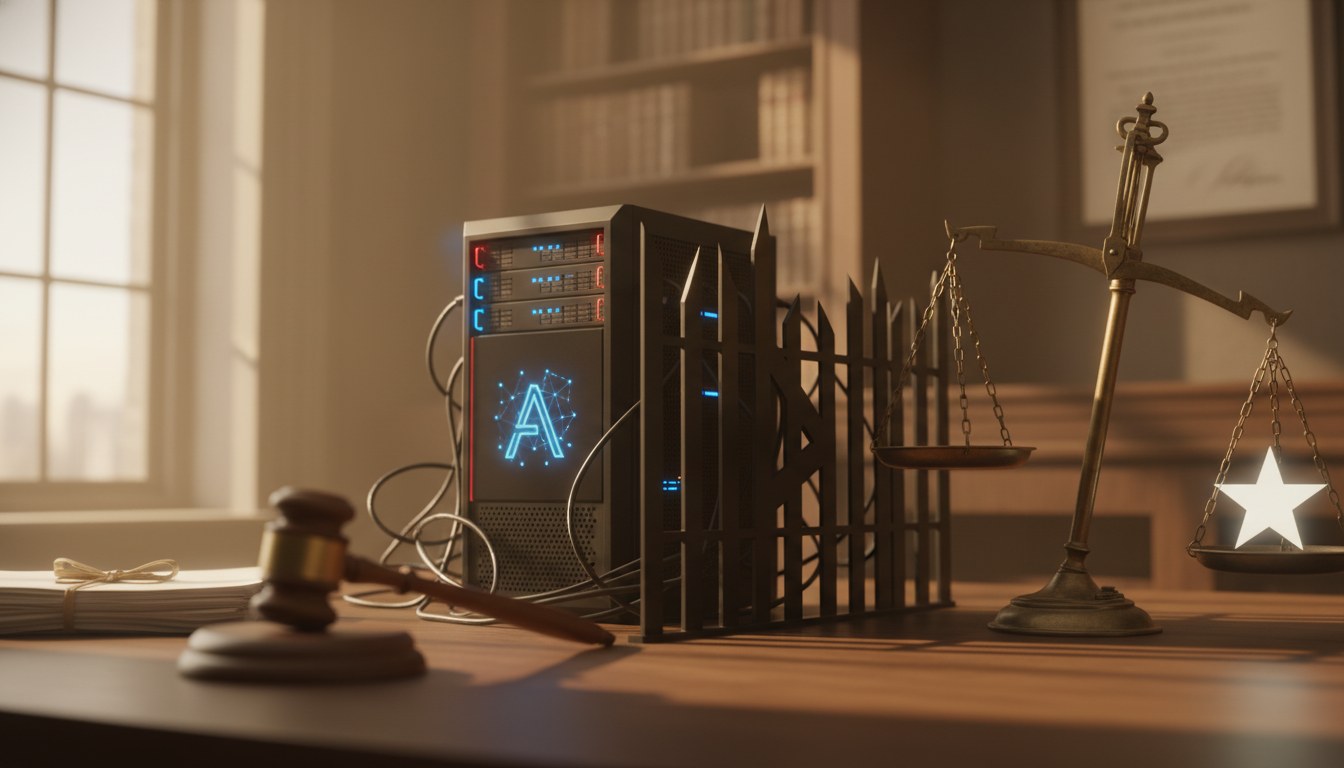
The positioning carries real strategic weight. Anthropic has been in an active legal dispute with the Department of Defense since March, after refusing to grant the Pentagon unrestricted access to Claude across all lawful purposes. A federal appeals court in Washington is currently considering the case, with one judge already describing the Pentagon's designation of Anthropic as a national security supply-chain risk as "a spectacular overreach." Joining the Vatican's AI-skeptical platform while that case works through the courts places Anthropic firmly on the side of those who see meaningful governance as compatible with innovation, and at odds with the administration's looser approach.
"Anthropic might be making a sensible choice to side with the AI-skeptical Vatican over AI boosters in and out of the White House." The Washington Post, May 25, 2026
Political Stakes
The Vance-Burgum split creates its own complications for the administration. Catholic voters were a significant part of Trump's coalition in the 2024 election, and midterm positioning is already in view. An encyclical that calls for robust AI regulation, issued by a pope who has become a notable presence in global governance conversations, is not a document senior officials can dismiss without cost in those communities. Vance's "very profound" comment suggests that at least some in the White House understand that.
Anthropic has been cultivating relationships with religious and ethical thinkers for some time, and the Vatican collaboration has been months in the making. What the encyclical has done is force a public reckoning with the question Anthropic has been posing privately: who, beyond the companies and their paying customers, gets a voice in how AI systems are built and deployed? The administration's fractured response suggests that question does not yet have a clean answer inside the White House either.
For Anthropic, the Vatican appearance follows a pattern that has defined the company since its founding. Every major governance question has produced the same answer: accept more constraint, accept more scrutiny, and accept the commercial cost. The encyclical itself does not mention Anthropic by name, but the company's co-founder standing at the podium was a choice, and choices at that level carry meaning that extends well beyond a single document launch.