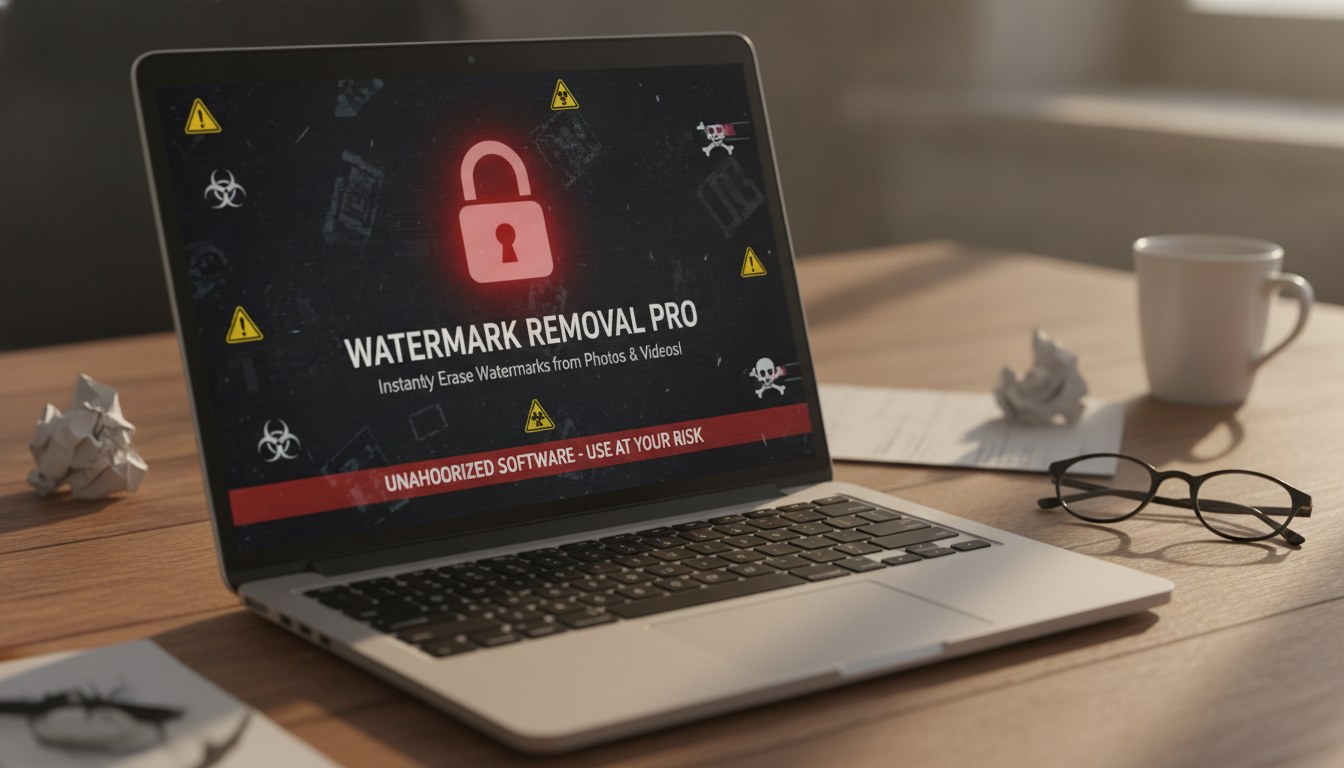
Since Anthropic introduced invisible watermarking for Claude AI outputs, a wave of dubious apps has appeared online claiming to detect or strip those watermarks. According to a Forbes investigation, many of these tools are outright fraudulent, making technical promises they cannot fulfill while charging users for a service that simply does not work as advertised.
The timing is no accident. When Claude began watermarking generated writing invisibly, it created an immediate market anxiety among users who worried about being identified as AI content producers. That anxiety became fertile ground for bad actors moving fast to monetize confusion.
What the Scam Apps Are Claiming
The apps vary in their pitch, but the pattern is consistent. Many promise to scan a piece of text and identify whether a Claude watermark is embedded. Others go further, claiming to remove the watermark entirely so the content appears fully human-written. Security researchers and AI experts quoted in the Forbes report say neither function is technically possible for a third-party app to perform without access to Anthropic's proprietary watermarking keys and methodology. Some of these apps collect payment upfront, return a result that looks plausible, and offer no refund when users later discover the tool did nothing verifiable.
Key Facts
- Multiple third-party apps now claim to remove or detect Claude's invisible watermarks.
- Security experts say third parties cannot access Anthropic's watermarking system without proprietary keys.
- Some apps charge subscription fees for services researchers describe as technically impossible.
- The watermarking rollout targeted both the consumer and enterprise tiers of Claude.
- Anthropic has not publicly commented on the proliferation of these fraudulent tools.
The broader implications of this watermarking rollout have been discussed at length by analysts tracking the AI industry. Anthropic's watermarking approach raises layered questions for society, from academic integrity to journalism to legal liability, and those unresolved questions are part of what the scam ecosystem feeds on. When legitimate use cases remain murky, users are more susceptible to tools that promise simple answers.
"Watermark removal for this class of AI output is not a solved problem for anyone outside the originating company. Apps claiming otherwise are selling false confidence at best and outright fraud at worst."Independent AI security researcher, via Forbes

Why This Moment Was Predictable
The pattern mirrors what happened after other major AI capability announcements. Each time a high-profile feature launches, a secondary market of dubious workarounds tends to follow within days. Anthropic has built its public identity around safety and transparency, but that positioning does not automatically protect users from third-party actors exploiting the company's announcements for profit.
For now, the advice from researchers is straightforward: no consumer-facing app can reliably remove or neutralize a watermark embedded by the model provider itself. Users suspicious of these tools are better served by reading primary documentation from Anthropic directly rather than trusting app store listings that appeared days after a major feature announcement. The Forbes report notes that several of the apps in question had near-perfect ratings built from what appeared to be coordinated fake reviews, adding another layer of deception to an already murky situation.
As watermarking becomes standard practice across AI platforms, regulators and app store operators will face growing pressure to police misleading capability claims. Until that oversight catches up, the burden falls largely on individual users to apply skepticism to any tool promising to undo what a frontier AI lab has engineered into its outputs.