The specific prediction Dario Amodei made at a Council on Foreign Relations CEO Speaker Series event this month was concrete enough to anchor a policy debate: within twelve months, he said, the world may arrive at a moment where AI is "essentially writing all of the code" produced anywhere. Not most code. Not code in limited domains. All of it. The claim is consistent with the trajectory Amodei has tracked inside Anthropic, and it carries weight from someone with more visibility into frontier model development than almost anyone outside a small cluster of competing labs.
The forum mattered as much as the statement. The Council on Foreign Relations is where U.S. policymakers, foreign policy professionals, and corporate leaders meet to shape strategic thinking about issues the government cannot move on alone. Amodei's presence there was a signal that Anthropic views AI governance as a geopolitical question, not just a regulatory one.
The Software Job Question
The twelve-month coding prediction matters for several reasons beyond its headline value. Software development is the sector where AI's commercial impact has already been most visible. Claude Code, Anthropic's AI development tool, drove a broad selloff across enterprise software stocks earlier in 2026 as buyers began questioning how many human developer seats they actually needed. Amodei's CFR statement suggests that process is in early innings rather than late ones.
His concern was less about software jobs per se than about who controls the systems doing the disruption. Amodei has spoken publicly about his discomfort with the concentration of power in AI, a concentration he has described as happening "almost overnight, almost by accident" inside a small number of organizations, including his own. His earlier writing on what AI automation means for white-collar employment suggests he sees the question as genuinely unresolved rather than settled in favor of technological optimism. The CFR audience, which includes people who make policy decisions affecting millions of workers, is precisely the right audience for that framing.

DeepSeek Changes the Calculation
Amodei described DeepSeek as a turning point. In his telling, the Chinese AI laboratory became the first to produce a frontier model with engineering innovations directly comparable to those from Anthropic, OpenAI, or Google. That disrupts an assumption that had given U.S. policymakers some comfort: that American labs maintained a technical lead wide enough to act without urgency on export restrictions.
Key Themes: Amodei at CFR
- Core predictionAI may write essentially all code within 12 months
- On DeepSeekFirst Chinese lab with frontier-comparable engineering
- On power concentration"Almost overnight, almost by accident"
- On export controlsEssential to keep democratic nations at the AI frontier
- AGI timelineLikely 2026-2027; requires millions of chips, tens of billions
- Wealth pledge80% donation commitment with Anthropic's six co-founders
His policy conclusion from DeepSeek is not defeatism. It is that the margin is narrowing faster than the policy apparatus has moved, and that the tools available to slow convergence are limited. Export controls on advanced AI chips, Amodei argued, serve a clear purpose: keeping democratic nations at the forefront of the most capable AI development. Without those controls, the critical transition he described -- systems capable of outperforming almost all humans at almost all cognitive tasks, arriving in the 2026-2027 window and requiring millions of chips and tens of billions of dollars to build -- could shift toward less democratic contexts.
"In 12 months, we may be in a world where AI is essentially writing all of the code." Dario Amodei, Council on Foreign Relations CEO Speaker Series, May 2026
Power, Wealth, and the Responsibility Attached to Both
The CFR appearance is one in a series of public interventions where Amodei has tried to put democratic AI governance on the same level of urgency as capability development. In January 2026, he published a 20,000-word essay warning about personal fortunes "well into the trillions" accumulating in a small number of hands and granting outsize political influence. His pledge, made together with Anthropic's six other co-founders, to donate eighty percent of their wealth was a direct response to that risk as he understood it.
The tension in Amodei's position is visible to anyone paying attention. He leads one of the companies whose growth is accelerating the very concentration he warns about. Anthropic's $30 billion annualized revenue run rate and in-progress fundraise at a $900 billion valuation make the company a significant contributor to the phenomenon. Amodei has addressed this directly in other venues, arguing that the alternative is ceding the frontier to actors less committed to safety and governance.
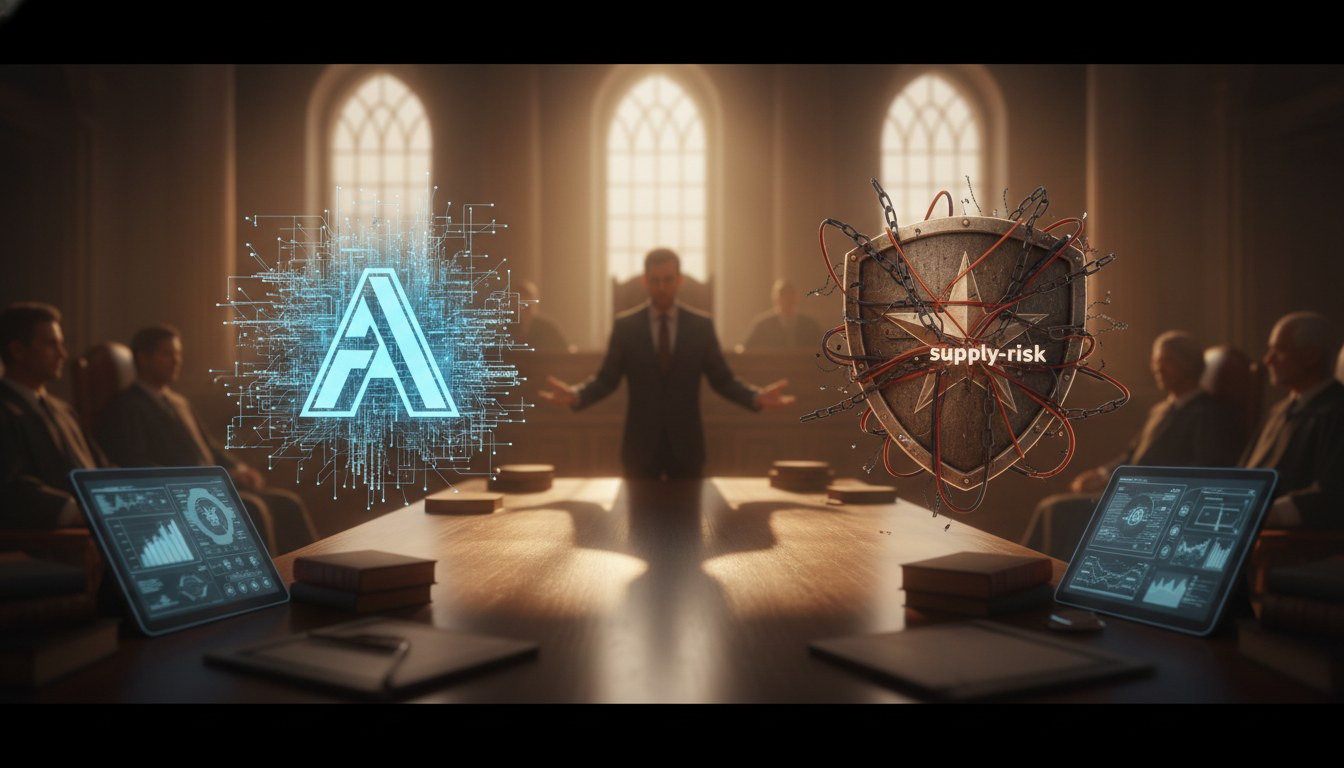
Anthropic's ongoing legal dispute with the Pentagon over a supply-chain risk designation adds another layer to the picture. The company has been fighting a government-wide ban on Claude AI purchases while simultaneously arguing, at CFR, that the U.S. government and AI companies should be working toward shared goals. For more on that legal battle, see our earlier coverage of the appeals court proceedings. The contradiction is genuine and Amodei has not resolved it in any public forum. What he has done, by showing up at CFR, is indicate that Anthropic intends to be part of the conversation rather than merely a subject of it.