On May 8, 2026, Daniela Amodei, Anthropic's president and co-founder, appeared at Stanford Graduate School of Business for the school's "View From The Top" speaker series. Her main message, delivered without the hedging common in discussions about AI's future, was direct: the tension between building a successful AI business and doing good for the world is a false choice. The two reinforce each other, she argued. The packed room seemed to agree.
Safety as an Active Commitment
Amodei defined AI safety in terms that push back against the industry's tendency to treat it as a constraint imposed from outside. For Anthropic, she said, safety is "a form of radical responsibility for the technology that we're developing." That framing positions safety not as a limit on what Claude can do, but as a proactive obligation to understand and manage the technology's effects before they become visible to users.
The scope of that commitment is wide. Anthropic's safety work spans both the high end of risk, AI systems potentially assisting in weapons development, and everyday product decisions around child safety, misinformation, and user wellness. When an audience member asked whether safety and revenue growth are in tension, Amodei pushed back. "Most businesses are not looking to have models that are unsafe," she said. "It's actually really good for business to be safe." She acknowledged a newer tension, though: as models grow more capable, the pace of deployment raises questions that policy frameworks alone cannot resolve.
Key Points from Stanford GSB
- EventStanford GSB "View From The Top," May 8, 2026
- Amodei's safety framing"A form of radical responsibility"
- Safety scopeWeapons risk, child safety, misinformation, user wellness
- AI economic index findingAI primarily complements work, not replaces it
- Predicted job shiftCoding declines; interpersonal skills gain value
- Amodei's degreeEnglish literature, Stanford, 2009

What AI Actually Does to Work
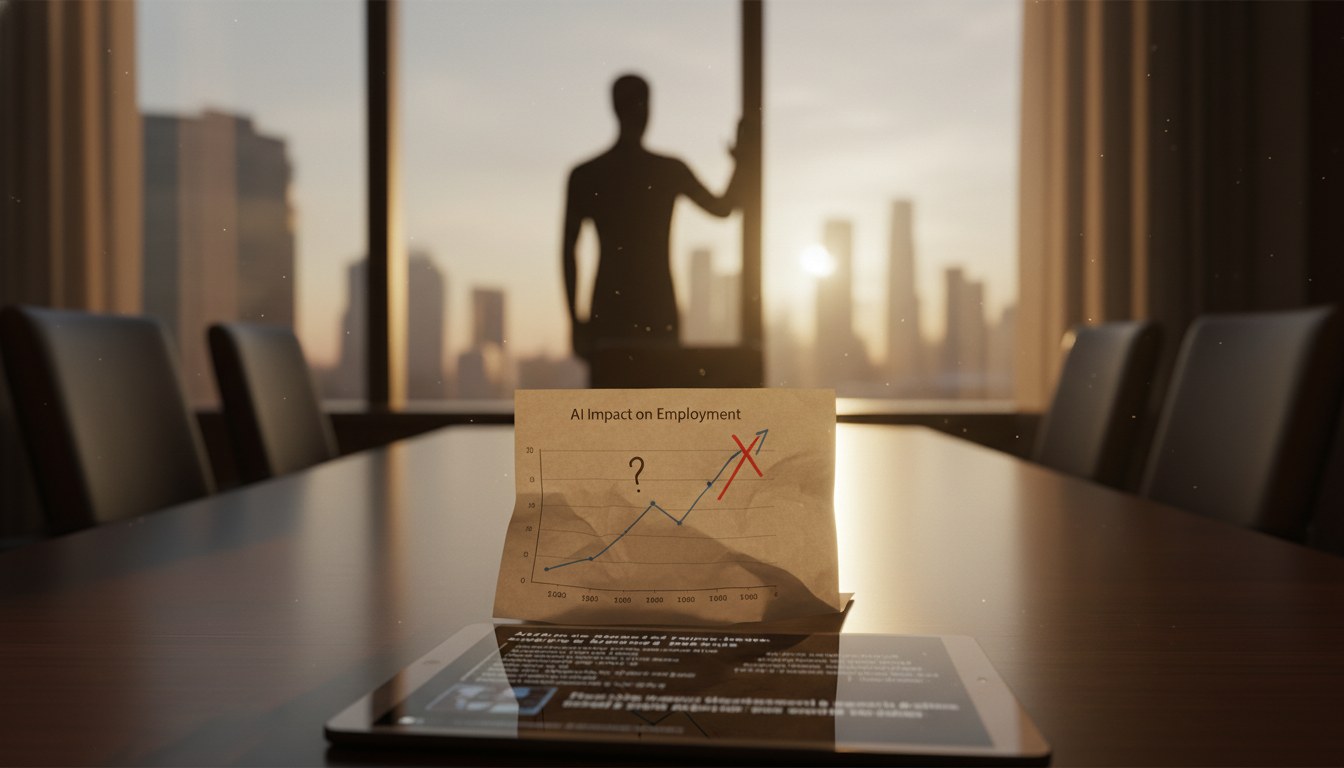
One of the persistent debates around AI is whether it displaces workers or augments them. Amodei offered a grounded answer, pointing to Anthropic's own economic index, which tracks how people use AI tools in practice. The data shows AI operating as a complement to human work rather than a replacement for it. That aligns with what many enterprise deployments have found: Claude tends to make workers more efficient rather than reduce headcount.
Her one specific job forecast cut against common assumptions. Coding as a standalone skill will likely matter less as AI models continue to improve at generating and debugging code. Interpersonal skills, the ability to navigate complex organizational situations, manage client relationships, and lead teams through uncertainty, will become more valuable. The logic is that AI is improving faster at pattern-based technical work than at the judgment-intensive dimensions of human interaction. Dario Amodei addressed similar questions from a different angle earlier this month, exploring whether aggregate demand for human work will grow even as individual tasks become automated.
"This concept that being in business doesn't have to be in tension with doing good, I think that is a very new idea and I think it is really special." Daniela Amodei, Stanford GSB "View From The Top," May 8, 2026
An Unusual Path to the Center of AI
Amodei's background is not the standard profile for a technology executive. She graduated from Stanford with an English literature degree in 2009 and spent years in operations and business roles before co-founding Anthropic with her brother Dario and five colleagues. She admitted that in 2009, she had the anxiety many humanities graduates feel: "I had a strong desire to make the world a better place," but worried about what employers would make of that background. The concern turned out to be unfounded. The analytical and communicative skills built through literary study, she suggested, are among the least replicable by AI, a point that connects directly to her advice on which skills to develop now.
Her advice for co-founder selection was practical: go on a trip together before committing. If the other person drains your energy in that setting, they are the wrong choice regardless of their technical credentials. The vacation test she proposed is simple, she said, but reliable, because sustained time together outside of work reveals how people actually operate under conditions that remove professional performance.
The TIME 100 recognition that Dario and Daniela Amodei received earlier this year placed both siblings in the Innovators category, reflecting Anthropic's influence on the direction of AI development. The Stanford appearance gave Daniela Amodei space to articulate the values driving that influence on her own terms, outside the context of product announcements and investor relations. Her argument, that doing good and doing well are compatible and mutually reinforcing, ran through every answer she gave. It will be worth revisiting as AI models become more capable and the choices labs make about deployment and responsibility become more consequential.