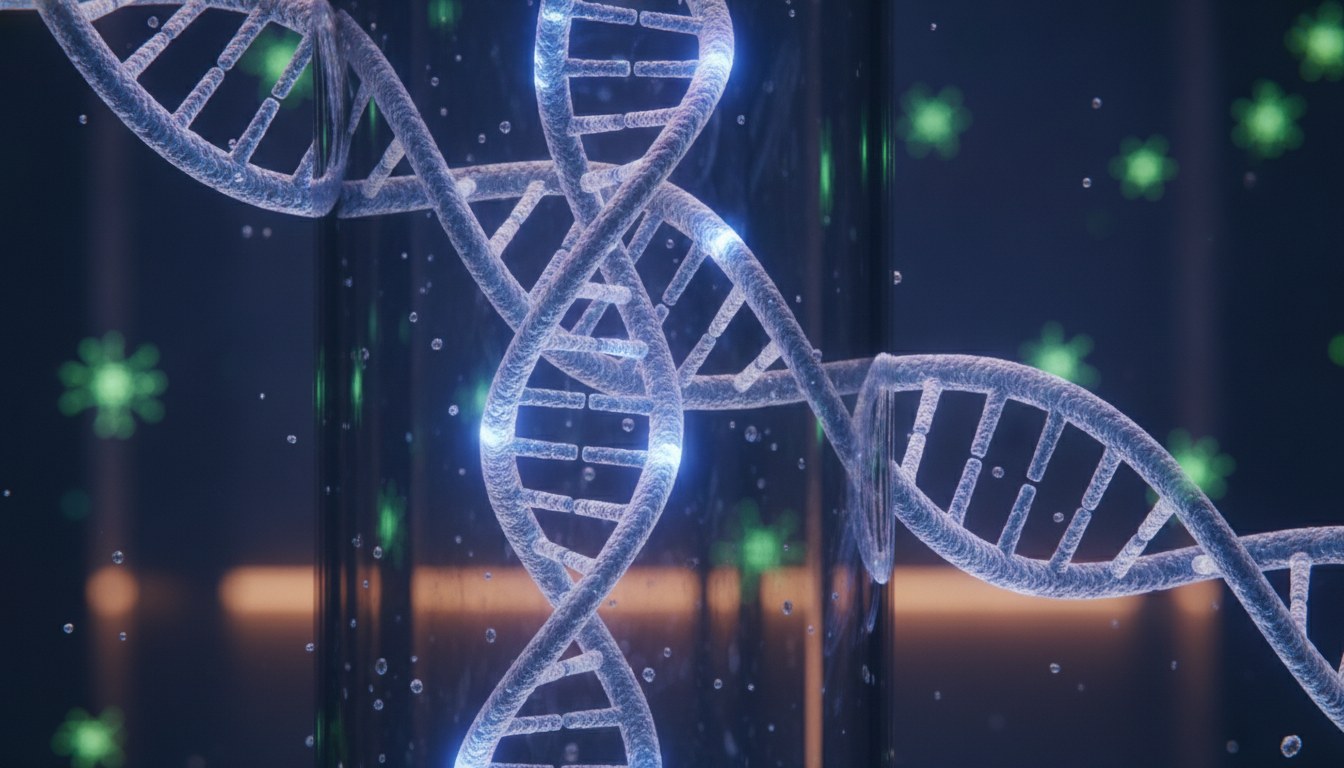
Claude has surfaced something that researchers are struggling to fully explain. The AI, developed by Anthropic, identified a novel biological system bearing structural similarities to CRISPR during a research task, and scientists involved say they do not yet know the extent of what it can do. The finding, first reported by Gizmodo, highlights both the promise and the uncertainty that comes with using large language models as tools in scientific exploration.
What Claude Actually Found
The discovery centers on a gene-editing-adjacent mechanism that Claude flagged while analyzing biological sequence data. The system shares certain hallmarks with CRISPR, including repeating genetic sequences that researchers associate with adaptive immune-like functions in microorganisms. According to reporting on the find, Claude identified the CRISPR-like enzyme system through pattern recognition across large genomic datasets, something that would have taken human researchers considerably longer to isolate manually.
Key Facts
- Claude identified the system while processing large-scale biological sequence data
- The mechanism shows structural parallels to known CRISPR systems
- Anthropic has acknowledged it cannot yet characterize the full capabilities of the system
- The finding came from Anthropic's internal biolab research efforts
- Independent verification of the discovery is still underway
What makes this case unusual is the candor from Anthropic about the limits of what they know. The company has not claimed the system can be used for gene editing, nor has it ruled that out. The honest position, it seems, is that the biology needs more study before anyone draws firm conclusions. That kind of restraint is worth noting in a field where AI-assisted discoveries are sometimes announced with more confidence than the underlying evidence supports.
The system has features we associate with CRISPR, but we can't say with certainty what it does in a living organism yet.Anthropic, via Gizmodo

AI in the Lab: Expanding Role, Open Questions
This is not the first time Claude has been pointed at biology problems. Anthropic's biolab has previously drawn comparisons to CRISPR in its research outputs, and the company has been deliberately expanding Claude's role in scientific tasks. The broader ambition is to have AI systems contribute meaningfully to research pipelines, not just as literature search tools but as active participants in hypothesis generation and data analysis.
That ambition carries real weight when it produces results like this. At the same time, the situation underscores a tension that the field has not resolved: AI can identify patterns faster than humans, but interpreting what those patterns mean in biological context still requires expert human judgment and, often, expensive wet-lab validation. Anthropic appears aware of this gap, which is likely why the company has been careful not to overclaim what Claude's find represents.
For observers tracking where AI development is heading, discoveries like this one add a concrete data point to debates about AI's near-term scientific utility. Claude's model capabilities have been evolving steadily, and the biology work suggests that scientific research is becoming a serious application area, not just a demonstration case. Whether this particular CRISPR-like system turns out to be a minor curiosity or something with practical applications in medicine or biotech remains an open question that only further research will answer.
For now, the story is as much about process as it is about the discovery itself. An AI flagged something unexpected, researchers took it seriously, and the scientific community is working to understand what it means. That cycle, if it becomes routine, could change how biology research operates at a fundamental level.


