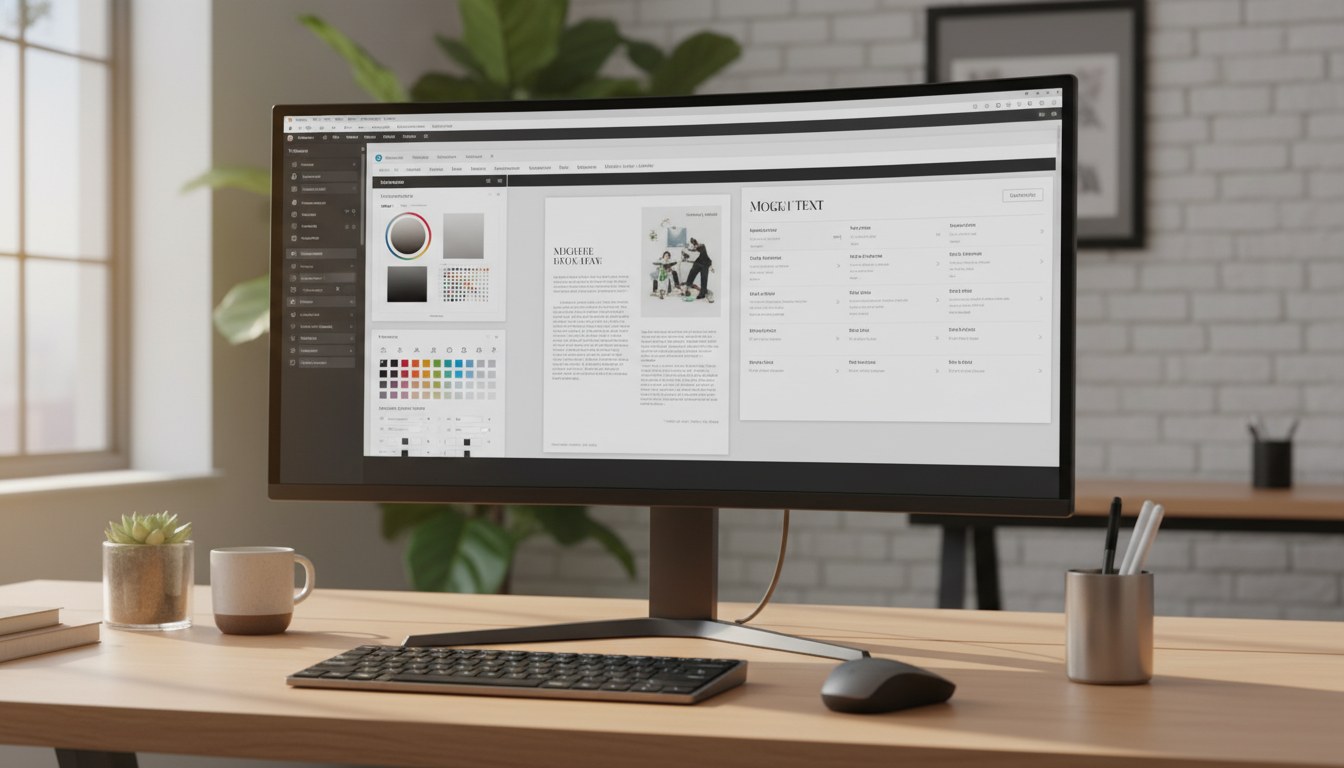
Anthropic has a habit of quietly shipping features that take a few days to fully register with users. Claude Design appears to be the latest example. Reviewers at XDA are calling it the best thing Anthropic has launched in quite some time, and the user response has largely backed that up. Still, a closer look reveals a set of limitations that could frustrate the very people most eager to use it.
What Claude Design Actually Does
Claude Design is aimed at users who want more control over how Claude presents and formats its outputs, bringing a layer of visual and structural customization that the platform previously lacked. It allows for tighter configuration of how responses are shaped, making it more practical for design-adjacent workflows, content production, and interface prototyping. For professionals who have been working around Claude's formatting defaults, the feature addresses a genuine gap. The Claude model family has always been strong on reasoning and language quality, but output presentation has been a consistent sticking point for power users.
Key Facts
- Claude Design is available to Claude users through Anthropic's standard interface
- The feature focuses on output formatting and visual structure customization
- XDA reviewers rate it among Anthropic's strongest recent product launches
- Limitations include restricted access tiers and gaps in certain use cases
- The release builds on Anthropic's ongoing push to improve practical usability
The timing is notable. Anthropic has been under pressure to translate its research pedigree into features that compete on a product level with rivals. The company's Series F funding gave it the runway to build more aggressively, and Claude Design reads as part of that broader effort to close the gap between raw model capability and day-to-day utility.
"Claude Design is the best feature Anthropic has launched in a while, but the limitations are real enough that they affect whether it actually solves the problem for most users."XDA review
Where It Falls Short
The XDA writeup does not pull punches on the weaknesses. Access appears to be tiered in ways that limit who can actually use the full feature set, which is a recurring frustration with Anthropic's rollout strategy. Certain design configurations also lack the depth or flexibility that more advanced users would expect. For casual users, these gaps may not register. For the professional or developer audience that would benefit most from Claude Design, they are hard to ignore.
There are also questions about how well the feature integrates with existing workflows outside of Anthropic's own interface. Third-party tool users and API-dependent teams may find that the most appealing parts of Claude Design do not carry over cleanly into their setups. That is a meaningful constraint given how much of Claude's actual usage happens outside the native product.
The broader context matters here. Anthropic's approach to Constitutional AI has always prioritized safety and alignment, sometimes at the cost of moving slower on product features. Claude Design suggests the company is recalibrating that balance, at least in part. Whether this feature marks a genuine shift in product velocity or is a one-off bright spot remains to be seen. The early reception is strong enough to warrant watching closely. The limitations are real enough to keep expectations in check.
For users already in the Claude ecosystem, Claude Design is worth exploring. For those evaluating whether to adopt Claude for design-oriented work, the feature is a step in the right direction but probably not yet a decisive one. The potential is visible. The execution still has room to grow.