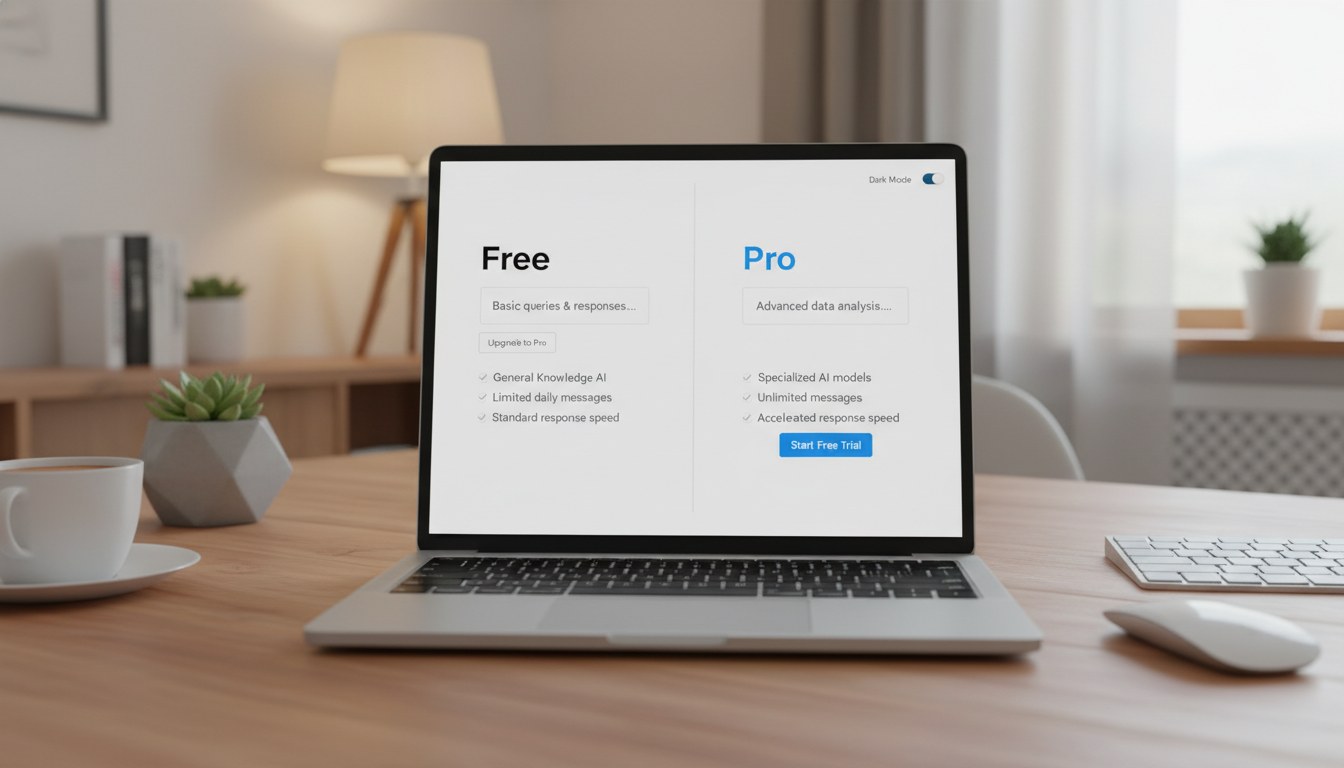
Anthropic has refined its Claude AI pricing structure considerably over the past year, and for anyone trying to figure out what they can access without opening their wallet, the picture is now clearer but also more restricted. The free tier remains available at claude.ai, but tighter usage caps and the arrival of more capable models have pushed more serious users toward paid plans.
What Free Users Get in 2026
Free accounts can access Claude through the web interface and mobile apps with no subscription required. The catch is daily message limits that kick in quickly during heavy use. Free users are typically served by a lighter version of the model, with access to the full Claude's model family gated behind paid plans. Features like extended context windows, priority access during peak hours, and the ability to create Projects are reserved for paying subscribers. File uploads are permitted on the free plan, but the number of documents processed per session is capped.
Key Facts
- Free tier available at claude.ai with daily usage limits
- Claude Pro costs $20/month for individuals
- Pro unlocks priority access, larger context, and Projects
- Claude for Work (Teams/Enterprise) starts at higher per-seat pricing
- API access is billed separately and not included in any consumer plan
- Free users receive access to a limited model variant, not the flagship release
The Pro plan at $20 per month has been the entry point for power users since its introduction, and that price has held steady. Pro subscribers get substantially higher message limits, access to the most capable available model, and features designed for longer, more complex work sessions. Anthropic has also been expanding Pro to include early access to experimental features before they roll out broadly. It's worth noting that Anthropic has pledged Claude will remain ad-free, meaning the free tier is supported by conversion to paid plans rather than advertising revenue.
The goal is to make the free experience genuinely useful while ensuring that users who depend on Claude for serious work have a path to reliability and performance.Anthropic, product documentation

Teams, Enterprise, and the API Layer
Beyond individual plans, Anthropic offers a Teams tier aimed at small businesses and collaborative workgroups, with per-seat pricing and shared administrative controls. Enterprise contracts scale further, with custom context limits, compliance features, and dedicated support. These are separate from the consumer subscription stack entirely. The API, which developers use to build Claude into their own products, operates on its own usage-based billing system. Anthropic separated agent SDK billing from subscriptions starting June 15, a move that clarified costs for developers building agentic workflows but added complexity for teams managing multiple billing lines.
For context on where this pricing strategy fits in the broader competitive picture, Anthropic and OpenAI are in a tight revenue race heading toward their respective IPOs, and subscription growth is a key metric for both companies. Expanding paid tiers while keeping a functional free option is a balance Anthropic has to maintain carefully to grow its user base without alienating cost-conscious users who may eventually convert.
Is the Free Tier Worth Using?
For casual users, the free plan covers a reasonable range of tasks including writing assistance, answering questions, summarizing documents, and basic coding help. The limitations become noticeable during longer sessions or when working on projects that require sustained back-and-forth over hours. Users who hit the daily cap frequently will find the Pro upgrade hard to avoid. For students, occasional writers, or people exploring what Claude can do, free access is a legitimate starting point. For anyone relying on it as a daily productivity tool, the math on $20 a month tends to work out quickly.
Anthropic has not announced any changes to free tier access that would further restrict capabilities in the near term, though the company's pricing architecture has historically shifted as new models launch. Keeping an eye on the product changelog is advisable for anyone whose workflow depends on current free-tier features remaining intact.


