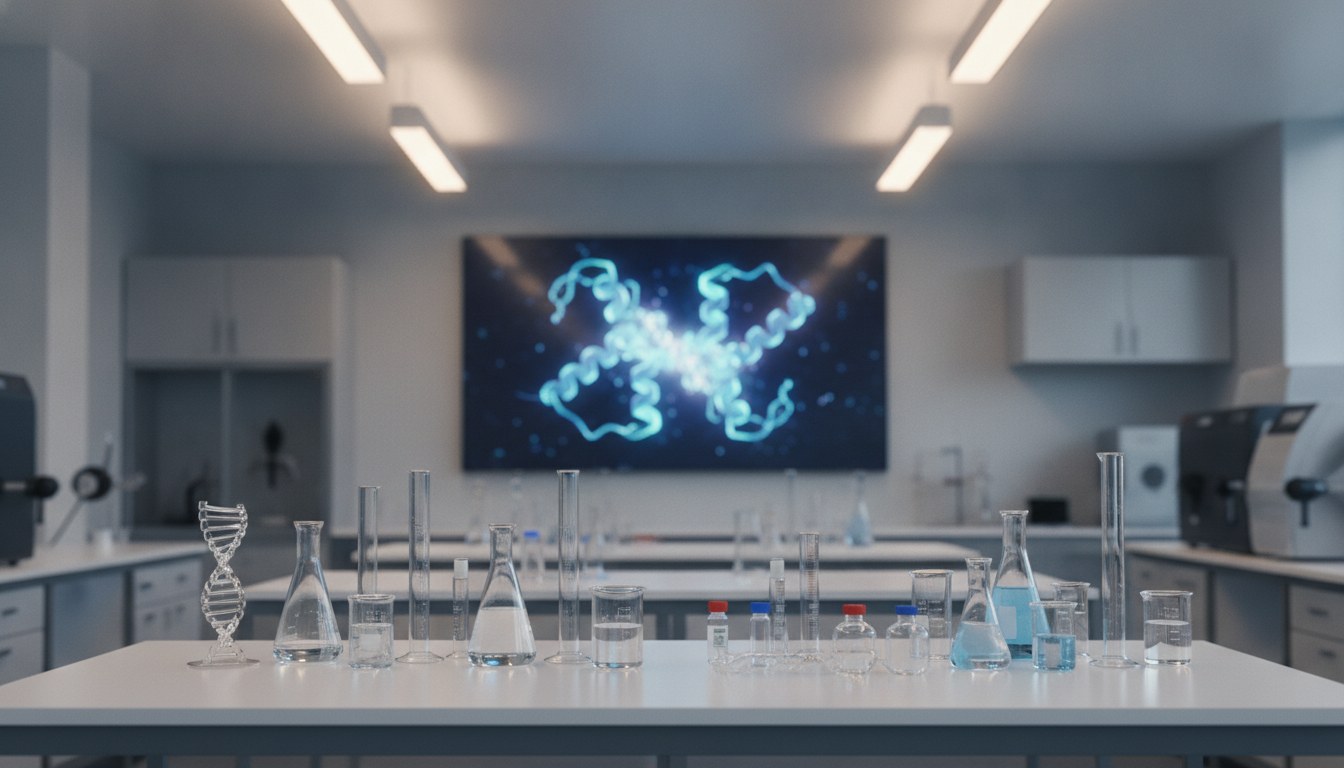
Anthropic has shared new details about how Claude is being used to speed up scientific workflows in two demanding fields: protein design and analytical chemistry. The examples, published directly by the company, illustrate how researchers are integrating the AI assistant into tasks that previously required significant manual effort and specialized expertise to execute efficiently.
Where Claude Is Making an Impact
In protein design, researchers have used Claude to help parse and interpret large volumes of structural data, suggest modifications to amino acid sequences, and reason through the likely functional consequences of those changes. The work is highly iterative by nature. Scientists run experiments, analyze results, adjust their hypotheses, and repeat. Claude appears to be shortening several of those loops. In analytical chemistry, users have leaned on the model to assist with method development, data interpretation, and the kind of systematic troubleshooting that can otherwise eat up hours of a chemist's day. These applications fit a broader pattern of Claude being deployed in technically dense environments where reasoning over complex information is the core job. Anthropic's push into scientific markets, including pharma, has been building for some time, and these use cases represent concrete evidence of that strategy taking hold.
Key Facts
- Claude is being used in active protein design research workflows, not just as a writing aid
- Analytical chemistry applications include method development and data interpretation
- Anthropic published the examples as part of its ongoing effort to document real-world Claude use cases
- Both fields involve high iteration rates, where AI assistance can reduce cycle times
- The applications rely on Claude's ability to reason over specialized technical content
The examples Anthropic is highlighting are not proof-of-concept demos. They reflect working integrations where scientists are relying on Claude as part of their daily research process. That distinction matters. Many AI tools have been shown to perform well in controlled benchmarks while offering limited practical value in real laboratory conditions. Anthropic's decision to document these cases suggests confidence that the results hold up under genuine research scrutiny.
Claude is being used to help researchers move faster through complex, data-heavy scientific tasks that previously required significant manual reasoning and domain expertise.Anthropic

Broader Context for AI in Science
The release of these case studies comes as AI companies compete to establish credibility with scientific and pharmaceutical organizations, which tend to be cautious adopters. Trust in this sector is built slowly and requires demonstrated reliability on high-stakes tasks. Anthropic has been positioning Claude as a capable tool for technical and scientific domains, and publishing specific application stories is part of how it builds that credibility. The protein design field in particular has seen significant AI investment over the past few years, with tools like AlphaFold reshaping what researchers expect from computational assistance. Claude enters that landscape not as a structure-prediction engine but as a reasoning and synthesis layer that sits on top of existing scientific workflows.
Analytical chemistry, while less in the spotlight than protein science, presents its own set of challenges that AI assistants are well suited to address. The field involves a lot of judgment calls about experimental conditions, instrument settings, and result interpretation. Having a capable AI model that can work through those decisions alongside a chemist, check reasoning, and surface relevant precedents from scientific literature could meaningfully change how that work gets done. Claude's model family has been designed with long context windows and strong reasoning capabilities, both of which are useful in exactly this kind of application. The ability to hold a large volume of experimental data or documentation in context and reason across it is not a minor feature in a laboratory setting. It is close to the whole point.
Anthropic has not released detailed performance metrics alongside these case studies, so independent verification of the speed and quality gains described remains limited. What is clear is that the company sees scientific research as a meaningful market, and these examples are intended to demonstrate that Claude can operate as a genuine collaborator in that environment rather than a general-purpose assistant that happens to know some chemistry.