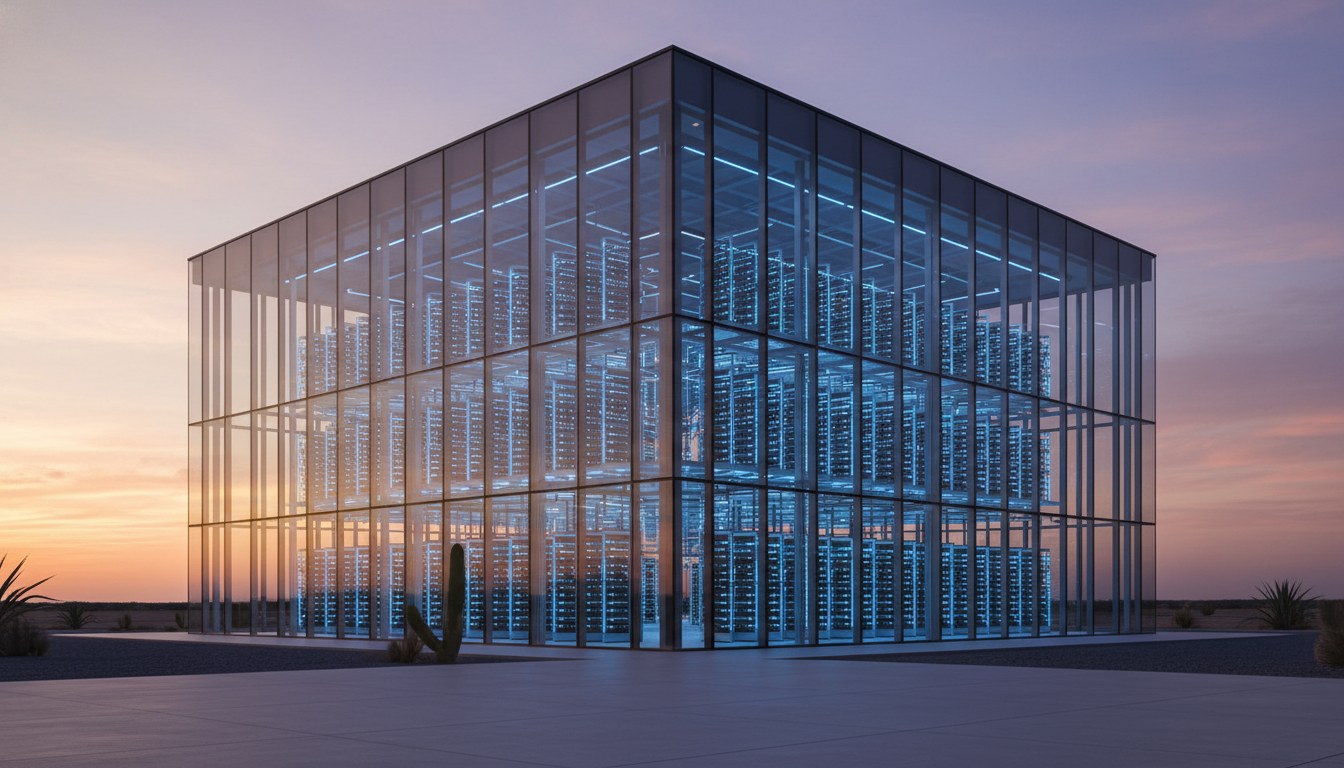
Apollo Global Management and Blackstone have closed a $35 billion debt financing package for Anthropic, structured to fund the AI company's access to Google's custom tensor processing units without tying up equity capital on hardware. Bloomberg reported the deal's completion on June 5, 2026, describing it as among the largest private-credit transactions ever assembled. The structure reflects how AI companies with steep compute requirements are increasingly turning to creative financing rather than outright ownership to secure the infrastructure their models need.
The mechanics are deliberately off-balance-sheet. Rather than Anthropic buying chips directly, the debt facility funds a specially designated vehicle that leases Google TPUs to Anthropic. Google is providing payment guarantees on capacity at five data centers, effectively backstopping the arrangement for lenders. Broadcom is providing residual-value guarantees on top of Google's backstops, adding a second layer of protection for the debt investors. The result is a structure where Anthropic gets access to substantial compute without the operational risk of owning depreciating silicon.
How the Deal Is Structured
The $35 billion priced across three tranches. The A1 notes totaled $6 billion and priced at 1 percentage point over Treasuries, with the A2 tranche, the largest at $24 billion, carrying a 5.75 percent coupon. A separate $4.5 billion B tranche was priced at 8.5 percent. The spread between the A tranches and the B notes reflects different levels of credit support, with A note holders sitting behind Google's and Broadcom's guarantees while B note investors carry more of the performance risk.
The deal is structurally different from Anthropic's earlier compute arrangement with xAI and SpaceX, which involved a $1.25 billion monthly commitment to lease capacity from Elon Musk's infrastructure. That deal, disclosed in SpaceX's S-1 filing, attracted significant attention for the amount and the counterparty. The Apollo-Blackstone deal is larger in aggregate but spread differently, focusing on Google's TPU infrastructure and backed by two investment-grade guarantors rather than a single counterparty.
Deal Structure at a Glance
- Total debt facility$35 billion
- A1 tranche (senior)$6 billion at T+100 bps
- A2 tranche (largest)$24 billion at 5.75% coupon
- B tranche (junior)$4.5 billion at 8.5% coupon
- Google guarantee coverageAll five TPU data centers
- Broadcom roleResidual-value guarantees

Why Anthropic Chose Debt Over Ownership
Daniela Amodei, Anthropic's president, addressed the company's compute philosophy at the Bloomberg Technology Conference last week. "Anthropic's view has always been wanting to plan for the best outcome but not overextend ourselves such that we're buying more compute than we could productively use," she said. That principle, consistent across Anthropic's public statements on capital allocation, points to a deliberate choice to preserve equity capital for research and hiring rather than locking it up in hardware that may depreciate as chip generations advance.
OpenAI and xAI have taken a different approach, with both companies building or acquiring owned data-center infrastructure. The comparison is worth watching, because owned infrastructure provides more operational control and potentially lower per-unit costs over long time horizons, but it also concentrates balance-sheet risk. Anthropic's financing structure transfers much of that risk to Apollo, Blackstone, Google, and Broadcom, at the cost of paying debt service across three tranches.
"Apollo and Blackstone finalized one of the largest private-credit transactions ever assembled, providing Anthropic with access to Google's custom silicon without tying up the company's equity capital." Bloomberg, June 5, 2026
Private Credit's Expanding Role in AI Infrastructure
The Apollo-Blackstone deal is the most visible example so far of private credit markets stepping in to finance AI compute requirements that equity rounds alone cannot cover. Anthropic raised $65 billion in its Series H round earlier this year at a $965 billion valuation, but that capital is earmarked for operations and research rather than chip acquisition. The debt market provides a parallel funding stream for infrastructure, leaving equity investors with exposure to the business rather than to chip inventories.
For investors in Apollo and Blackstone's funds, the deal offers structured exposure to Anthropic's growth with what the guarantor arrangements are designed to frame as relatively contained downside. If Anthropic's compute usage falls short of commitments, Google's payment guarantees are designed to prevent defaults from reaching the senior notes. The B tranche holders carry more risk in exchange for the higher coupon, essentially betting that Anthropic's demand for compute will remain strong enough that the residual-value question never becomes material.
The broader significance of the deal is that it establishes a template. AI companies that need hundreds of billions of dollars in compute access over the next decade will not be able to fund that through equity rounds alone. Private credit, structured around lease vehicles and backed by technology-company guarantors, appears to be one mechanism the industry is settling on. Whether that model scales as cleanly when interest rates shift or when chip demand cycles down remains an open question, but for now Anthropic has secured the infrastructure access it needs, ahead of its public listing, without diluting existing shareholders further.