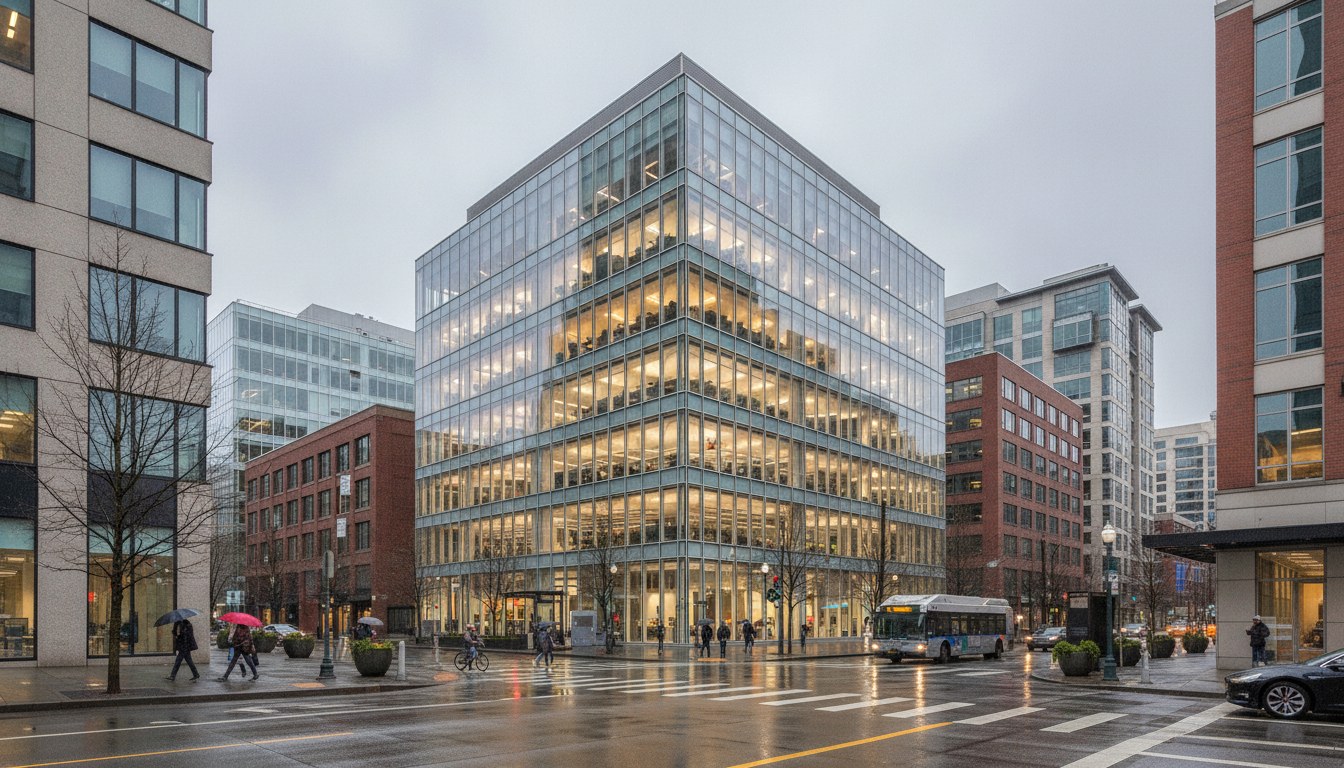
Anthropic is adding Seattle office space, according to a GeekWire report, as the AI company continues building out a physical presence beyond its San Francisco headquarters. The move is welcome news for a Pacific Northwest commercial real estate market that spent years absorbing the fallout from tech industry layoffs and remote work adoption that left entire buildings empty.
Seattle Joins a Growing List of Anthropic Cities
The Seattle expansion follows a pattern of geographic growth for Anthropic over the past year. The company opened a London office earlier in 2025 amid surging demand for AI coding tools, and established a Bengaluru presence as India became one of its fastest-growing markets. Seattle, home to Amazon and Microsoft, fits logically into that strategy given the city's deep pool of machine learning and software engineering talent. Anthropic has an existing relationship with Amazon through a multi-billion dollar cloud partnership, making the region a natural base for additional operations. Earlier reporting indicated Anthropic was eyeing more space in Seattle's South Lake Union neighborhood, the same district Amazon built its urban campus around.
Key Facts
- Anthropic is signing new office leases in Seattle, Washington
- Seattle's commercial real estate market has faced elevated vacancy rates since 2022
- The expansion adds to existing Anthropic offices in San Francisco, New York, London, and Bengaluru
- AI companies have emerged as one of the few growth sectors absorbing downtown office space nationally
- Amazon, a key Anthropic investor and cloud partner, is headquartered in Seattle's South Lake Union district
For Seattle's landlords and city planners, the timing matters. Commercial vacancy rates in the city's core spiked after a wave of tech industry contractions beginning in 2022, and traditional tenants have been slow to return to pre-pandemic footprints. AI companies represent one of the few categories of tenant actively looking to grow rather than consolidate. Anthropic's headcount has expanded steadily as it competes with OpenAI, Google DeepMind, and Meta for researchers and engineers across a range of disciplines including policy, safety, and product development. The company recently posted a policy role paying up to $400,000, illustrating the breadth of roles it is trying to fill outside pure engineering functions.
AI companies are among the most active tenants in markets like Seattle and San Francisco right now, absorbing space that traditional tech firms have been shedding since 2022.Commercial real estate analysts cited by GeekWire

What the Expansion Signals for Anthropic's Trajectory
Physical office growth is one concrete indicator of a company's operational confidence. Leases carry multi-year commitments and capital costs that companies typically avoid when uncertain about their runway. Anthropic closed a $2.5 billion funding round in early 2024 and has continued attracting investment since, giving it the balance sheet to make longer-term infrastructure bets. The Seattle move also reflects a broader industry recognition that concentrating entirely in San Francisco carries its own risks, from talent competition to cost. Distributing operations across cities allows companies to tap different hiring pools and, in some cases, access more favorable real estate terms.
The growth picture is not without complexity. Anthropic's own research has documented how AI tools are already changing the nature of white-collar knowledge work, raising longer-term questions about office-based employment patterns across industries. The company's models, detailed on the Claude model family page, are used by developers and enterprises for tasks that once required teams of analysts or coders. For now, however, the company itself is in a hiring and expansion phase that puts it on the landlord-friendly side of that equation. Whether Seattle's broader market can sustain momentum beyond a handful of AI anchors remains an open question, but for the neighborhoods Anthropic is moving into, the near-term effect is straightforward: occupied floors, active leases, and renewed foot traffic in districts that have spent three years hoping for exactly this kind of tenant.


