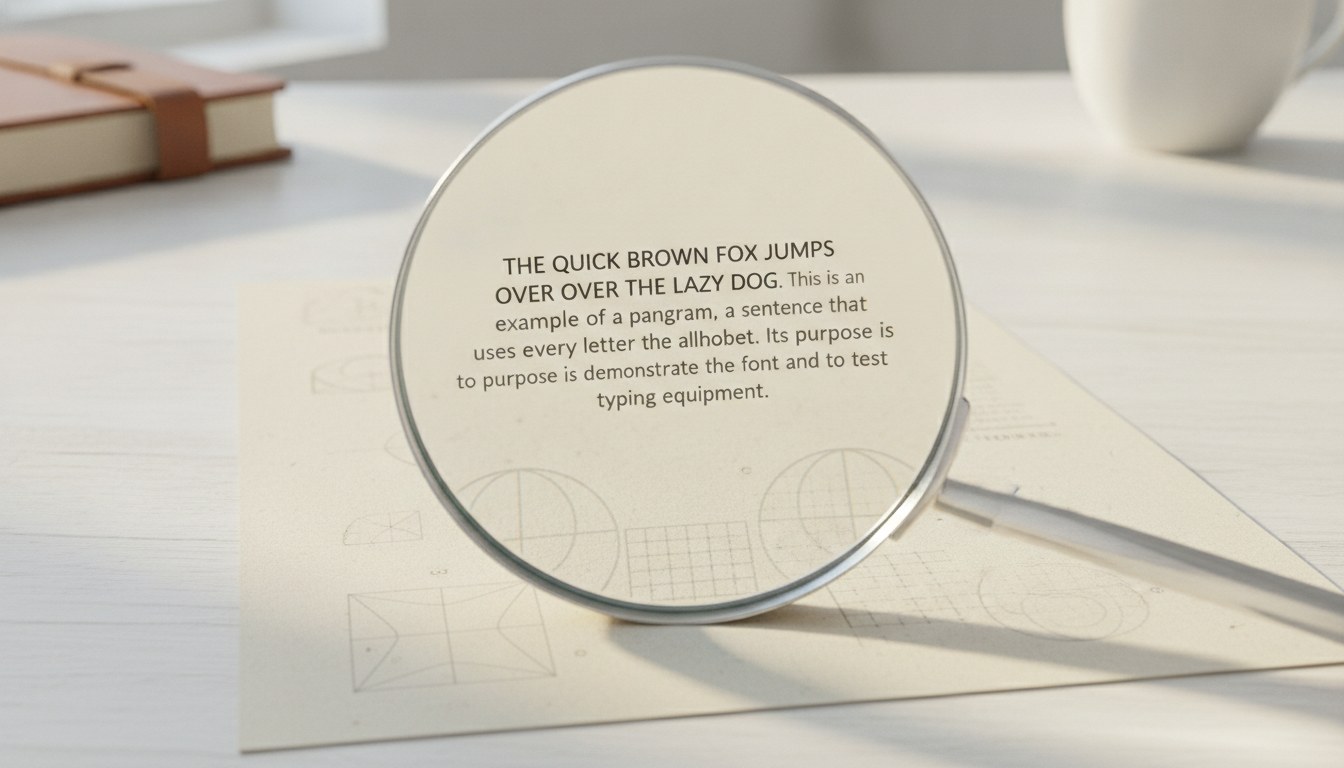
Anthropic has quietly begun embedding invisible watermarks into text produced by Claude, a technical move that has sparked sharp criticism from users and raised broader questions about transparency, ownership, and where AI-generated content regulation is heading. The watermarks are not visible to readers and are designed to persist through ordinary copying and pasting, making it possible to identify text as AI-generated after the fact.
What the Watermarking Actually Does
Unlike image watermarking, which alters pixels, text watermarking works by making subtle, statistically detectable choices in word selection, sentence structure, or character encoding. The result looks like normal prose to any human reader. Anthropic has not published a detailed technical breakdown of its specific implementation, but independent researchers have begun examining the outputs. For a deeper look at the mechanics, our explainer on how Claude's invisible text watermarking actually works walks through the leading methods and what they mean for end users.
Key Facts
- Anthropic is watermarking Claude's text output in a way that is invisible to readers.
- The watermarks are designed to survive copying and basic reformatting.
- EU AI Act provisions are expected to require provenance labeling for AI-generated content.
- ChatGPT and Gemini could face pressure to adopt similar systems under European rules.
- Some users and developers have reacted with concern about content ownership and privacy implications.
The reaction online has been swift and, in places, furious. One widely circulated comment captured the mood bluntly: "I think that Claude is about to start hemorrhaging customers." The concern is not purely emotional. Businesses and developers who use Claude to produce content for clients argue they have a legitimate interest in that output not being tagged or traceable without their knowledge or consent. Privacy advocates have raised similar points about individual users who may not realize their writing carries an embedded identifier tied to an AI service.
"I think that Claude is about to start hemorrhaging customers."User reaction circulated on social media following news of Claude's text watermarking rollout

EU Pressure Could Make This Industry-Wide
Whatever the backlash against Anthropic specifically, the broader regulatory picture suggests this practice may soon be unavoidable across the industry. The EU AI Act includes requirements around transparency for AI-generated content, and regulators have signaled that provenance labeling will be part of compliance. That means OpenAI's ChatGPT and Google's Gemini could face parallel obligations, turning what feels like an Anthropic-specific controversy into a sector-wide norm. Competing models from Chinese developers operating outside EU jurisdiction may face no such requirement, which could complicate the competitive picture further.
The timing is notable. Anthropic is pushing hard on enterprise adoption and has positioned Claude as a trustworthy, safety-conscious alternative to its rivals. A feature that tracks or tags user output, even for ostensibly legitimate reasons, cuts against the narrative of user empowerment that has helped the company build its brand. Questions about data practices have already surfaced in other contexts, and concerns about what companies do with interaction data are not new territory for AI providers.
For developers building products on top of Claude, the stakes are practical as well as philosophical. If a client receives a deliverable and that text carries an invisible marker identifying it as Claude-generated, questions arise about disclosure, about whether the watermark could surface in automated content screening, and about whether the developer retained meaningful control over the output. The range of models Anthropic offers spans from lightweight to highly capable, and enterprise customers in particular will want to understand how watermarking applies across tiers and API access.
Anthropic has not issued a comprehensive public statement explaining the scope of the rollout, which tier of users are affected, or whether there will be an opt-out mechanism for API customers. That silence is itself part of the problem, according to critics. Companies making quiet changes to how their products tag or process output tend to face sharper reactions than those who communicate changes openly. Whether Anthropic course-corrects with clearer disclosure, or whether rivals use the moment to attract disillusioned Claude users, will become clearer in the weeks ahead.


