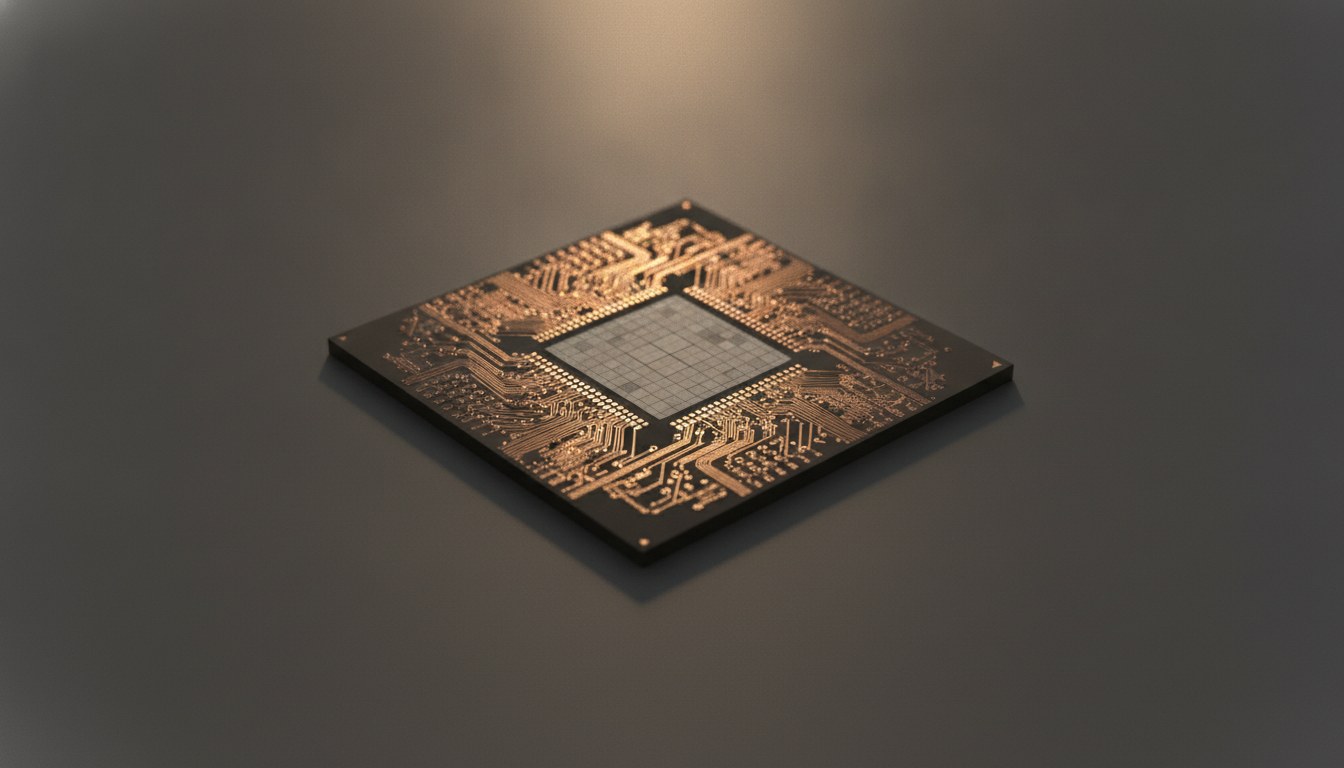
Anthropic is officially building an in-house chip design team, the company confirmed this week, marking a significant step toward controlling more of the hardware stack that runs its Claude AI models. The move, reported by Business Insider, puts Anthropic in the same category as Google, Apple, and Amazon, all of which have invested heavily in proprietary silicon to gain performance and cost advantages over competitors relying solely on off-the-shelf chips.
Why Anthropic Is Going In-House on Silicon
Training and running large language models like Claude demands enormous compute resources. Dependence on third-party chip suppliers creates both supply chain vulnerabilities and cost pressures that can compound at scale. By designing its own chips, Anthropic aims to tailor hardware specifically to the mathematical operations Claude relies on most, potentially yielding faster inference and lower energy consumption per query. Anthropic has not disclosed a timeline for when custom silicon might reach production, but the formation of a dedicated team suggests the effort is moving beyond early exploration.
Key Facts
- Anthropic has confirmed the creation of an internal chip design team.
- The team will focus on custom silicon optimized for Claude AI workloads.
- The move follows a pattern set by Google, Amazon, and Apple with their own AI chips.
- Anthropic has not announced a production timeline for any resulting hardware.
- The initiative is separate from existing partnerships with third-party chip suppliers.
The announcement does not arrive in a vacuum. Anthropic has been expanding its hardware partnerships while simultaneously laying groundwork for greater self-sufficiency. Earlier reporting indicated that AMD agreed to invest up to $5 billion in Anthropic and struck a chip supply deal, underscoring how seriously the company is treating its compute strategy. Building an internal design team sits alongside, rather than replacing, those supplier relationships, at least for now.
Custom silicon is increasingly a competitive necessity for AI labs operating at scale. Off-the-shelf GPUs are general-purpose tools; purpose-built chips can unlock efficiencies that matter enormously when you are running billions of model queries.Industry analyst commentary on AI hardware trends

Broader Context: AI Companies Racing for Hardware Control
Anthropic is not the first AI-focused company to pursue this path, and it will not be the last. OpenAI has publicly discussed chip ambitions, and Meta has deployed its own training hardware. The underlying logic is consistent across all of them: as model complexity grows, so does the case for silicon that is purpose-built rather than adapted from consumer or data center graphics cards. For Anthropic, the stakes are particularly high given how central Claude is to its commercial strategy. The company has been expanding Claude's reach aggressively, from enterprise deployments to the recent launch of Claude for Small Business, each adding to the cumulative compute demand the company must meet reliably and cost-effectively.
There is also a safety dimension worth noting. Anthropic has consistently framed its work around responsible AI development, and having tighter control over the full stack, including hardware, could give engineers finer-grained tools for monitoring and limiting model behavior at the infrastructure level. Whether that informs the chip team's mandate is not yet clear from public statements.
For now, the confirmation of an in-house chip team is a strategic signal as much as a technical one. It tells suppliers, investors, and competitors that Anthropic intends to compete across more dimensions than model quality alone. Keeping pace with the latest Claude AI news will matter for anyone tracking how quickly this hardware push translates into tangible capability or cost advantages for the company's products.


