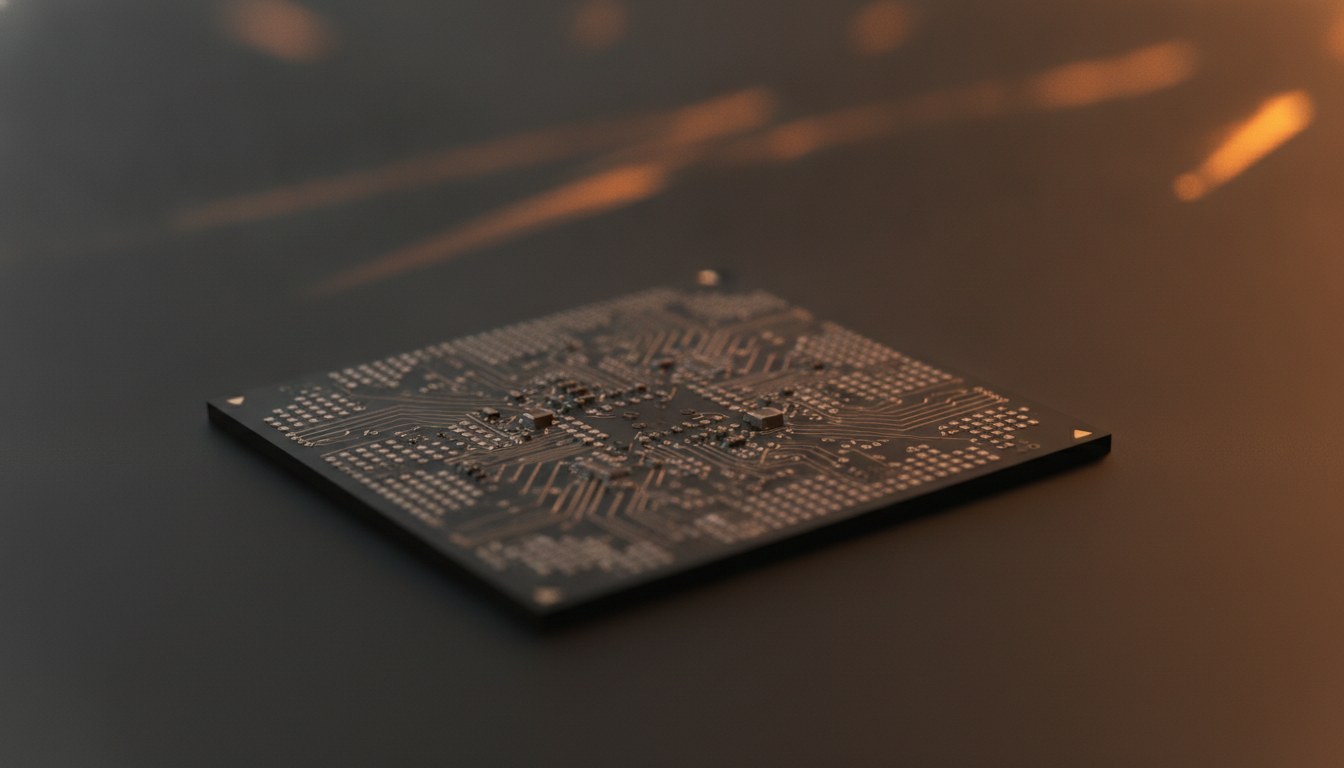
Anthropic is recruiting engineers to design and build its own artificial intelligence chips, according to job postings reported by TechRepublic. The move signals that the Claude maker is serious about securing its own hardware pipeline rather than depending entirely on third-party suppliers like Nvidia for the compute that powers its AI systems.
Why Anthropic Is Going In-House on Silicon
The decision to pursue custom silicon is not unusual among frontier AI labs. Google has its Tensor Processing Units, Amazon has Trainium and Inferentia, and Meta has built out its own AI Research SuperCluster. What makes Anthropic's entry into this space notable is timing. The company is still scaling its core model business aggressively, and chip development is expensive, slow, and technically demanding. Taking that on in parallel suggests Anthropic leadership believes the long-term cost and supply-chain benefits outweigh the near-term burden.
Key Facts
- Anthropic has posted engineering roles focused on custom AI chip development.
- The effort targets reduced reliance on third-party GPU and TPU suppliers.
- Custom silicon could lower inference costs and improve performance on Anthropic's specific workloads.
- Major AI competitors including Google, Meta, and Amazon already operate proprietary chip programs.
- Anthropic has raised billions in funding, giving it the capital to pursue long-horizon hardware investments.
Chip design cycles typically run three to five years from initial architecture work to production silicon. That means any chips Anthropic is beginning to design now would not reach deployment until well into the second half of the decade. Still, starting early is the point. Labs that began custom silicon programs in 2018 and 2019 are now reaping the benefits in lower per-token inference costs and reduced exposure to GPU shortages. Anthropic appears to be making the same calculation. This also connects to broader questions the company is grappling with around how AI is already reshaping white-collar work, including the kinds of engineering roles it needs to hire for.
Custom silicon allows a lab to optimize at the hardware level for the specific operations its models actually run, rather than accepting whatever tradeoffs a general-purpose GPU vendor has built in.Industry hardware analyst, background briefing

What This Means for Claude's Future
Inference efficiency is one of the most consequential cost levers for any AI company running large language models at scale. Every conversation a user has with Claude's model family requires compute, and that compute bill adds up fast across millions of requests. Proprietary chips designed around the specific mathematical operations Claude's architecture demands could meaningfully reduce those costs over time, which in turn affects pricing, margins, and how broadly the company can make its models available.
The hiring push also fits a pattern of Anthropic building out capabilities that reduce external dependencies. The company has been expanding across policy, safety research, and now hardware. Earlier this year, Anthropic posted a $400K policy role, a sign that its ambitions now extend well beyond pure model research into the infrastructure, governance, and physical compute layers that underpin everything else.
None of this is without risk. Custom chip programs have stumbled at companies with far more hardware experience than Anthropic currently has. Recruiting the right talent is hard, and retaining it while competing against Apple, Google, and chipmakers with decades of semiconductor history is harder. Still, if the program succeeds even partially, Anthropic would enter the next phase of the AI race with a more defensible and cost-efficient position than it has today.
For now, the job postings are the clearest public signal yet that Anthropic is thinking well beyond software. The company is quietly laying foundations for a future where it controls more of its own stack, from the models users interact with down to the chips those models run on.


