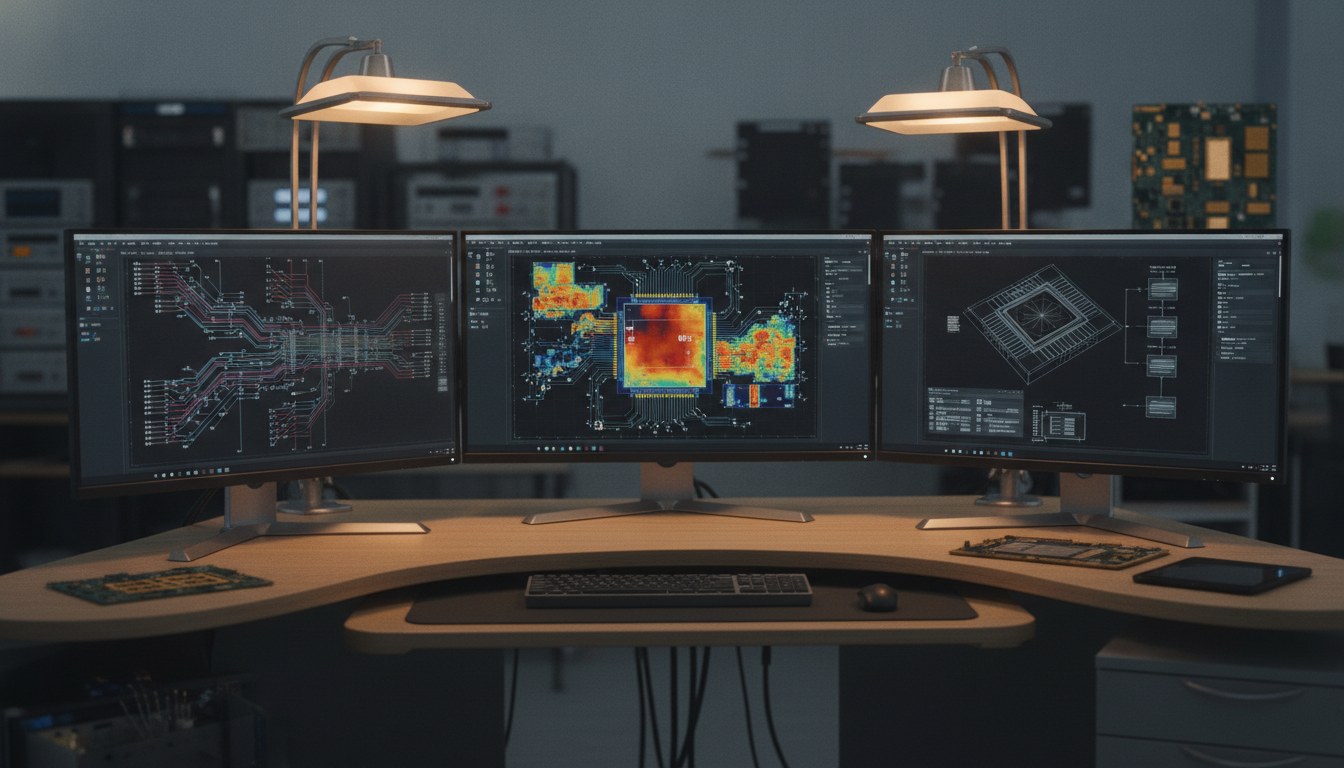
Anthropic is actively recruiting engineers to build an in-house AI chip design team, according to job postings first spotted by TechCrunch. The listings cover a range of hardware roles, from chip architecture to silicon validation, and suggest the company is serious about developing its own custom silicon rather than relying entirely on third-party suppliers like Nvidia for the long term.
The hiring push is a notable strategic shift for a company that has, until now, focused almost exclusively on model research and safety. Anthropic has grown rapidly since its founding in 2021, and the computational demands of training and deploying frontier models have only intensified. Building proprietary chips could give the company more control over performance, cost, and supply chain stability.
Why Custom Silicon Makes Sense Now
Large language model training is extraordinarily hardware-intensive. Companies that run at scale find themselves at the mercy of chip availability and pricing, both of which have been volatile over the past few years. Developing custom accelerators tailored specifically to model workloads can improve efficiency and reduce per-token costs over time. It is a path that Google pursued with its TPUs and that Amazon has taken with Trainium and Inferentia.
Key Facts
- Anthropic has posted multiple job listings for chip design and silicon engineering roles.
- Positions span architecture, design verification, and physical implementation.
- The team would focus on accelerators optimized for AI training and inference workloads.
- Anthropic currently relies heavily on Nvidia GPUs and cloud-provided compute.
- The move mirrors hardware strategies already in place at Google, Amazon, and Meta.
The timing also follows a period of significant investment activity around Anthropic's hardware ambitions. A recent deal highlighted how the company is diversifying its chip partnerships, with AMD committing up to $5 billion in investment alongside a chip supply agreement. Building an internal design team would complement such partnerships rather than replace them, at least in the near term.
Custom silicon is not just a cost play. It is about designing hardware that fits the specific computational graph of your models, rather than adapting your models to fit someone else's hardware.AI hardware analyst, background briefing

What This Means for Claude's Future
The chip effort is closely tied to the future trajectory of Claude's model family. As models grow more capable and are deployed across a wider range of products and APIs, the infrastructure supporting them needs to scale accordingly. Custom hardware could allow Anthropic to optimize for specific inference patterns unique to Claude, potentially improving latency and throughput for end users.
This is not the first signal that Anthropic has been moving in this direction. Earlier reporting confirmed the company's intent to establish a dedicated in-house chip design capability, and the new job postings now put concrete hiring activity behind those plans. The team is expected to operate as a specialized unit within Anthropic's broader engineering organization rather than as a standalone subsidiary.
For the AI industry more broadly, Anthropic's move adds to growing evidence that frontier labs view hardware control as a core competency, not an afterthought. Whether the company's chip ambitions will translate into production silicon within the next few years remains to be seen. Chip design cycles are long and expensive, and building a competitive internal capability from scratch takes time. Still, the investment signals where Anthropic sees its competitive pressures heading.
Recruitment for the team appears ongoing, with roles listed across multiple experience levels. Engineers with backgrounds in GPU microarchitecture, digital design, and AI accelerator development are among those being targeted. The scope of the hiring suggests this is a foundational build rather than a small exploratory project.
“Building custom silicon is how you control your destiny in AI. Organisations betting long-term on Claude should watch this closely, because proprietary chips mean faster model iteration, lower inference costs, and ultimately less pricing volatility for enterprise customers.”
Leon Tindemans, AI expert and entrepreneur specialising in Claude, Copilot and ChatGPT. Learn more with prompt writing training for AI by TTM Communicatie.


