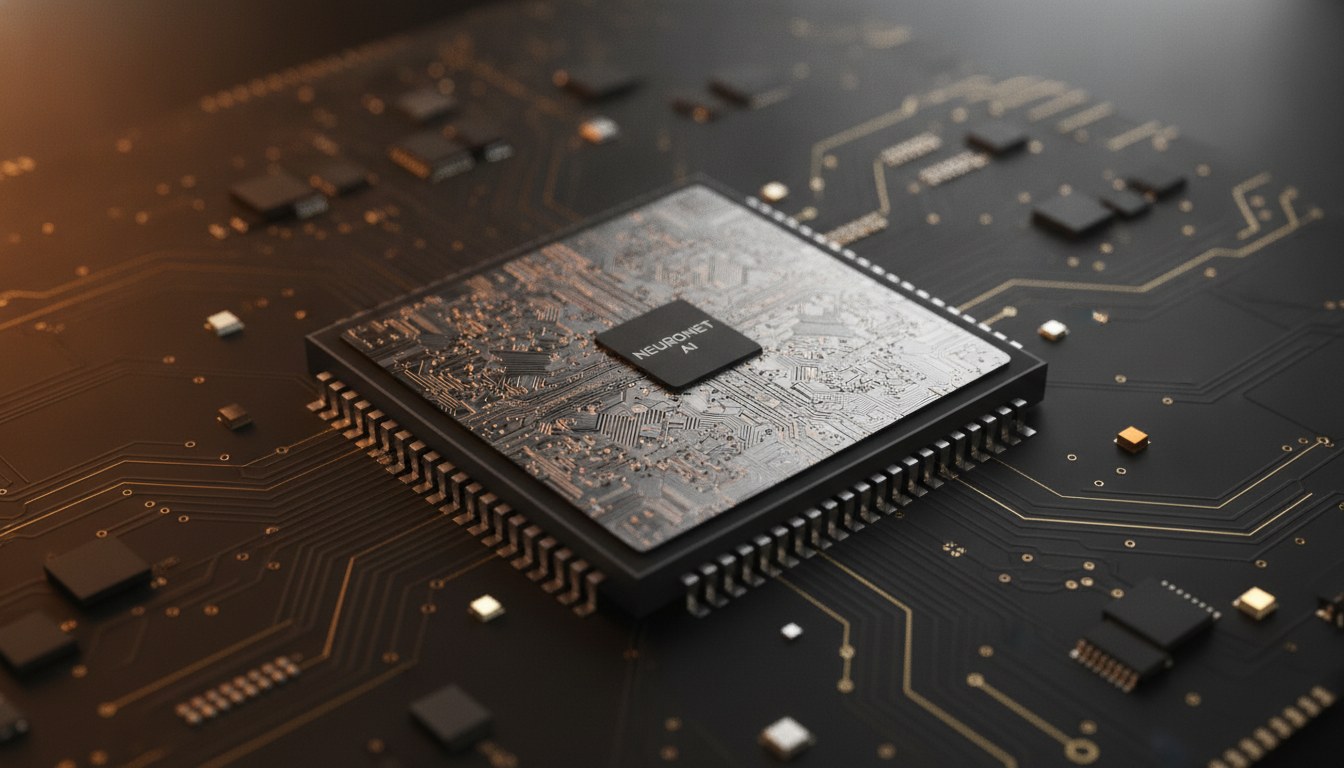
Anthropic is developing custom silicon to power its Claude models, according to a report from Ars Technica. The company joins a wave of AI developers moving beyond off-the-shelf chips from Nvidia and toward purpose-built hardware designed around their specific workloads. For a company running one of the most compute-intensive AI systems in the world, the decision reflects both economic pressure and the practical limits of general-purpose accelerators.
Why Custom Silicon Makes Sense Now
Training and running large language models at scale is extraordinarily expensive. Most of that cost flows through GPU clusters, which are designed to handle a wide range of tasks rather than being optimized specifically for transformer inference or training. By designing chips tuned to how Claude's model family actually operates, Anthropic could lower the per-query cost significantly while also gaining more control over performance characteristics like memory bandwidth and latency. Google has followed a similar path with its Tensor Processing Units, and Amazon's Trainium chips were built on the same logic.
Key Facts
- Anthropic plans to design custom AI hardware specifically to run Claude models.
- The move reduces dependency on Nvidia GPUs and third-party accelerators.
- Custom chips can be optimized for inference workloads, potentially cutting costs per query.
- Google, Meta, and Amazon have each pursued similar in-house chip strategies.
- Anthropic has not disclosed a specific timeline or manufacturing partner for the chips.
The timing also aligns with Anthropic's rapid expansion. The company has been broadening its product footprint, as seen in recent moves to add new capabilities to its platform. That growth means inference costs are scaling fast, and owning the hardware layer gives Anthropic levers it simply does not have when renting compute from cloud providers. There is also a reliability angle: designing your own chips means fewer surprises when supply chains tighten or a major vendor shifts its roadmap.
Custom hardware is not just about saving money. It is about making architectural decisions at the silicon level that reinforce what you are trying to do at the model level.AI infrastructure analyst, paraphrased from Ars Technica coverage
The Competitive Landscape for AI Silicon
The broader AI industry has been converging on the idea that general-purpose GPUs, while powerful, are not the final answer. Meta has its MTIA chip. Microsoft has been exploring custom silicon for Azure AI workloads. Even smaller players are experimenting with FPGAs and ASICs for inference. Anthropic, which has always presented itself as a safety-focused research organization, framing hardware investment as part of responsible scaling could become part of its public narrative. Control over compute is, after all, control over how and when models get deployed.
There is also a longer-term strategic dimension. The AI hardware market is projected to grow sharply through the rest of the decade, and companies that own their silicon could find themselves with an asset worth more than just operational savings. Designing chips requires deep collaboration between model researchers and hardware engineers, which tends to produce feedback loops that improve both. It is the kind of vertical integration that Apple demonstrated works, and that several AI labs are now pursuing in their own way.
Anthropic has not disclosed a manufacturing partner or a projected timeline for when custom hardware would enter production. Chip design is a multi-year effort, and the company would likely need to partner with a foundry like TSMC to actually fabricate the silicon. Given how fast the model landscape moves, as covered in the latest reporting on how Claude builds its own execution harnesses, the hardware strategy will need to stay flexible enough to accommodate rapid architectural changes at the model level.
For now, the announcement signals intent more than capability. But it places Anthropic firmly in the camp of companies that see custom infrastructure as a core part of their long-term competitive position, not a nice-to-have feature for some distant future. Given the compute demands of frontier AI, that is a bet that is becoming harder to avoid.
“Anthropic building its own silicon is a pivotal move that will directly shape Claude's speed, cost, and capability ceiling. For organisations heavily invested in Claude-powered workflows, this signals greater pricing control and performance gains ahead, making now the right time to deepen that platform commitment.”
Leon Tindemans, AI expert and entrepreneur specialising in Claude, Copilot and ChatGPT. Learn more with Copilot training by TTM Communicatie.