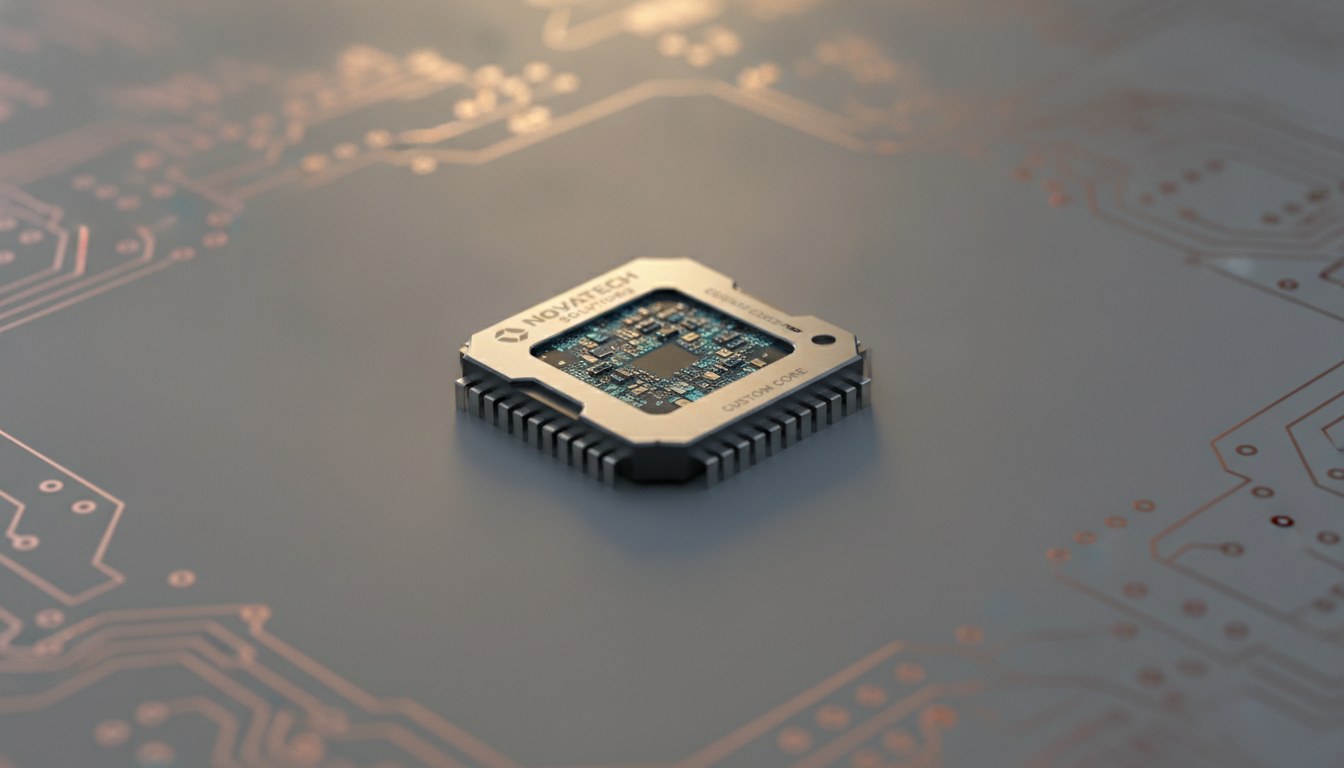
Two significant developments in the global AI race emerged this week. Anthropic has officially confirmed it is designing a custom chip specifically for running Claude, while Chinese tech giant ByteDance has instructed employees to stop distilling knowledge from US-developed AI models. Together, the moves reflect the deepening technological and geopolitical divide shaping the industry.
Anthropic's Hardware Push
Anthropic, the San Francisco-based AI safety company behind Claude, confirmed to reporters that it has an active program to develop proprietary silicon. The effort is aimed at reducing dependence on third-party chip suppliers and optimizing inference performance for Claude's model family. While details remain sparse, the move puts Anthropic alongside Google and Meta in the growing club of AI firms pursuing custom hardware as a competitive lever.
Key Facts
- Anthropic has confirmed an internal custom chip development program targeting Claude inference workloads.
- ByteDance has issued a policy banning employees from using outputs of US AI models to train its own systems.
- Model distillation, the practice of training smaller models on outputs from larger ones, has become a flashpoint in US-China AI policy.
- The ByteDance ban covers models from multiple American developers, not only Anthropic.
- Custom chip development has become a priority for major AI labs seeking to cut costs and improve throughput.
The economics behind in-house chip programs are compelling. Inference costs remain one of the largest operational expenses for AI companies running models at scale. A purpose-built chip, tuned to a specific model architecture, can deliver meaningfully better performance per watt than general-purpose GPUs. Anthropic has not disclosed a timeline or a manufacturing partner, but the confirmation alone signals that the company is thinking well beyond its current reliance on commercial GPU supply chains.
Custom silicon is not just about cost. It is about control over the entire stack, from training to deployment, in ways that commodity hardware simply cannot provide.Industry analyst commentary, Wccftech

ByteDance Clamps Down on Distillation
On the other side of the Pacific, ByteDance issued an internal directive prohibiting employees from using outputs generated by US AI models to train or fine-tune its own systems. The practice, known as model distillation or knowledge distillation, has become increasingly controversial as American AI developers argue it allows competitors to benefit from expensive training runs without authorization or compensation.
ByteDance's decision comes amid broader regulatory and legal pressure on the technique. OpenAI and others have taken steps to detect and block distillation attempts in their terms of service. The move also coincides with a wave of corporate caution at Chinese tech firms, some of which have faced scrutiny for their use of foreign AI tools. Earlier this month, similar concerns surfaced when Alibaba banned staff from using Anthropic's Claude Code tool, a decision that drew wide attention across the industry.
The distillation question sits at the heart of a broader debate about how AI capability spreads internationally. When a smaller, locally developed model can absorb the capabilities of a frontier US system simply by training on its outputs, the competitive advantage of expensive frontier training narrows quickly. US export controls on advanced chips have tried to slow this dynamic at the hardware layer, but distillation represents a software-layer shortcut that is harder to police.
For Anthropic, the ByteDance policy and its own chip program both point toward the same underlying reality: the AI industry is fragmenting along national lines, and companies are beginning to build infrastructure and governance structures that reflect that split. Whether custom silicon accelerates Claude's capabilities in meaningful ways remains to be seen, but the strategic intent is clear. As competition intensifies and export restrictions tighten, owning more of the stack is becoming less of an aspiration and more of a necessity.