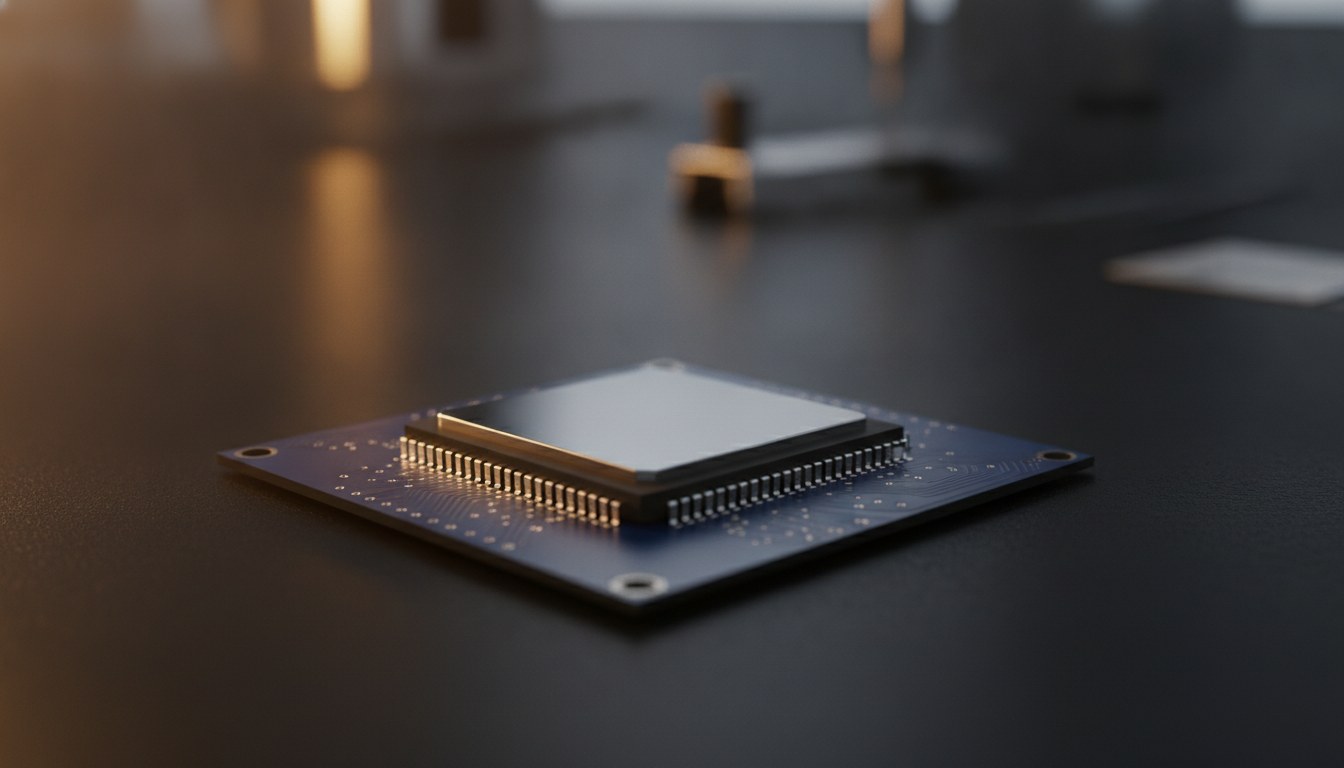
Anthropic is co-designing custom AI inference chips and has tapped Samsung as its manufacturing partner, according to a report from Tom's Hardware. The effort represents a significant step toward reducing the company's dependence on Nvidia's expensive GPU hardware, which has become a major cost center for AI labs running large-scale model inference workloads.
The chips are said to be focused specifically on inference rather than training, a distinction that matters. Training requires enormous bursts of compute, but inference is what happens every time a user interacts with a model like Claude. As usage scales, inference costs accumulate fast, and purpose-built silicon can deliver better performance per dollar than general-purpose GPUs.
Why Custom Silicon Makes Sense Now
Anthropic joins a growing list of AI companies pursuing their own chip strategies. Google has its TPUs, Amazon has Trainium and Inferentia, and Meta has been developing its own AI accelerators. For Anthropic, the timing aligns with a period of rapid infrastructure expansion. The company recently signed a $1.8 billion deal with Akamai to scale Claude's inference network, underscoring how seriously it is treating the cost and capacity challenges of running Claude at scale.
Key Facts
- Anthropic is co-designing custom inference chips, not training chips
- Samsung is reported as the manufacturing partner
- The goal is to reduce costs associated with Nvidia GPU procurement
- Inference-focused chips offer better performance-per-dollar at scale
- Multiple major AI labs are now pursuing custom silicon strategies
The choice of Samsung as a manufacturing partner is notable. Samsung operates one of the few foundry businesses capable of producing advanced chips at scale, competing in that space with TSMC. Whether Anthropic's chips will use Samsung's most advanced process nodes has not been confirmed, but the partnership itself indicates Anthropic is moving beyond early-stage exploration into concrete development work.
Custom inference silicon allows AI companies to optimize chip architecture around their specific model workloads, something off-the-shelf GPUs were never designed to do.Industry analysis, Tom's Hardware

Nvidia Dependency Remains a Real Cost Problem
Nvidia's H100 and H200 GPUs remain the dominant hardware for AI workloads, but they carry steep price tags and constrained supply. Anthropic has not been immune to these pressures. Earlier reporting indicated the company sealed a $10 billion AI compute deal with an Nvidia-backed startup, reflecting just how much capital is flowing into securing GPU access. Custom chips, if successful, could shift that calculus meaningfully over time.
It is worth noting that Anthropic is not abandoning Nvidia hardware entirely. Claude already runs on Nvidia GPUs inside Microsoft Foundry, and partnerships with cloud providers that rely on Nvidia infrastructure will likely continue in parallel. Custom silicon is more of a long-term hedge than an immediate replacement strategy.
Designing chips takes years and carries substantial execution risk. Companies like Apple and Google have spent over a decade refining their in-house silicon programs. Anthropic is earlier in that journey, and the road from co-design to volume production involves many technical and logistical hurdles. Still, the decision to invest in this direction reflects a conviction that controlling more of the hardware stack is worth the complexity.
For users and enterprise customers, the near-term impact is limited. But if Anthropic can bring custom inference chips to production, the downstream effects could include lower API pricing, higher throughput, and greater reliability during demand spikes. Those are outcomes that matter to anyone building on top of Claude's model family. The hardware strategy, in other words, is ultimately a product strategy too.


