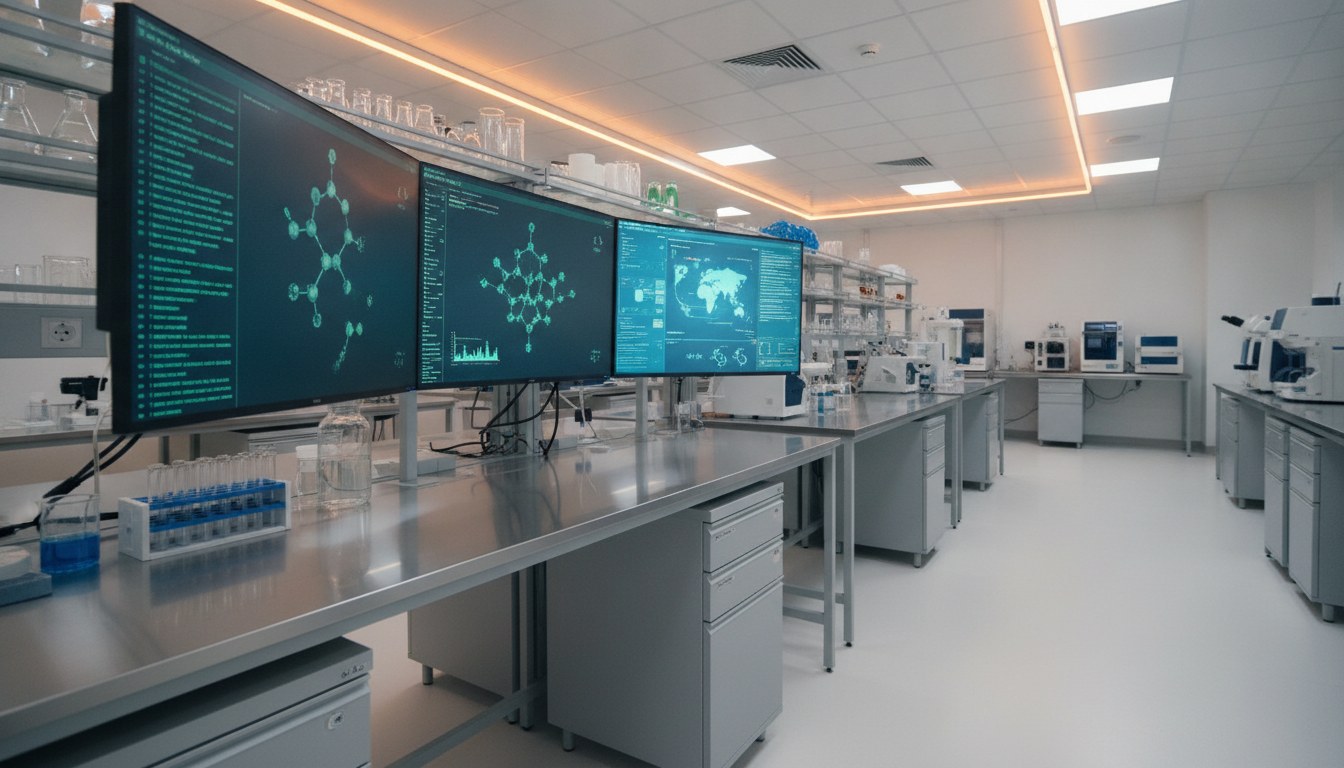
Anthropic has launched Claude Science, a purpose-built AI tool designed to support pharmaceutical research and development operations. The product, reported by Pharmaceutical Technology, represents the company's clearest step yet into the life sciences sector, where AI adoption is accelerating but trust in AI-generated outputs remains a significant concern among researchers and regulators alike.
What Claude Science Is Built to Do
Claude Science is positioned as a research assistant capable of helping scientists parse large volumes of literature, synthesize findings across studies, assist with experimental design, and surface relevant data from complex datasets. The pharmaceutical industry generates enormous quantities of research output, and one of the persistent bottlenecks in drug discovery is the time required for scientists to process and cross-reference that information. Claude Science is designed to compress that process. Anthropic's push into pharma comes as competition in AI-assisted drug discovery intensifies, with a growing number of companies offering specialized tools for biomedical research teams.
Key Facts
- Claude Science is Anthropic's specialized product targeting pharmaceutical R&D workflows
- The tool is aimed at supporting literature review, data synthesis, and experimental planning
- The launch marks Anthropic's most direct entry into the life sciences software market
- Pharma R&D represents one of the highest-value AI application areas currently being pursued by major AI labs
The timing of the launch fits a broader pattern at Anthropic. The company has been expanding its application footprint across technical and scientific domains, moving beyond general-purpose assistant use cases. Anthropic has previously outlined its vision for Claude in scientific contexts, emphasizing the importance of accuracy and verifiability in high-stakes research settings. Pharma R&D is about as high-stakes as it gets, with errors in research interpretation carrying potential downstream consequences for clinical outcomes.
Pharmaceutical research teams require tools that can handle specialized scientific language, understand domain-specific context, and support rather than replace expert judgment at every stage of the pipeline.Pharmaceutical Technology

Context: Anthropic's Science Ambitions
Claude Science does not exist in isolation. Earlier work showed Anthropic's AI could map an entire scientific subfield for as little as $26, demonstrating both cost efficiency and the model's capacity to handle dense, technical material at scale. That kind of capability is directly relevant to pharma applications, where literature mapping and competitor research are routine but time-intensive tasks.
The move also reflects growing commercial momentum at the company. Anthropic's revenue run rate recently hit $4.7 billion, driven in significant part by developer-focused tools. Expanding into pharmaceutical research opens a new category of enterprise customer with substantially different needs and procurement patterns compared to software developers. Pharma buyers tend to require strong data governance guarantees, auditability, and integration with existing laboratory information systems.
It is worth noting that the pharmaceutical industry has been cautious about AI adoption in core research workflows. Regulatory scrutiny over AI-generated outputs is ongoing in multiple jurisdictions, and large pharma companies have compliance requirements that shape how they can use external AI tools. Anthropic will need to address those concerns directly if Claude Science is to gain traction beyond early adopters and smaller biotech firms.
Claude Science adds to a growing portfolio of domain-specific applications that Anthropic is developing alongside its general-purpose models. Whether the product is offered as a standalone subscription, an enterprise tier add-on, or something integrated into existing Claude APIs remains to be fully detailed publicly. What is clear is that Anthropic is treating scientific research as a serious and sustained area of investment, not a peripheral use case.


