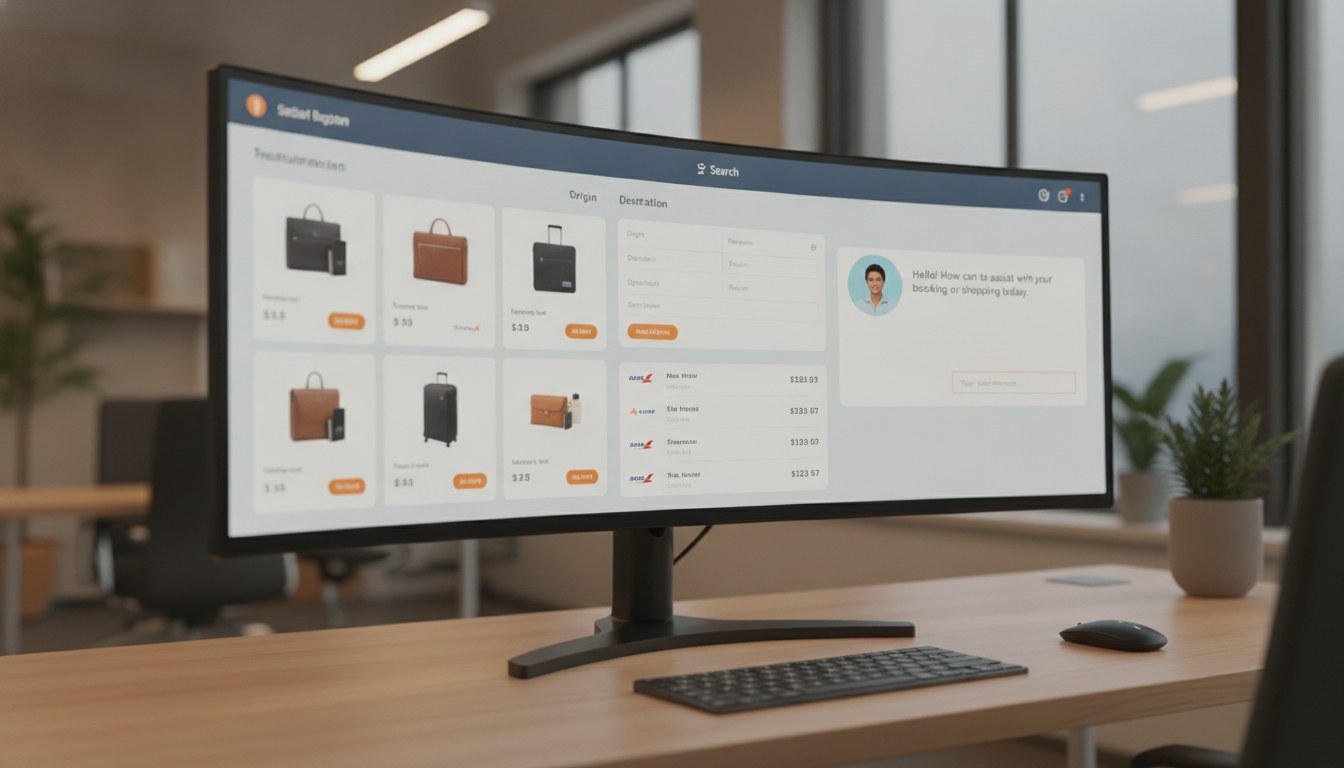
Anthropic has released Claude Commerce Agents, a freely available reference architecture designed to help developers build AI-powered shopping and merchant agents across multiple consumer industries. The project is licensed under Apache-2.0, meaning teams can adopt, modify, and redistribute the code without licensing fees or restrictions. The blueprint covers four primary verticals: retail, travel, telecom, and entertainment.
What the Blueprint Covers
The Commerce Agents framework provides a structured starting point for two categories of agents: shopping agents that assist consumers in finding, comparing, and purchasing products or services, and merchant agents that help businesses manage inventory, respond to customer inquiries, and process transactions. The dual-sided design reflects how commercial AI deployments increasingly need to serve both buyers and sellers within the same ecosystem. This release follows Amazon opening its seller tools to AI agents, with Claude among the first to gain that kind of merchant-side access.
Key Facts
- License: Apache-2.0, open for commercial and non-commercial use
- Verticals covered: retail, travel, telecom, and entertainment
- Two agent types: shopping agents (consumer-facing) and merchant agents (business-facing)
- Published by Anthropic as a reference implementation, not a finished product
- Built to work with Claude models via Anthropic's API
The travel segment of the blueprint is particularly notable given the sector's complexity. Booking a flight or hotel involves multiple systems, dynamic pricing, and frequent changes. Anthropic's work here aligns with broader industry momentum: Amadeus and Anthropic recently partnered on AI agents for the travel sector, signaling that major players see agentic AI as a practical near-term tool for that industry rather than a distant prospect.
The Apache-2.0 license was a deliberate choice. It removes the legal friction that often slows enterprise adoption of open reference architectures, letting engineering teams evaluate and deploy without procurement delays.MarkTechPost analysis of the Claude Commerce Agents release

Why Open Source the Architecture?
Publishing a reference implementation under a permissive license serves Anthropic's broader goal of increasing Claude adoption in commercial settings. By lowering the barrier to entry, the company makes it easier for mid-size retailers, telecom providers, and entertainment platforms to experiment with agentic workflows without building from scratch. Developers who start with the blueprint are likely to continue using Claude's API in production, which is where Anthropic generates revenue. The strategy mirrors how cloud providers publish open-source tooling that funnels users toward paid managed services.
The release also comes at a time when Anthropic is actively expanding its understanding of how agents behave in multi-agent environments. The company has published research examining edge cases where agents interact in unexpected ways, which informs how safety guardrails are built into commercial frameworks like this one. A commerce agent handling payment data or personal travel itineraries carries real-world stakes, and the blueprint's design reflects that awareness.
What Developers Get
The repository includes prompt templates, tool definitions, and example workflows for each vertical. Retail agents can handle product search, cart management, and order tracking. Travel agents are structured to manage search across flights and hotels, handle booking confirmations, and process change requests. Telecom and entertainment agents follow similar patterns adapted to plan comparisons, upgrades, and subscription management.
Developers are expected to adapt the templates to their own backend systems, product catalogs, and APIs. The Commerce Agents blueprint is a starting structure, not a plug-and-play solution. Teams will still need to handle authentication, data privacy compliance, and integration with existing commerce infrastructure. That work is non-trivial, but having a well-structured reference point can cut early design cycles considerably. Those interested in the full picture of what Claude can do in agentic settings can explore Claude's model family to understand which models are best suited for commerce workloads requiring tool use and multi-step reasoning.
The Commerce Agents release positions Claude as a credible option for businesses evaluating AI for customer-facing commerce workflows, and it gives the developer community a concrete artifact to build on rather than starting from documentation alone.