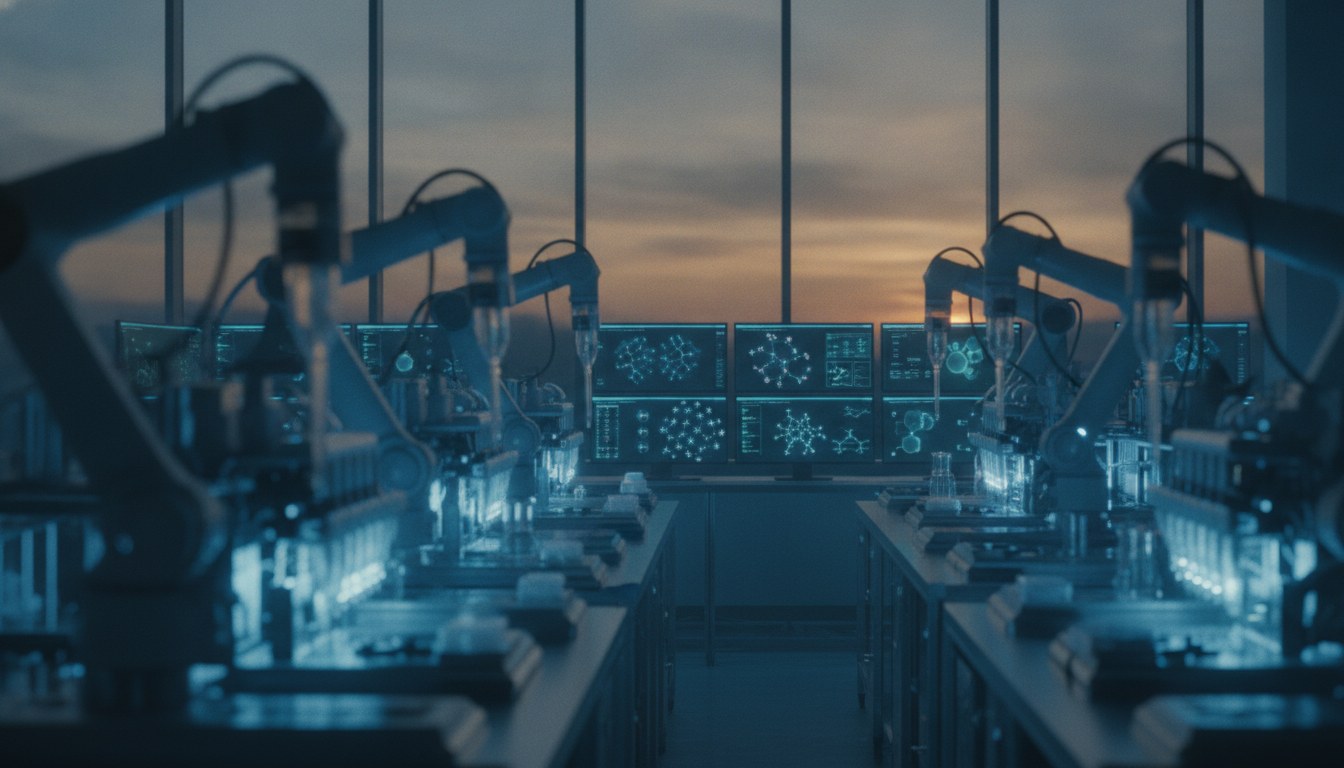
Anthropic CEO Dario Amodei has made one of his most sweeping public predictions yet, claiming that artificial intelligence could help cure or prevent most major diseases within the next decade. The statement, which circulated widely after coverage by Yahoo Tech, reflects a broader confidence from AI lab leaders about the near-term potential of their technology, even as questions about timelines and feasibility remain open among scientists and researchers.
What Amodei Actually Said
Amodei's claim centers on the idea that AI systems, working alongside human researchers, could dramatically compress the timeline for medical discovery. Rather than the traditional decades-long arc of drug development and clinical validation, he envisions AI accelerating the process at multiple stages, from identifying biological targets to designing molecules to predicting outcomes. He has framed this not as a distant aspiration but as something achievable within a defined window, specifically around ten years. Amodei has made similarly sweeping claims in other recent forums, including a Council on Foreign Relations appearance where he suggested AI could write essentially all code within a year.
Key Facts
- Dario Amodei is the co-founder and CEO of Anthropic, one of the leading AI safety-focused labs in the US.
- His prediction covers most major diseases, which he has associated with conditions like cancer, cardiovascular disease, and infectious illness.
- The ten-year timeline aligns roughly with projections that AI-assisted drug discovery could begin producing approved therapies by the early 2030s.
- Amodei has previously described a future he calls a "compressed scientific revolution," where AI collapses decades of progress into a few years.
- Critics note that biology's complexity and regulatory processes may present obstacles that AI alone cannot resolve.
The prediction sits within a larger narrative Amodei has been building publicly. He has spoken and written at length about what he sees as a potential inflection point in human history, one where AI capabilities begin producing measurable benefits across science, medicine, and economics. Whether or not the ten-year claim proves accurate, his willingness to attach a specific timeframe is notable given how carefully many researchers hedge on predictions in this space. Anthropic has positioned itself as an organization that thinks seriously about long-term consequences, which makes these confident near-term forecasts stand out even more.
"We could be on the cusp of a moment where most of humanity's major diseases are, for the first time, genuinely within reach of being cured or prevented."Dario Amodei, Anthropic CEO

Skepticism and Context
Not everyone shares Amodei's optimism on the timeline. Biologists and clinicians frequently point out that the bottlenecks in medicine are not purely about information processing speed. Clinical trials take years because biological systems are slow, variable, and ethically constrained. Regulatory approval processes exist for good reason and are unlikely to accelerate at the same pace as AI capabilities. Some researchers worry that overconfident predictions from AI executives could distort research funding priorities or set up a credibility problem if results do not materialize on schedule.
There is also the financial dimension. The cost of frontier AI development remains a significant concern for Anthropic's long-term trajectory, and ambitious public claims about medical breakthroughs may partly serve to justify the enormous capital requirements of the industry. That does not make the vision wrong, but it adds a layer of context worth keeping in mind when evaluating statements from any lab CEO in a competitive funding environment.
Why the Claim Matters Regardless
Even setting aside questions of exact timing, Amodei's framing is influencing how policymakers, investors, and researchers think about AI's role in medicine. Major pharmaceutical companies are already integrating AI into early-stage discovery pipelines. Academic labs are using models to analyze protein structures, predict drug interactions, and scan vast bodies of literature. The direction of travel is not seriously in dispute. The disagreement is about speed and magnitude.
For Anthropic specifically, the medical framing aligns with how the company has long justified its mission. Building powerful AI, in this view, is not just a commercial endeavor but a path toward tangible human benefit. Dario and his sister Daniela Amodei were recently named to TIME's list of the 100 Most Influential People of 2026, recognition that underscores how seriously their ideas are being taken in public discourse. Whether AI delivers on medicine's biggest promises in ten years, twenty, or longer, the conversation Amodei is driving is shaping expectations across the industry.


