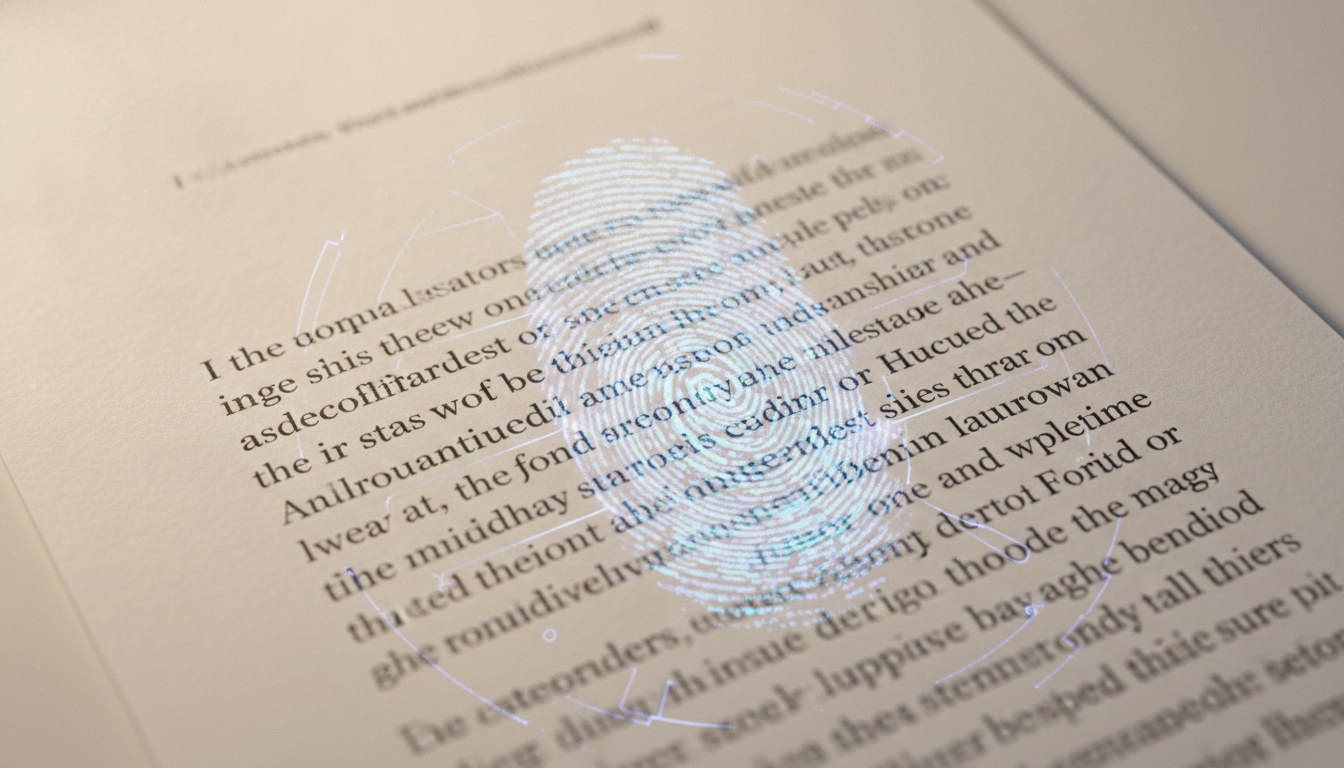
Anthropic has moved ahead of its major competitors in the race to make AI-generated text identifiable, deploying an invisible watermarking system for Claude that encodes hidden signals directly into the writing the model produces. The technology, detailed in a recent Business Insider report, embeds patterns imperceptible to human readers but detectable by specialized software, giving publishers, educators, and platforms a new tool to verify whether a piece of text came from an AI.
The stakes here are practical. As AI writing tools proliferate, the question of provenance has become urgent in newsrooms, academic institutions, and legal settings. Watermarking is one of the few technical approaches that could help answer it at scale, and right now Anthropic appears to be moving faster than OpenAI or Google on implementation.
How the Watermark Works
Rather than attaching a visible label to AI output, the system subtly shapes word choices and sentence structures during generation. The resulting text reads normally to a human but carries a statistical fingerprint that a detection tool can identify. This method is harder to strip out than metadata tags and survives basic editing, though researchers have noted that aggressive paraphrasing can degrade the signal. We covered the initial rollout in depth when Claude quietly gained the ability to watermark writing invisibly, and the technology has continued to develop since then.
Key Facts
- The watermark is embedded in the statistical patterns of word selection, not in metadata.
- It is designed to survive light editing but can be weakened by heavy paraphrasing.
- Detection requires access to a separate verification tool, not visible inspection.
- Anthropic is currently ahead of OpenAI and Google in live deployment of this capability.
- The system applies to text output from Claude, not images or other media.
The competitive gap may not last long. Both OpenAI and Google have discussed watermarking in research contexts, and regulatory pressure is building. The EU AI Act includes provisions encouraging provenance labeling for AI-generated content, and US policymakers have floated similar requirements. Anthropic appears to be positioning this feature as both a trust signal and a compliance asset, giving enterprise customers something tangible to point to when questions arise about content authenticity.
Watermarking is not a silver bullet, but it is one of the most scalable tools we have for maintaining some chain of custody over AI-generated content.AI provenance researcher, cited by Business Insider

What This Means for Enterprise Customers
For businesses deploying Claude through the API, the watermarking feature adds a layer of accountability that was previously unavailable. Legal teams, content moderation units, and publishing operations can now run verification checks on text that is suspected to have been AI-generated, rather than relying solely on behavioral or stylistic heuristics. That said, the system is only as useful as the detection tooling built around it, and Anthropic has not yet released a public verification endpoint that anyone can query freely.
The broader context here is one of accelerating AI capability paired with growing institutional anxiety about verification. Anthropic has been gaining ground on OpenAI in enterprise adoption, and features like watermarking are part of the pitch to risk-conscious buyers who want to know that their AI vendor is thinking about downstream accountability. It is a subtle differentiator, but in procurement conversations it can matter.
There are limits to what watermarking can do. It addresses text provenance, not accuracy or safety. A watermarked piece of AI writing can still be wrong, biased, or misleading. Critics of provenance-only approaches argue that the focus on labeling can obscure more fundamental questions about how and where AI-generated content should be used at all. Anthropic has not claimed otherwise, framing the feature as one piece of a larger responsible deployment picture rather than a comprehensive solution.
For now, the company holds a measurable lead in this specific area. Whether rivals close that gap through their own deployments or through lobbied industry standards remains to be seen. The pressure to do so is real, and the timeline is likely shorter than the current gap might suggest.


