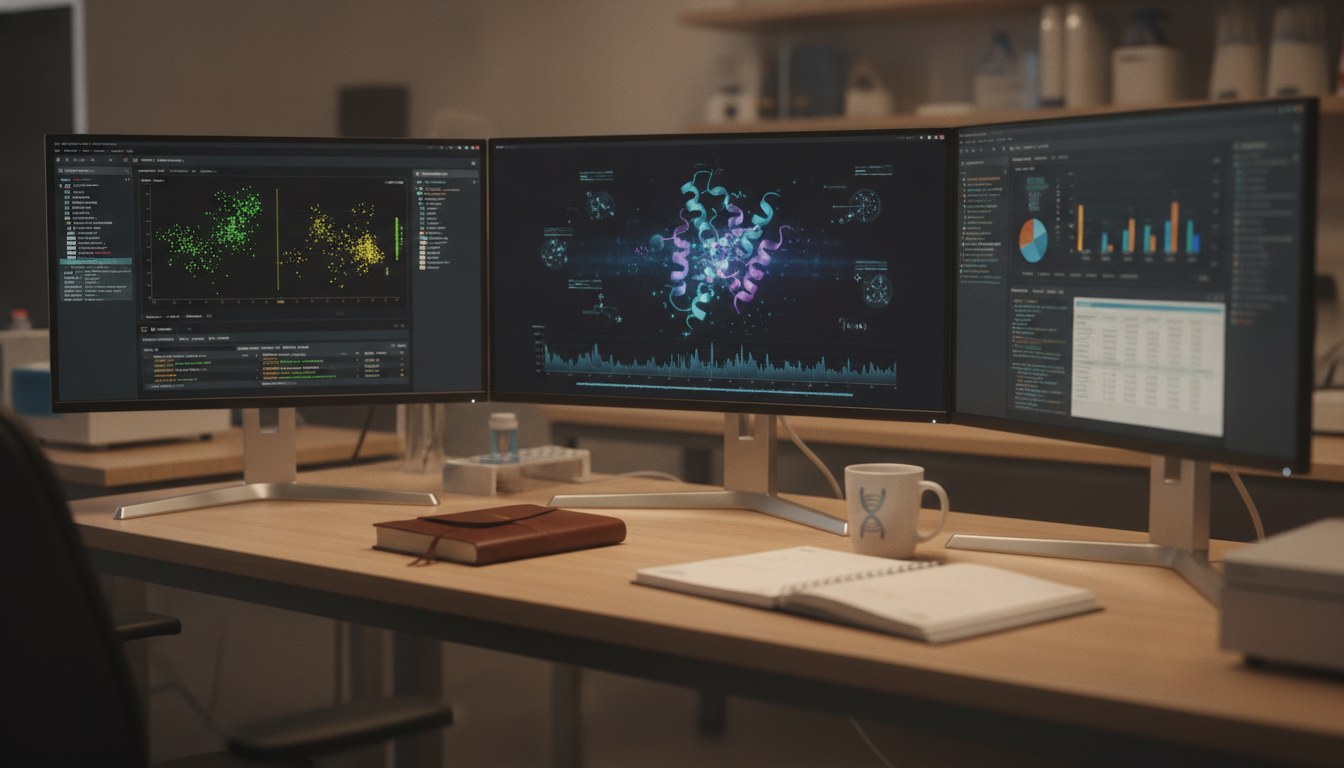
Anthropic is moving deeper into the scientific research market with the launch of a dedicated AI research workbench, a platform designed to consolidate the fragmented mix of tools that scientists typically juggle across data analysis, literature review, and experimental planning. The product represents one of the company's most direct plays at embedding Claude into day-to-day laboratory and academic workflows.
What the Workbench Offers
The workbench is built around the idea that researchers lose significant time switching between disconnected software environments. By pulling common scientific tasks into a single interface powered by Claude, Anthropic is betting that AI assistance becomes more useful when it has full context across a project rather than operating in isolated prompts. The platform is expected to handle tasks ranging from summarizing research papers to helping design experimental protocols and interpret results. This launch follows a broader push by Anthropic outlining its vision for Claude in scientific research, where the company signaled it views academia and research labs as a core growth area.
Key Facts
- The workbench consolidates multiple scientific tools into one AI-powered interface
- It is built on Claude and targets academic and professional research environments
- The product follows Anthropic's recent Claude Science initiative for research labs
- Fragmented tooling is cited as a primary pain point the platform aims to address
- The launch continues Anthropic's expansion into specialized professional verticals
The timing is notable. Anthropic has been steadily building out vertical-specific products over the past several months. The company recently launched Claude Science for research labs, a flagship offering aimed squarely at institutional science customers. The research workbench appears to sit alongside or within that broader Claude Science umbrella, providing a more hands-on, tool-integrated environment rather than simply offering API access to the underlying model.
Researchers need more than a capable model. They need a workspace that understands the shape of scientific work, from hypothesis to publication.Anthropic product team, via company materials

Anthropic's Push Into Professional Verticals
The research workbench is part of a clear pattern. Anthropic has been building tailored products for specific professional audiences rather than relying solely on general-purpose access to Claude. The company has made similar moves in legal services, expanding Claude's capabilities for law firms. Science and research may prove an even more natural fit, given the volume of unstructured text, data interpretation, and iterative reasoning those workflows demand.
The competitive landscape is also pushing Anthropic's hand. Rival AI labs have been aggressively courting enterprise and institutional clients, and a polished, purpose-built workbench gives Anthropic a more concrete product story to tell research departments weighing their options. A unified environment also gives Claude persistent context that improves the quality of assistance over time within a project, something a general chat interface struggles to replicate consistently.
It remains to be seen how quickly research institutions adopt the platform. Academic procurement cycles tend to move slowly, and labs often have strong preferences for existing tooling. But for teams already experimenting with AI assistance, a consolidated workbench could lower the friction that has kept broader adoption at bay. The product joins a growing lineup from Anthropic targeting the intersection of serious intellectual work and AI capability, a space the company has spent considerable effort staking out over the past year.


